Green Transition Forum 6.0
![Bulgarian Academy of Sciences Expert Says AI Will Change Professions, Not Erase Them]()
![Bulgarian Academy of Sciences Expert Says AI Will Change Professions, Not Erase Them]() Discussion panel at Green Transition Forum 6.0, Sofia, June 1, 2026 (BTA Photo)
Discussion panel at Green Transition Forum 6.0, Sofia, June 1, 2026 (BTA Photo)
site.btaBulgarian Academy of Sciences Expert Says AI Will Change Professions, Not Erase Them
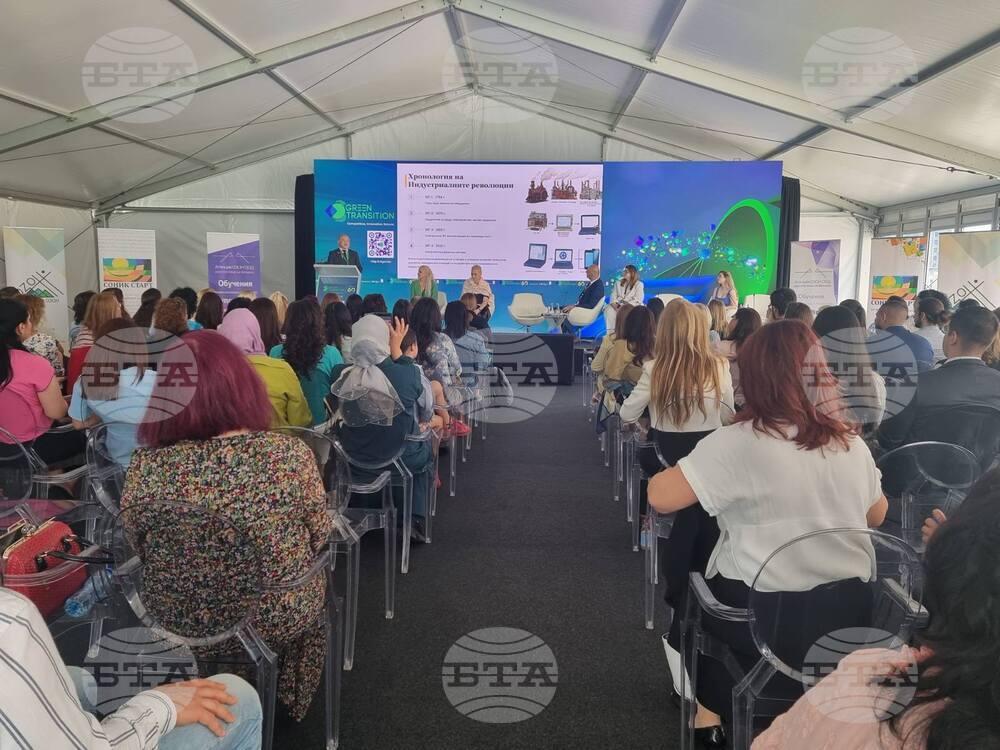
Artificial intelligence will change many professions rather than erase them, Spartak Keremidchiev of the Bulgarian Academy of Sciences said at Green Transition Forum 6.0 in Sofia on Monday. The forum is being held at Sofia Event Center. It is organized by Dir.bg, with BTA among its media partners.
Keremidchiev said that one of the major misconceptions since the onset of the Fourth Industrial Revolution has been the assumption that the labour market will collapse, with entire professions disappearing and others becoming fully automated. He said this interpretation is clinically imprecise and represents an erroneous diagnostic framing of the issue.
A profession changes not only when the technical capacity for such change exists, but also when there is a sound economic rationale, Keremidchiev said. In his view, even if 2% or 3% of a profession cannot be automated, this may modify the profession but will not eliminate it. He cited the example of pilots, who actively control an aircraft for no more than 15 minutes during a flight, while for the remainder of the time the aircraft operates on autopilot. Those 15 minutes, however, are critical, as they encompass take-off and landing.
Keremidchiev said several factors will determine the professions of the future. The first is the structure of the economy, including what will be produced and by what methods. The labour market will also be a decisive factor, including which new professions will be in demand and how the balance between work and leisure time will evolve.
In recent years, people have been working less, have had more free time and have gained greater access to remote work and flexible working hours, Keremidchiev said. Owing to productivity gains generated by robots and other labour-substituting technologies, forecasts indicate that people may work three or four days a week in the future, he added. Increased free time will stimulate the development of more professions in that domain, he said.
Keremidchiev said that global challenges related to the climate, healthcare, inequality and food security will also generate new professions.
In the future, people will change professions several times and become multi-professionals, Keremidchiev said. They will also practise several professions either simultaneously or sequentially, meaning that the emphasis will shift from education to vocational training. Education requires comprehensive reform so that fundamental skills are taught at school and university, while practical skills are acquired in the workplace, he said. Children today are being educated for jobs they will not perform, but they must be taught to respond to change, adapt and develop lifelong learning skills, Keremidchiev said.
/RY/
news.modal.header
news.modal.text