site.btaEuropean Citizens’ Panel on Preparedness Adopts 20 Recommendations for Crisis Readiness
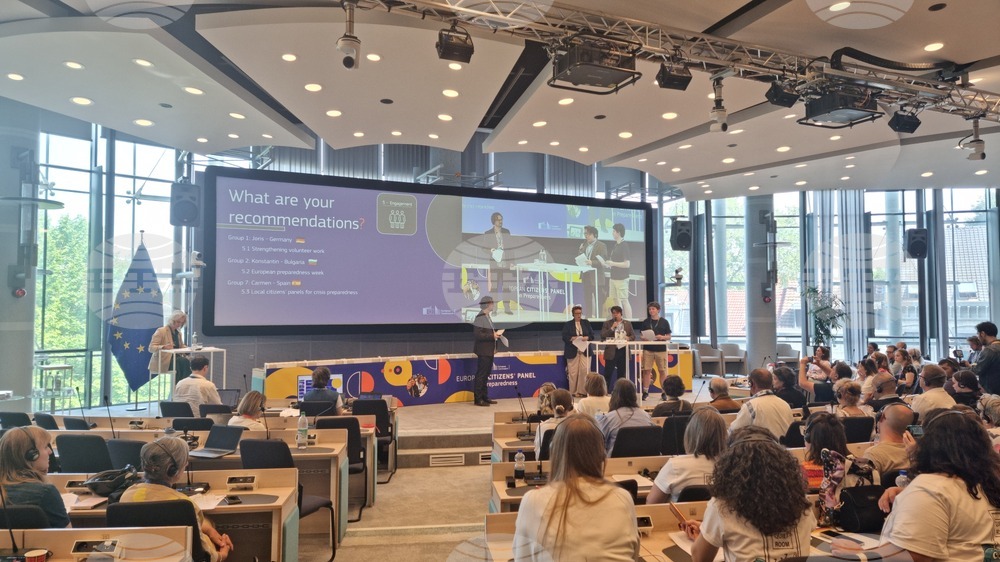
Recommendations aimed at improving the preparedness of European citizens to respond to various types of crises were submitted to the European Commission as the outcome of the European Citizens’ Panel on Preparedness, held in Brussels on Saturday and Sunday.
The document is the result of extensive work by nearly 150 citizens from all EU member states and proposes concrete measures for more effective communication, greater resilience and broader public participation. The final version contains 20 recommendations grouped under the themes of Communication, Information Integrity, Inclusion, Self-Sufficiency, Engagement and Education.
Participants in the panel were divided into 12 groups, each of which presented its proposals during the concluding plenary session. The discussions highlighted that preparedness is a shared responsibility between institutions, local communities and citizens, requiring systematic and long-term efforts.
Under the Communication theme, four recommendations were adopted. Participants proposed the introduction of harmonised warning systems using both digital and traditional communication channels, including adapted messages for people with disabilities. They also recommended the creation of local knowledge centres providing training, materials and simulations, as well as a centralised European mechanism for verified and up-to-date crisis information.
The Information Integrity section included three recommendations, among them the introduction of critical thinking education for all age groups and stronger measures against disinformation, including stricter oversight of online platforms. The panel stressed the need for more visible and accessible fact-checking mechanisms to help citizens verify information.
On Inclusion, participants called for a standardised and universal visual and audio warning system recognisable across all EU member states. They also recommended a unified design for crisis information adapted to the needs of people with disabilities. Particular emphasis was placed on involving local organisations in the distribution of 72-hour emergency kits to vulnerable groups.
Under the Self-Sufficiency theme, five recommendations were presented, including measures to improve energy autonomy through investment in renewable energy and energy storage. Participants also stressed the importance of prioritising food supplies produced within the EU and supporting local producers.
The panel additionally proposed the development of a secure European digital infrastructure and the creation of common guidelines for the contents of 72-hour survival kits. Participants called for better coordination among institutions while preserving local autonomy.
The fifth topic, Citizen Engagement, produced three recommendations. One of them focused on strengthening volunteer structures through easier registration procedures and European recognition mechanisms. The panel also proposed the introduction of a European Preparedness Week dedicated to education through games, demonstrations and competitions, as well as the establishment of local citizens’ panels involved in shaping preparedness policies.
Under the final theme, Education, participants recommended introducing preparedness education from an early age, including weekly lessons, simulations and practical training. They also underlined the need for fair and sustainable funding for crisis preparedness education, proportionate to risk levels and population size, with clear accountability mechanisms.
/KK/
news.modal.header
news.modal.text