site.btaPresident Iotova, Bulgarian MEPs Discuss Need to Actively Uphold Bulgarian Position on North Macedonia's EU Accession
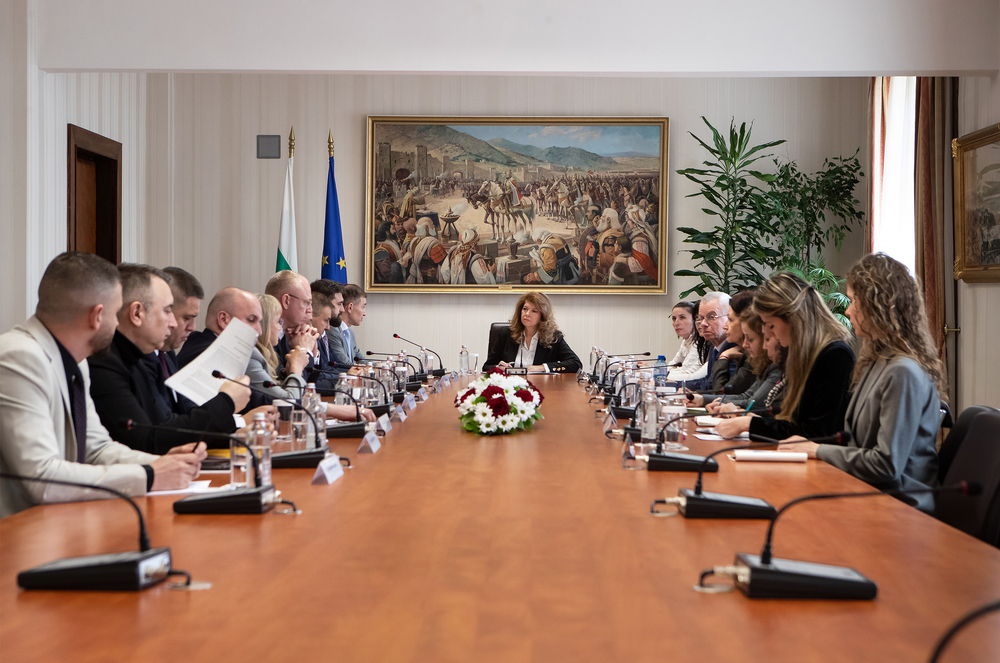
Bulgarian institutions should make more efforts to uphold the national position on the European Union membership of the Republic of North Macedonia. President Iliana iotova and Bulgarian MEPs rallied around the idea during a meeting on Friday, the press office of the head of state said.
The meeting precedes the preparation and the upcoming vote in June in the European Parliament on the annual report on North Macedonia’s progress on its path toward the European Union.
The Bulgarian MEPs thanked the head of State for the meeting and her commitment to the issue. The representatives in the EP are united and working in coordination on the matter, but they do not feel the necessary support from the state in defending Bulgaria’s national position, and they also note inactivity on the part of some institutions.
The participants in the meeting were adamant that Bulgaria, with the confidence of a full-fledged member of the European Union, must uphold its strong position and insist that Skopje fulfill the 2022 French proposal, which also became a common European position regarding the accession of North Macedonia to the EU. In order to begin negotiations, North Macedonia must meet its commitments, and include Bulgarians into its constitution. Bulgaria and North Macedonia do not have a bilateral dispute, and the country must meet the European membership criteria, one of the main ones being the protection of human rights, participants in the meeting stressed. The discussion also addressed attempts by North Macedonia to alter elements of the adopted negotiation framework that contradict the European consensus of 2022. The risk of changing the voting procedure for admitting a new member state to the EU, from unanimity to a qualified majority, was also discussed.
The meeting also revisited last year’s European Parliament report on the progress of the Republic of North Macedonia and the actions taken by Bulgarian members of the European Parliament and the Bulgarian authorities, which prevented the inclusion of wording deemed unacceptable to Bulgaria. At the time, President Rumen Radev (2017–2026) sent a letter to the leaders of the European institutions and EU member states, firmly stating that Bulgaria would not accept any distortion of the European compromise.
Iotova and the Bulgarian MEPs stressed the need for Bulgaria to step up its international efforts in defending its position. The discussion also highlighted the importance of establishing Bulgarian language lectureships at foreign universities. In addition, the creation of a Bulgarian National Cultural Institute, as proposed by Iotova, could become a powerful tool of cultural diplomacy.
/NZ/
news.modal.header
news.modal.text