Council of Ministers decisions
![Revoked Nominations Trigger New Selection for European Prosecutor]()
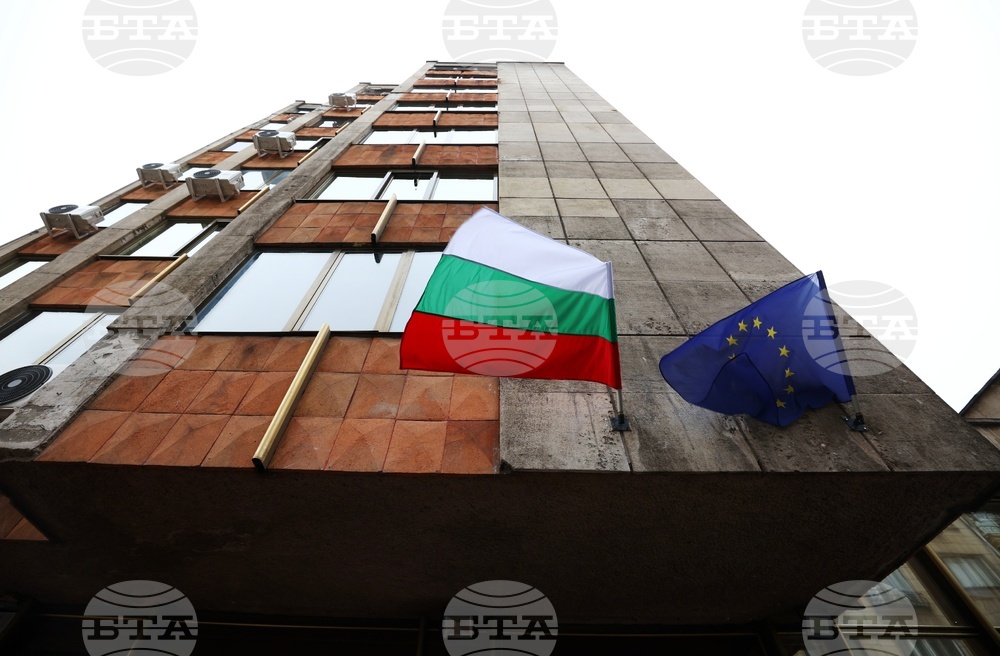
![Revoked Nominations Trigger New Selection for European Prosecutor]() Facade of the European Public Prosecutor’s Office building, Sofia, December 4, 2025 (BTA Photo/Minko Chernev)
Facade of the European Public Prosecutor’s Office building, Sofia, December 4, 2025 (BTA Photo/Minko Chernev)
site.btaRevoked Nominations Trigger New Selection for European Prosecutor
The caretaker government revoked the Council of Ministers’ January 21, 2026 decision approving three Bulgarian candidates for European prosecutor, the government press service said here Wednesday. The move withdrew the nominations of Dimitar Belichev, Mihaela Raidovska and Plamen Petkov and ordered a new national selection procedure.
The Ministry of Justice will send a notice of the decision to the European selection body referred to in Article 14(3) of Council Regulation (EU) 2017/1939 establishing the European Public Prosecutor’s Office.
By its decision, the Council of Ministers instructed the Minister of Justice to organize a new procedure for selecting candidates for the position of European Prosecutor from Bulgaria under clearly defined rules. The rules provide for the selection to be conducted by a five-member panel composed of one tenured lecturer in criminal law or criminal procedure; two judges from the Criminal Chamber of the Supreme Court of Cassation, elected by the General Assembly of the Supreme Court of Cassation; one prosecutor from the Supreme Cassation Prosecutor’s Office, appointed by a Deputy Prosecutor General of the Supreme Cassation Prosecutor’s Office; and one lawyer with at least 12 years of professional experience in criminal law, criminal procedure, and EU law, appointed by the Supreme Bar Council. A representative appointed by the Minister of Justice with an excellent command of English will also serve on the panel without voting rights.
The nominations were withdrawn after a full and thorough review by the Ministry of Justice found major and systemic shortcomings in the national selection procedure carried out between October 2025 and January 2026, affecting both its organization and its lawfulness. This made it necessary to hold a new national procedure in strict observance of the principles of political neutrality, independence, transparency, objectivity, fairness and equal treatment, based on clear, comparable and public assessment criteria.
Serious shortcomings were found in the formation of the national seven-member panel that selected the candidates for European prosecutor. It included two representatives of the Ministry of Justice, two representatives of the Prosecutors’ College of the Supreme Judicial Council, two representatives of the Judges’ College of the Supreme Judicial Council, and one representative of the Faculty of Law, Sofia University St. Kliment Ohridski. A key and insurmountable problem was the participation of four members of the Supreme Judicial Council whose terms expired on October 3, 2022, while they were still in a position to form a majority on the national panel. Their continued exercise of powers beyond the term set by the Constitution of the Republic of Bulgaria and the Judiciary Act raises serious doubts about their legitimacy in taking such important staffing decisions related to a key institution in the EU justice system.
The fact that the panel was chaired by a representative of the political cabinet of the justice minister, a deputy minister, as well as the participation of one more member put forward by the ministry, created reasonable concern that members of the executive could influence a staffing decision of key importance to the country and to the European rule of law, and put judicial independence at risk. In practice, the only member with an unquestionably independent and politically neutral status was the representative of the academic community, meaning the panel as a whole was not in a position to guarantee an objective and depoliticized choice.
The selection was carried out without previously adopted and publicly announced rules containing clear and objective criteria and a methodology for assessing the candidates’ knowledge and professional and moral qualities. This created a risk of inconsistency, lack of transparency and subjectivity in the Republic of Bulgaria’s staffing policy for this extremely important post in the EU justice system, compromised equal treatment of the participants, and deprived the candidates of an effective remedy because, in the absence of clear criteria, it was impossible to verify whether the assessment was correct.
There was a real risk that the European selection panel would reject the list of candidates approved at national level because of the procedural flaws that were found. Such an act would have caused serious reputational damage to the Republic of Bulgaria and would have led to an even greater delay in the selection of a candidate from Bulgaria. The revocation of the January 21, 2026 decision and the restart of the procedure was an act of preventive State responsibility aimed at sending candidates selected through a transparent, competitive and depoliticized procedure.
On Tuesday, Caretaker Deputy Prime Minister and Justice Minister Andrey Yankulov said he had proposed that the Council of Ministers revoke the government decision that had finalized the procedure for choosing a new European prosecutor from Bulgaria at national level. Yankulov said that this procedure for nominating three candidates for the post, from whom one is to be chosen at European level, suffered from serious shortcomings.
/VE/
news.modal.header
news.modal.text