site.btaUPDATED Caretaker Foreign Minister Neynsky Explains US Aircraft Deployment at Sofia Airport During Parliamentary Hearing
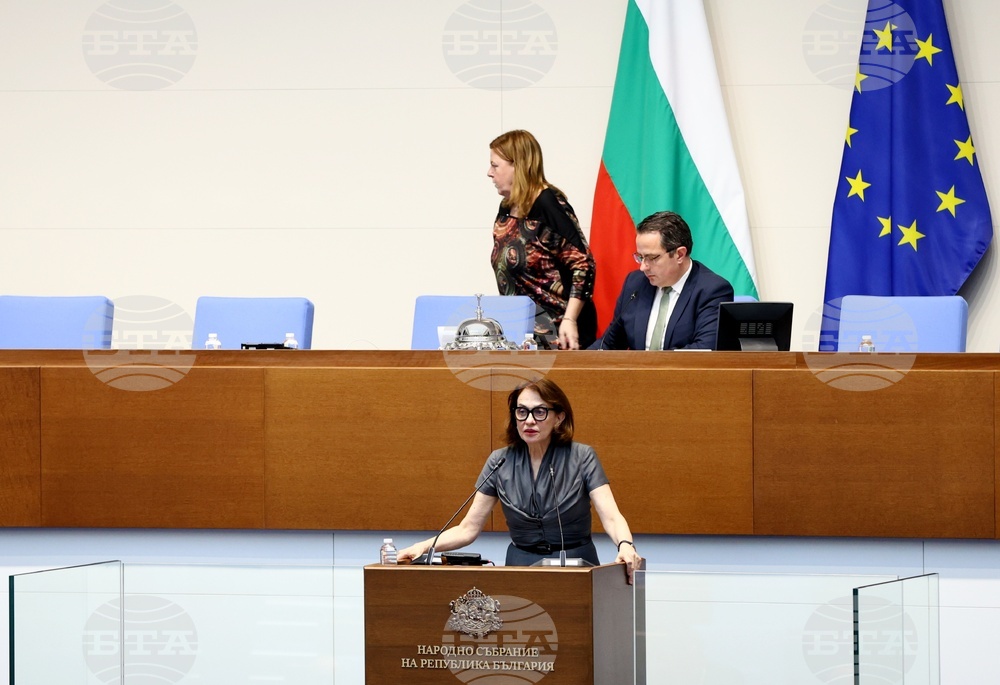
Caretaker Foreign Minister Nadezhda Neynsky said during her parliamentary hearing on Thursday, that the deployment of US military aircraft at Sofia airport is not related to current or planned military operations. The hearing is at the request of the Vazrazhdane parliamentary group. On February 19, the Defence Ministry announced that aircraft of the United States Air Force had been deployed at Sofia Airport in connection with a military exercise.
Neynsky explained that on February 17, 2026, the US Embassy requested permission and support for the deployment of up to 15 aircraft at Sofia Airport for the period from February 17 to May 31, 2026, as well as for assistance in ensuring access for military personnel to the airport runway. The reasons given were related to the implementation of activities on the enhanced vigilance of the NATO Alliance. In accordance with the Act on Passage through and Presence within the Territory of the Republic of Bulgaria of Allied and of Foreign Armed Forces, the Minister of Defence granted the requested permission for the deployment of US forces and assets at Vasil Levski Sofia Airport for the aforementioned period, the caretaker minister stated.
According to Neynsky, the permanent diplomatic permission granted for flights of US Air Force aircraft in Bulgarian airspace is in force and is being used for 2026. "As stated in the official information provided by the Ministry of Defence, the aircraft at Vasil Levski Airport belong to the US Air Force, their deployment is in support of training related to their activities on enhanced vigilance of the Alliance, the personnel are for servicing the aircraft, the deployment is in support of training activities", Neynsky said. She emphasized that the aircraft have a purely logistical function and do not have offensive capabilities, as their purpose is to support logistical operations through refuelling in the air, and not to participate in combat missions.
Neynsky assured the MPs that it is expected that the American aircraft and personnel will be in Bulgaria for the period specified and are not related to current or planned military operations. In her words, it should be emphasized that the Russian aggression against Ukraine has necessitated a significant strengthening of the security and deterrence potential of NATO's eastern flank in response to the definition of the threat from Russia as the most significant and direct to Euro-Atlantic security.
Neynsky recalled that since 2022, NATO has taken a number of measures to strengthen the defence of allies, including enhanced airspace protection missions, deployment of allied forces on a rotational basis, expanded logistical requirements, and conducting larger-scale exercises. The minister pointed out that in the context of Bulgaria's geostrategic position in the Black Sea region and the Balkans, the country’s alliance commitments to implement measures for enhanced vigilance, including conducting exercises, are increasing. She added that allied forces regularly use the facilities of the Novo Selo training ground and the air bases in Bezmer and Graf Ignatievo.
Responding to Vazrazhdane MP Angel Georgiev's question why wasn't the National Assembly consulted, Neynsky pointed out that the Constitutional Court has ruled that when it comes to allied forces, no parliamentary decision is required, only a decision of the Council of Ministers is sufficient.
What the Constitutional Court said
In 2003, the Constitutional Court was asked by the President to issue an interpretation of constitutional provisions governing parliamentary approval for the entry, transit or stationing of foreign forces and the deployment of Bulgarian troops abroad (Art.84 of the Constitution), in the context of Bulgaria’s commitments arising from then prospective NATO membership and broader Euro-Atlantic integration.
The Court ruled that allied troops present in the country under a ratified international treaty of a political or military nature cannot be considered “foreign troops” within the meaning of the Constitution, provided their presence is linked to the fulfilment of allied obligations – and Parliament's approval was unnecessary.
In its decision, the Court held that once Parliament has ratified, promulgated and brought into force an international treaty under Article 85 of the Constitution, the obligations arising from that treaty take precedence over the requirement for case-by-case parliamentary authorisation under Article 84 of the Constitution. Therefore, additional approval by the National Assembly is not required for the presence of allied forces or the deployment of Bulgarian troops abroad when these actions stem directly from treaty-based commitments, including collective defence and peacekeeping operations.
/RY, RD/
news.modal.header
news.modal.text