site.btaChallenges Facing Bulgarian Business and Competitiveness Discussed at Continue the Change Forum

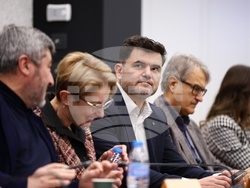
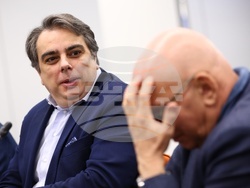
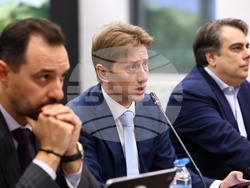
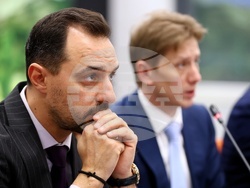
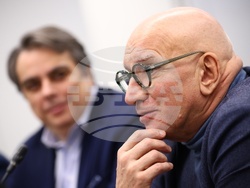
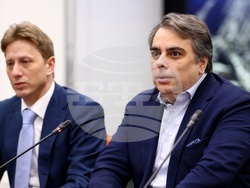
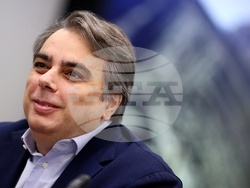
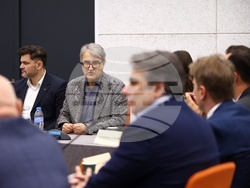
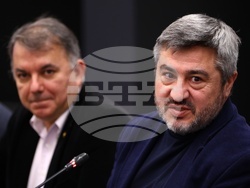
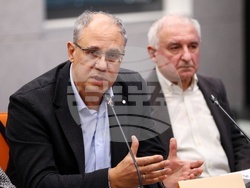
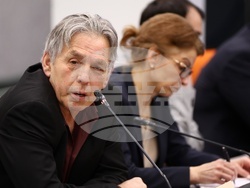
Members of Parliament, business leaders, representatives of employer and business organizations, economists and financial experts took part in a discussion on challenges facing Bulgarian business and competitiveness, organized by the Continue the Change party on Friday. The Competitive Business forum is part of a series of debates on key issues shaping Bulgaria's future under the motto "Strong Bulgaria in a Strong Europe".
Continue the Change leader Assen Vassilev raised the question of how Bulgaria can move beyond its image as a provider of cheap labour and develop a national brand, and whose responsibility that should be: of the State, industry or services sector. According to him, the United States' high GDP is largely driven by seven companies that operate entirely in IT and services rather than traditional industry. Europe lacks comparable companies, which explains why its GDP is significantly lower than that of the US, he said. Vassilev stressed that the key question for Bulgaria is where it positions itself and the steps it must take to shed the stigma of cheap labour and emerge as a strong economy.
Latchezar Bogdanov, Chief Economist at the Institute for Market Economics, said Bulgaria needs a global leader with vast resources, as well as "explosive success stories". He added that some of these potential champions will require significant capital.
Economist Evgeni Kanev identified judicial reform as the top priority for Bulgaria's economic development. He argued that with blocked institutions, no investor will come to the country, making it essential to actively work on improving Brand Bulgaria. At present, this country has a reputation for cheap labour and high levels of corruption, the economist said.
Financial expert Levon Hampartzoumian said Bulgaria must ensure that life in the country is calm, pleasant and secure, which is "not a matter of two decrees and three laws". He added that the US exports services that are built on an extremely strong, large, and developed industrial base, which allows the services sector to grow - a principle that also applies to China. According to him, the EU's approach to industrial policy is both dramatic and strategically flawed. He questioned whether the Green Transition has sound objectives, is based on science or is guided only by impressions.
Svetoslav Benchev from the Bulgarian Petroleum and Gas Association raised concerns about how Sofia protects its interests in Brussels, noting that the country's position in the petroleum sector is not adequately defended. There will not be a second oil refinery in this country because someone wants to kill this business, even though it is important for Bulgaria and the entire EU, he said.
/RY/
Additional















news.modal.image.header
news.modal.image.text
news.modal.download.header
news.modal.download.text
news.modal.header
news.modal.text