site.btaGERB Leader Borissov Insists Government Must Not Resign amid Euro Changeover and Budget Unrest
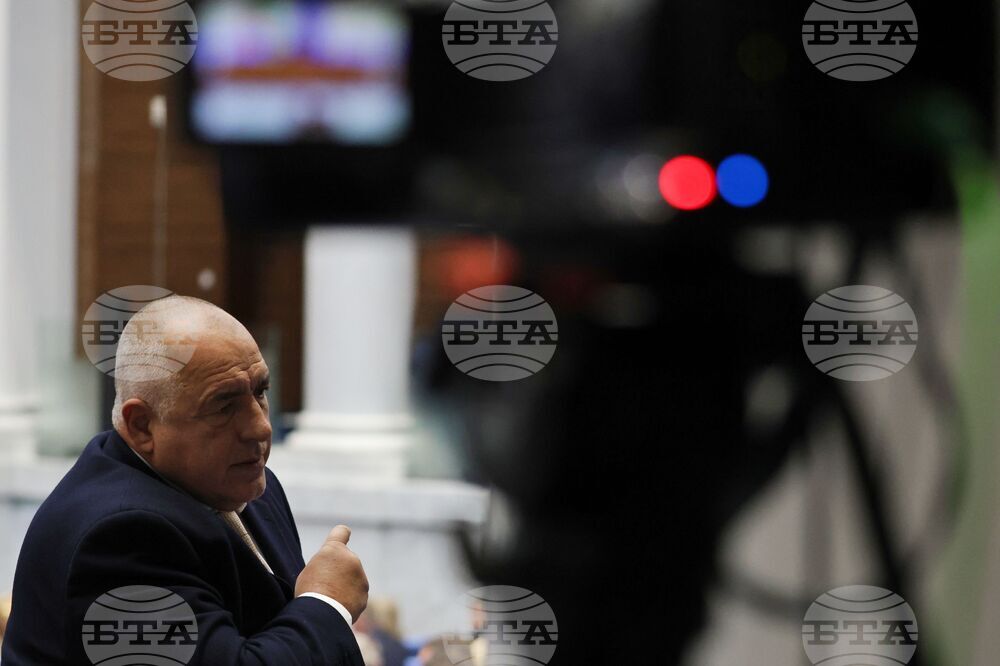
The government must not resign under any circumstances, GERB leader Boyko Borissov told journalists on the sidelines of Parliament on Wednesday.
If it falls now, he said, this would mean three to four months of chaos, soaring prices and such damage to the planned January 1 euro changeover that the next cabinet might become the first in a euro area country to seek to leave the single currency.
We returned to the starting point – a minority government backed by Movement for Rights and Freedoms (MRF) – New Beginning, without committees and posts for them, Borissov said.
He added that on Tuesday MRF Chair and MRF–New Beginning Floor Leader Delyan Peevski was kind enough at the Joint Governance Council to agree to all his proposals, which Prime Minister Rosen Zhelyazkov then made public.
Borissov commented that the opposition on Tuesday claimed the euro area was a given, but this was thanks to GERB and the government that requested a convergence report.
After the fight against contraband, the mobsters and VAT fraud, the National Revenue Agency and the Customs Agency collected BGN 8.6 billion more this year, Borissov said, and rhetorically asked whether this was a reason for the government to resign.
Commenting on Monday’s protest in Sofia, Borissov said he viewed it as two separate parts and congratulated the participants in the first one, saying they had “done a golden job.”
He said that from the very first day of the budget debate, every GERB representative who spoke described it as bad, a compromise, and a coalition budget, and that no one was willing to defend it.
Finance Minister Temenuzhka Petkova said in mid-November that the draft 2026 State Budget represents “the most realistic budget possible”, as it has been prepared on the basis of current legislation and the policies pursued to date. Later in November, Petkova also said that she listens to all criticisms of the 2026 Budget but has not heard arguments that substantiate the opposition’s claims, and this budget reflects political life in Bulgaria during the past four years: “political limbo, lack of stability, the absence of a regular government willing to take responsibility for its policies.” Borissov said at the end of October that "everybody wants more but we have set a 3% deficit target". On November 27, Prime Minister Rosen Zhelyazkov said: "We will sit down at the negotiating table, we will once again try to restore dialogue with the trade unions and the employers, and we will try to achieve macroeconomic indicators for the budget that will be satisfactory for a large part of business and for a large part of society.”
Other ministers have previously defended the budget, calling the proposal “the possible budget” under current constraints, with Education Minister Krasimir Valchev describing the education part as “the best possible compromise” between fiscal realities and the system’s needs. Labour and Social Policy Minister Borislav Gutsanov commented during the same debate that “there may well be a better budget, but this is the possible budget”. Regional Development Minister Ivan Ivanov said the budget framework is dictated by delayed infrastructure investments in the last four years, arguing that each delay returns as a heavier, more expensive future commitment that reduces the government’s room to pursue its own vision. Deputy Prime Minister and Bulgarian Socialist Party leader Atanas Zafirov said at the end of November that "If there is no possibility to continue the planned social policies, BSP – United Left will reconsider its participation in the government".
“This protest did extremely important work for us, because together with colleagues, partners, employers and trade unions, the process was publicly brought back to where it should have been a month and a half ago,” Borissov added. He explained that, in order to rebalance the budget, capital expenditure was being reduced.
In his view, the police handled the situation very well and he firmly rejected the resignation of Minister of Interior Daniel Mitov. If the police had acted differently, he said, the events under the colonnades of the Council of Ministers would have been recalled instead.
Borissov was referring to the police brutality scandal from the night of July 10, 2020, when, during the anti-government protests in Sofia, police officers dragged detained protesters under/behind the colonnades of the Council of Ministers building and beat them out of public view.
/RY/
news.modal.header
news.modal.text