site.btaUPDATED President Vetoes Defence and Armed Forces Act Amendments
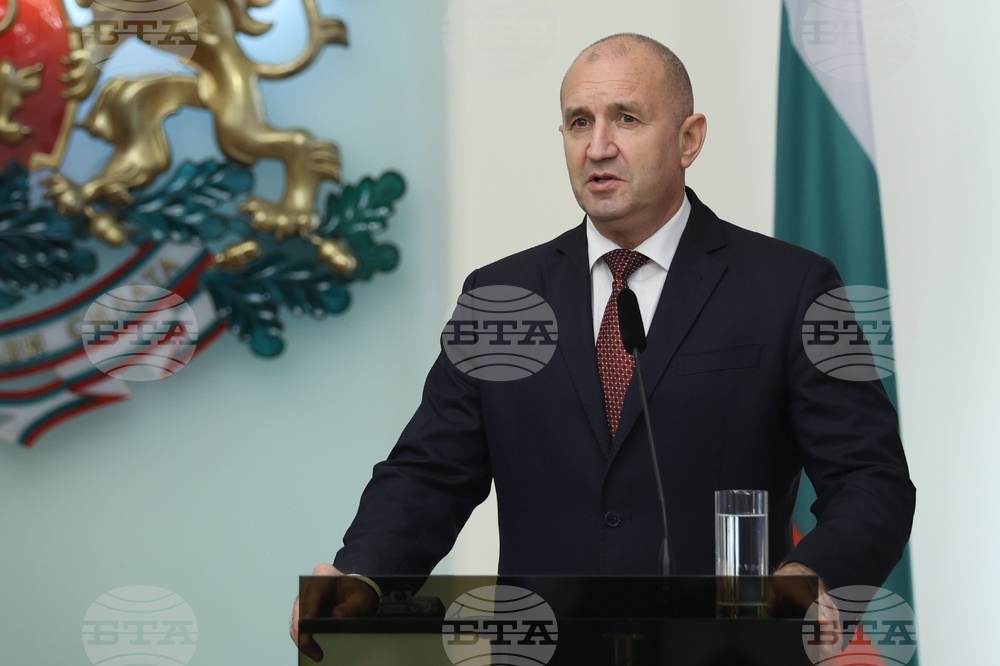
President Rumen Radev returned for further discussion in the National Assembly several provisions from the Act Amending and Supplementing the Defence and Armed Forces Act, adopted on October 30, the presidential press secretariat reported on Tuesday.
In his reasoning, the President acknowledges that steps have been taken in the right direction, aimed at improving coordination among the competent defence authorities and establishing regulation concerning the activities of the Supreme Command. He agrees that there is a need to refine the rules on the upper age limit for military service, to encourage the development of the academic corps, and to improve the procedures for allocating, recording and compensating working hours, as well as for granting and deferring leave. However, he notes that these changes should not be implemented in a way that disadvantages service personnel.
According to the President, previous legislative practice of raising the maximum age for military service has not solved the problem of personnel shortages in the Armed Forces. Instead, it has created conditions for stagnation within the system, slowing the renewal of command structures and limiting career development opportunities for officers. The changes to how service time is recorded and compensated, and to the new procedure for taking leave, could disadvantage service members further and lead to additional demotivation, Radev says.
He points out that although the adopted amendments pursue important defence objectives, in practice they could exacerbate the shortage of human resources in the army and should therefore be reconsidered by the legislature.
The President also expresses support for the idea of introducing incentive measures related to the development of the academic corps and to providing support for service personnel who have made a proven contribution to the advancement of education and science within the military education system.
Under the amendments to the Defence and Armed Forces Act, the upper age limit for military personnel who have not yet exercised their right to retire under the Social Insurance Code has been raised by two years. In addition, the changes explicitly regulate the activities of the Supreme Command and introduce a legal definition of the term “deterrence” in relation to military threats.
The law now specifies that, in peacetime, the Armed Forces perform deterrence tasks in accordance with strategic action and operations plans, as well as allied commitments under international treaties and agreements. The National Assembly also authorized the use of weapons and/or technical means by the Armed Forces against unmanned autonomous systems in the protection and defence of military sites, permanent bases, military formations, equipment, and ship platforms located outside their permanent bases.
/IV/
news.modal.header
news.modal.text