site.btaTaraclia Holds Discussions on Local Self-Government
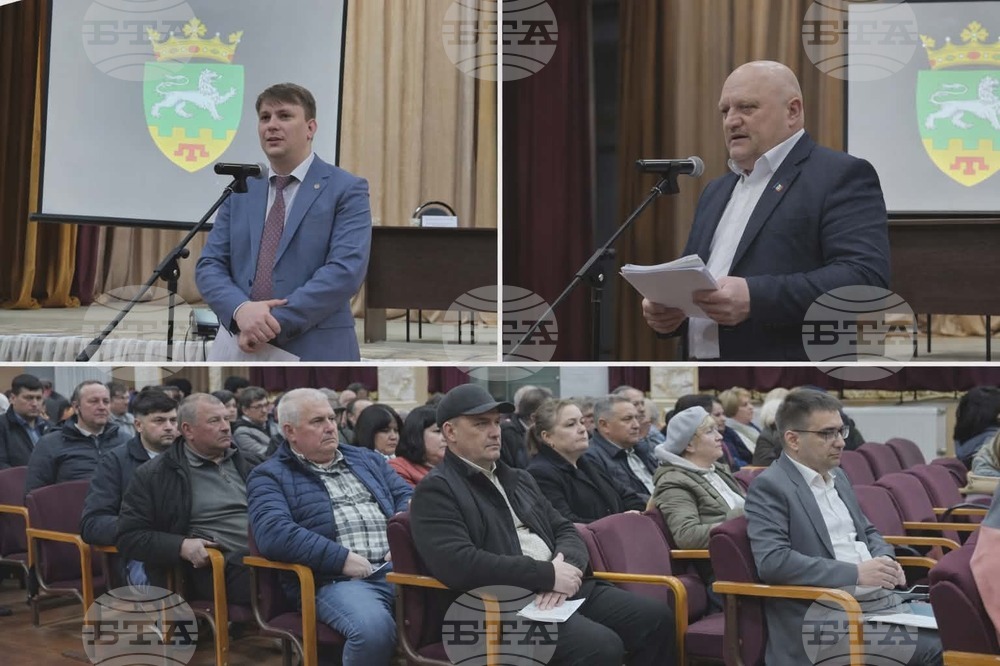
Consultations on the reform of local public administration were held here on Tuesday with the participation of representatives of the Moldovan government and the State Chancellery. The meeting brought together district and municipal leaders, representatives of Bulgarian organizations in Moldova, as well as residents of the Taraclia District, who had the opportunity to ask questions and join the discussion. Among those present was Bulgaria’s Ambassador to Chisinau, Maya Dobreva.
The forum was led by Alexandru Iacub, Deputy Secretary General of the Government of Moldova, who presented the Moldovan Government’s proposal regarding the reform of the Taraclia District, which envisages administrative-territorial reorganization aimed at more effective governance, better services, and more active citizen participation.
Iacub reported that the proposal for the Taraclia District is to transform it into a second-tier municipality, which would merge the city and district administrations into a single structure with unified leadership. The district council and the position of chairperson would be replaced by a municipal council and a mayor, who would also serve as mayor of the city of Taraclia. The changes are expected to lead to reduced bureaucracy and faster decision-making, more accessible and higher-quality public services, as well as greater financial autonomy through an expanded tax base. Other expected benefits include redirecting more funds toward infrastructure and development rather than administrative expenses, as well as preserving and strengthening the region’s ethnocultural identity.
Taraclia District Chair Lazari Dermenji read a statement calling on the Moldovan government to preserve the Taraclia District in the context of the administrative-territorial reform. Dermenji emphasized that the Taraclia District must be preserved within its existing administrative boundaries because the district’s potential inclusion in a larger region could lead to a loss of administrative autonomy and affect the preservation of the cultural, linguistic, and historical identity of the Bulgarian community.
Dermenji stated that these concerns are not unfounded, as the district was already abolished as an administrative unit in 1999 and subsequently restored following public pressure and a referendum. He said that reforms must be implemented in compliance with European standards for the protection of minorities, ensuring the Bulgarian community’s ability to effectively exercise its rights. The main demands listed were the preservation of the district’s powers in the areas of education, culture, and social policy, as well as greater financial autonomy, including the possibility for a portion of collected taxes to remain in the local budget. In conclusion, he called for support to preserve the Taraclia District as a centre for Bulgarians in Moldova, emphasizing that the reform should be an opportunity for development and not a threat to the community's identity.
Proposals regarding the reform can be sent to primariiputernice@gov.md while draft legislative amendments have been published for public consultation on the following website.
/TM/
news.modal.header
news.modal.text