site.btaDr. Ellie Hadjiyska Schmelzer: From Childhood Curiosity About the Stars to Leadership Role at NASA Mission
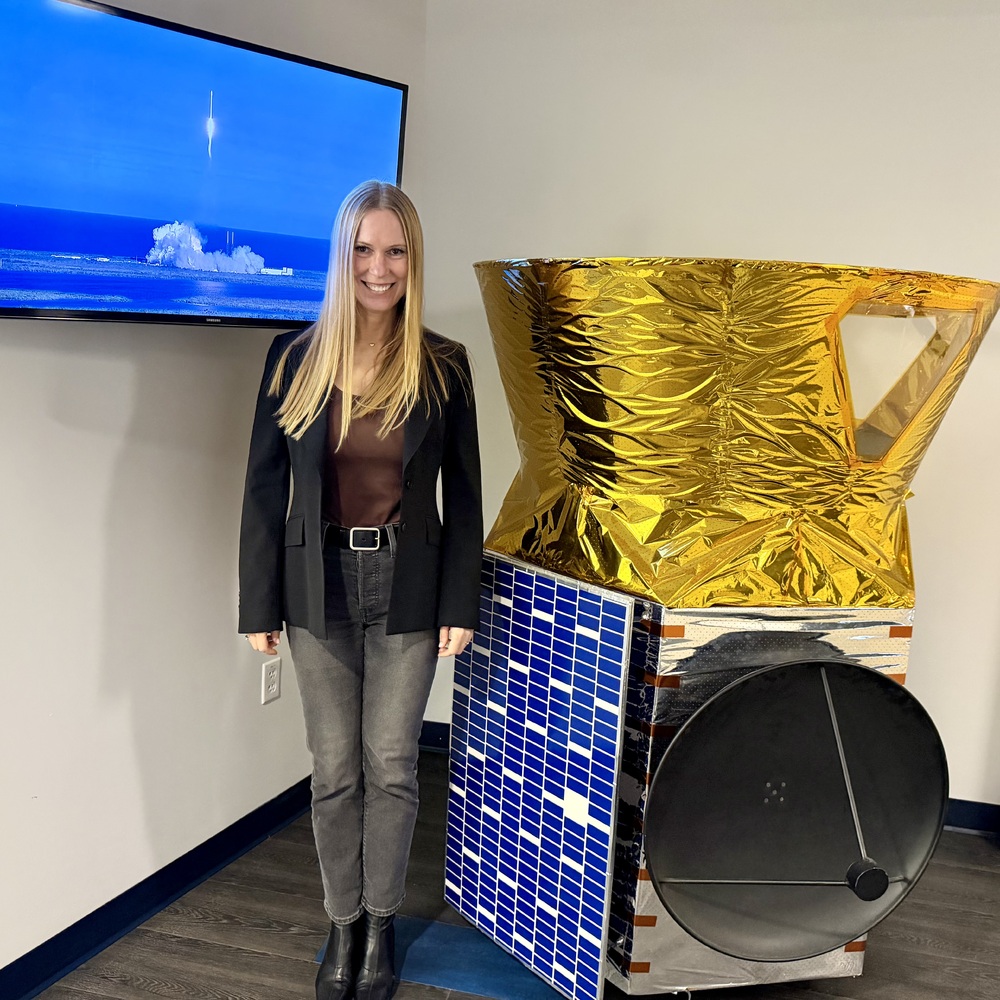
Bulgarian scientist Dr. Ellie Hadjiyska Schmelzer leads a team working on NASA’s Transiting Exoplanet Survey Satellite (TESS) mission — one of the most advanced space projects dedicated to discovering planets beyond our solar system. In an interview with BTA, she shared her journey from childhood curiosity about the stars to a leadership role at the heart of US space exploration.
She has been living and working in the United States since 1993, having left Bulgaria during a period of uncertainty and limited opportunities for young scientists. Her parents, both engineers, encouraged her to pursue professional growth in an environment that could nurture her ambitions.
Her love for physics began as early as first grade, inspired by her mother, who introduced her to science through books such as “Zanimatelna Fizika” (“Entertaining Physics”). Her interest in astronomy emerged even earlier — as a young child, she would gaze at the stars from her grandparents’ balcony, asking about “the blinking lights in the sky.”
As a leader in the TESS mission, Hadjiyska is responsible for key aspects of the program — from spacecraft operations and scientific team coordination to budget management and cybersecurity. She works with engineers and researchers from MIT, Northrop Grumman, Princeton, and NASA. TESS searches for new exoplanets through space-based observations and has already made several significant discoveries — among them a planet that is literally disintegrating under the heat of its host star.
Her previous projects — TOSS and La Silla Quest Survey (LSQ) — prepared her for her current role, giving her extensive experience in both the engineering and scientific aspects of ground-based astronomical surveys.
Today, the team also employs artificial intelligence to detect new astronomical phenomena more efficiently than the human eye. The mission is set to be expanded with a new observing strategy aimed at discovering planets with longer orbital periods.
Dr. Ellie Hadjiyska Schmelzer says she feels an immense honor and responsibility to represent her country before the global scientific community. Her advice to young scientists is to focus not so much on where they want to work, but on what they want to study — and to find the environment that best matches their strengths and aspirations.
Looking ahead, she predicts that NASA’s Artemis mission will lead the way in the next decade, with the goal of once again sending humans to the Moon.
Below is the full text of the interview.
Since when have you been living and developing your career in the United States, and what inspired your decision to build your personal and professional path there?
I have been living and simultaneously studying or working in the US since 1993. My decision to build my personal and professional life in the US was based on a number of events and opinions curated by my immediate family, friends, and colleagues. At the time of my departure, Bulgaria was in a very vulnerable political and socioeconomic state, falling short in supporting ambitious young minds. It was a difficult decision, surrounded by fear, sadness, and doubt. My parents were both engineers who were stifled by the communist regime, and although the political climate had just changed in Bulgaria, neither they nor I could be sure how fast and successful the transition to democracy would materialize. They wanted me to have opportunities for professional and personal growth that they feared Bulgaria couldn’t provide at the time.
What sparked your passion for physics and astronomy?
My mother was a mechanical engineer. She enjoyed studying physics and mathematics at an advanced level and assumed I may have a similar inclination. She tested her theory by purchasing several books for me on the theme “Zanimatelna Fizika”. Her approach was to introduce me to physics in the most entertaining way, showing me that it can be pleasant and rewarding to tackle. Her approach worked! I was literally sucked into relativistic physics as a student in first grade. By the time I formally studied physics in third grade, I was already a devoted fan, interested in learning as much as possible and as fast as possible. My interest in Astronomy had been conceived even earlier in my childhood, approximately at the age of 5 or 6. I had a habit of stepping out onto my grandparents’ balcony and staring at the sky, repeatedly asking my grandfather, “What were the blinking lights in the sky?”. He was able to explain what stars are, in general terms, but for deeper insight, he referred me to my parents.
Tell us about your work as the leader of NASA’s TESS space mission.
To enhance the accuracy of your question, I need to point out that I am not the only leader/manager of TESS. The idea for the space mission was conceived by the Principal Investigator, Dr. George Ricker, about 9-10 years ago. Since then, there have been several managers in my current role, who, like me, enable the operation of the mission and ensure coherence of all of its parts so that it is run as smoothly as possible. What I effectively do is oversee several key components of the mission as well as manage our subcontractors. The main elements of the mission consist of the operation of the spacecraft (the hardware, software, its observing strategy, and its data acquisition). A separate unit within the mission is the Science Office, which is responsible for processing the data acquired by the spacecraft’s four cameras, sending it for machine and human vetting, and storing it. I ensure that all these activities are executed successfully, that the data is filtered, and potential scientific targets are recorded and further investigated/studied by our scientists. I oversee the MIT team working on TESS, which consists of 23 engineers and researchers. There are a few additional experts, employed by Northrop Grumman, Princeton University, and other smaller subcontractors, who contribute to the mission in both computing and scientific ways. In addition, I am the liaison between MIT and NASA Goddard Space Flight Center. Goddard houses the TESS project manager, who oversees the mission as a result of NASA being our funding agency. They ensure that the allocated funds are distributed for the optimal operational success and are also spent in a highly regulated manner. I manage this process by creating and maintaining the MIT portion of the mission’s budget as well as managing the cybersecurity operations for TESS.
What does it mean to you to be a Bulgarian woman leading a NASA mission?
I am truly honored and humbled to have this incredible responsibility to represent our precious country in front of such a reputable establishment as NASA. My accomplishments reflect on my birth country, of which I am extremely proud.
How did your experience with the astronomical projects Transient Optical Sky Survey (TOSS) and La Silla Quest Survey (LSQ) prepare you for your work on the TESS mission?
That is a fantastic question. Both of the surveys you mention were incredibly relevant, ideal stepping stones to prepare me for this role. My doctoral dissertation was based on the design, building, commissioning, and data acquisition with the Transient Optical Sky Survey. There are a number of both engineering and scientific similarities between TOSS and LSQ, and also between TOSS and TESS.
However, TOSS was a very small observatory, one that I built and installed on the roof of the Physics Department building at the University of California at Santa Barbara. It was, by definition, a ground-based survey. LSQ was a much larger project; I worked on it while I was a postdoctoral researcher at Yale University. LSQ utilized a much larger and more capable camera than TOSS and involved scientists who assisted us in the follow-up of interesting astrophysical phenomena from all over the world. The volume and quality of the data were significantly superior to TOSS.
However, LSQ was operating from Chile, which put it in the same category of observatories (ground-based) as TOSS and therefore had certain limitations as such (mostly related to the atmosphere). Both surveys were excellent in preparing me to lead TESS. They gave me two different, but complementary perspectives and examples of optical surveys. The only absolutely new characteristic of TESS in comparison to both LSQ and TOSS is that TESS is a space mission rather than a ground-based telescope or system of telescopes. This provided a new frontier for learning for me and a scale of a project much greater than LSQ. When we look at the three surveys, they form a ladder: TOSS was a multi-telescope graduate student observatory on the roof of a University of California building; LSQ was a professional-level telescope and a wide-field camera, located on a reputable (among astronomers) mountaintop in Chile, operated by a renowned university - Yale; and finally, TESS is a multi-million-dollar NASA-funded mission operating from the world-leader in engineering and physics - MIT.
What are the most interesting discoveries TESS has made since you became head of the mission?
One of the most exciting discoveries by TESS has been a Disintegrating planet orbiting a Sun-like star in the constellation Pegasus (Hon, 2025). The planet, BD+05 4868 Ab, has been falling apart by slowly creating a tail of material both behind itself and in front of itself. The disintegration was caused by the planet being heated by the star to 1,600 degrees Celsius. This resulted in the shedding of surface material forming the very large trailing tail (spanning 9 million kilometers). The planet is expected to fully disintegrate in only 1-2 million years.
How do you coordinate an international team when it comes to such a large-scale, NASA-funded project?
The secret is - I have a lot of help, both because I am managing extremely capable personnel and also because of the direct support I receive from the PI at MIT and the Project manager at the NASA Goddard Space Flight Center. The fact that I stepped into this role after the spacecraft had been in operation for several years made my task much easier to manage. Our team is based in the US, although there are a number of foreign scientists involved in the collaboration.
Science sees no borders. I am accustomed to working with scientists from many parts of the world. For example, during my postdoc research at Yale University, while working on the La Silla Quest variability survey, I repeatedly interacted with scientists in other countries. They enabled the follow-up of targets that were discovered by us at Yale, which needed additional observations in order to be understood better. That experience prepared me for my current job in terms of being a part of a large scientific collaboration.
What technologies or approaches do you use to monitor and analyze data from space?
The most notable new development for us is using AI to search the data for unusual phenomena. This is, by definition, many times more efficient in finding interesting targets than the naked eye. The Disintegrating planet I mentioned earlier was discovered by human vetting. With AI tools, we hope to find hundreds or thousands of similarly peculiar-behaving worlds.
What are the next steps for the TESS mission — are there plans for expansion or upgrades?
We are modifying our observing strategy to enable us to discover long-period planets. This, combined with the implementation of AI models for better filtering of the data, should result in new science and larger quantities of discoveries.
What advice would you give to young Bulgarian scientists who dream of pursuing astrophysics or working for NASA?
My recommendation is that young scientists avoid focusing on where they may end up working (NASA, JPL, Harvard), but on what they will actually study or research. NASA, for example, is extremely well known in many parts of the world. It is responsible for advancing many fields of science. Many would find great satisfaction in working for NASA. But like any “celebrity”, NASA has limitations that are only known to the ones who are “on the inside”. NASA is very traditional; it is governed by numerous rules and restrictions, requires following strict procedures, and the generation of multiple forms and reports. NASA can be a fantastic place to work for some and a frustrating place for others. NASA takes quite some time in accomplishing tasks, but the procedures have been proven successful by the long years of experience NASA has in developing scientific knowledge and missions to discover new worlds. Young scientist who prefer this approach to reaching their career goals will flourish at NASA. On the other hand, young scientists who prefer a fast-paced work environment and don’t mind taking higher risks may be better suited to work at SpaceX, for example. Yet, a different group of young scientists who do not want to concern themselves with building, operating, or maintaining hardware may be best suited to work for universities as professors or researchers. Overall, my advice is to understand well what your own abilities and strengths are, and only then find the organizations or companies, or universities that match those skills and preferences. If young scientist blindly target NASA as their future place of work without understanding what it means to work there, they would not be happy.
Which space missions or scientific fields do you believe will be leading in the next 10 years?
Well, this may be well known to everyone already, so I will simply confirm that NASA’s Artemis is the leading mission that will operate in the foreseeable future, and also that will take humans to the Moon. The next stage of the mission is Artemis II, which will take astronauts around the Moon in 2026 without a landing on the surface being in the plans. Artemis III will be the first US mission to land humans on the Moon (in the last 50 years) and is expected no earlier than 2027. The Artemis missions after that will aim to slowly establish and utilize habitats orbiting the Moon or on the Moon’s surface.
/DS/
news.modal.header
news.modal.text