site.btaExperts Discuss Preparing Workforce in Bulgaria for Artificial Intelligence
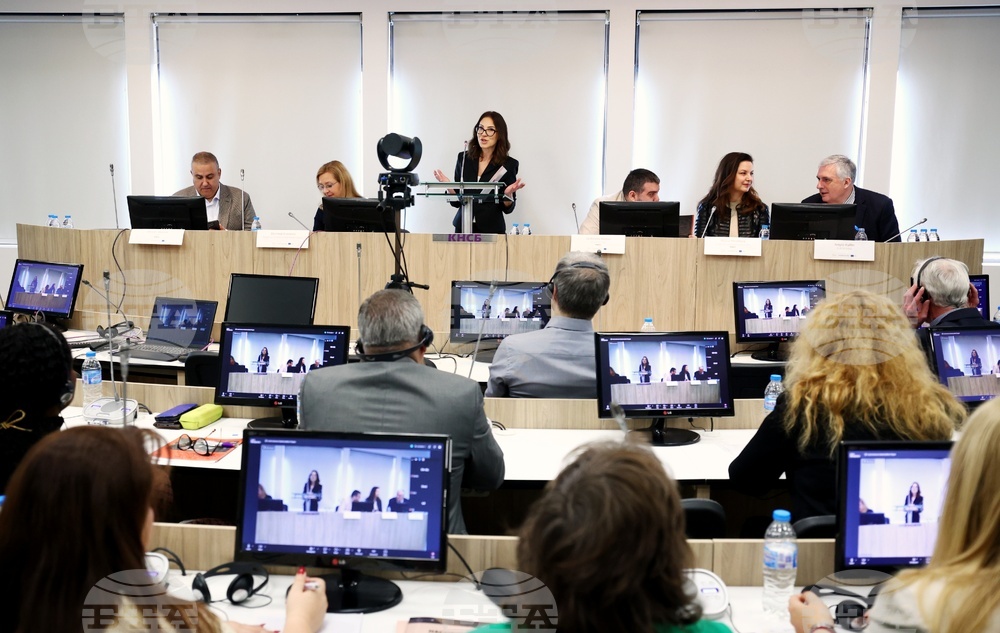
Experts discussed on Friday the preparation of Bulgaria’s workforce for the introduction and use of artificial intelligence (AI) at the conference "From Social Dialogue to Action: The Path of a Just Digital Transition". The main focus was how employees can adapt to rapid changes and avoid fears of losing their jobs. Participants agreed that social dialogue is an important part of adapting to labour market changes.
The event was organized by the Confederation of Independent Trade Unions in Bulgaria (CITUB) and took place at the organization’s headquarters.
Studies show that more than 50% of Bulgarian workers fear losing their jobs due to robotization and AI, CITUB President Plamen Dimitrov said in a video address to the conference participants. According to him, the challenges are related to job losses and the disappearance of entire professions due to the advancement of AI. Dimitrov said that Bulgaria has already taken important steps toward more humane and responsible regulation of AI in the workplace. He noted that the country is set to gradually implement the European AI Act. Dimitrov also pointed to a legislative change from 2024 that introduced the right to disconnect from the digital work environment. According to him, this also ensures “protection against dehumanization” in the workplace.
CITUB chief economist Lyuboslav Kostov said AI is changing the rules of the game and society must decide how it will position itself. Trade unions are calling for training and retraining of workers and want AI to develop in a way that keeps people at the beginning and at the end of the process, he added. Kostov noted that developments should not be viewed only negatively, but pointed out that the world is moving at different speeds, including in terms of digital skills.
There is no evidence that digitalization leads to job losses, said Ivailo Kalfin, Executive Director of the European Foundation for the Improvement of Living and Working Conditions (Eurofound). He pointed out that over the past 25 years, around 30 million jobs have been created across Europe, highlighting an overall upward trend in employment. At the same time, he stressed that changes are happening rapidly, requiring workers to adapt as job roles and tasks evolve. Jobs are not disappearing, he argued, the key challenge is adapting to new conditions. Kalfin also said that the financial sector is among the leaders in adopting AI technologies. While medium-sized and large companies are generally managing this transition successfully, smaller businesses continue to face significant challenges.
Economic and Social Council (ESC) head Zornitsa Roussinova said it is not possible to address the new challenges on the labour market without the participation of social partners and civil society organizations. Roussinova noted that around 30-35% of workers in Bulgaria have digital skills, which is below the European Union average. She pointed out that another challenge is the differences between generations in the workplace, as they have varying levels of digital competence.
The AI-driven change is an inevitable part of modern life, but regardless of the tools used to manage processes, people must remain at the beginning and at the end, said Maria Mincheva, Deputy Chair of the Bulgarian Chamber of Commerce and Industry.
Bulgaria faces a rapidly changing digital landscape and must seek faster, more adaptive solutions, said Stoyan Stavrev of the Confederation of Employers and Industrialists in Bulgaria. Stavrev highlighted Bulgaria’s IT sector as thriving, with around 60,000 people employed in the industry. He also stressed that social dialogue plays a key role in fostering job growth and ensuring success for workers.
Representatives of foreign trade union organizations also took part in the conference, presenting the experience of their countries in the process of workplace digitalization.
/NF/
Additional





news.modal.image.header
news.modal.image.text
news.modal.download.header
news.modal.download.text
news.modal.header
news.modal.text