site.btaExtension Budget Will Not Hinder Eurozone Entry
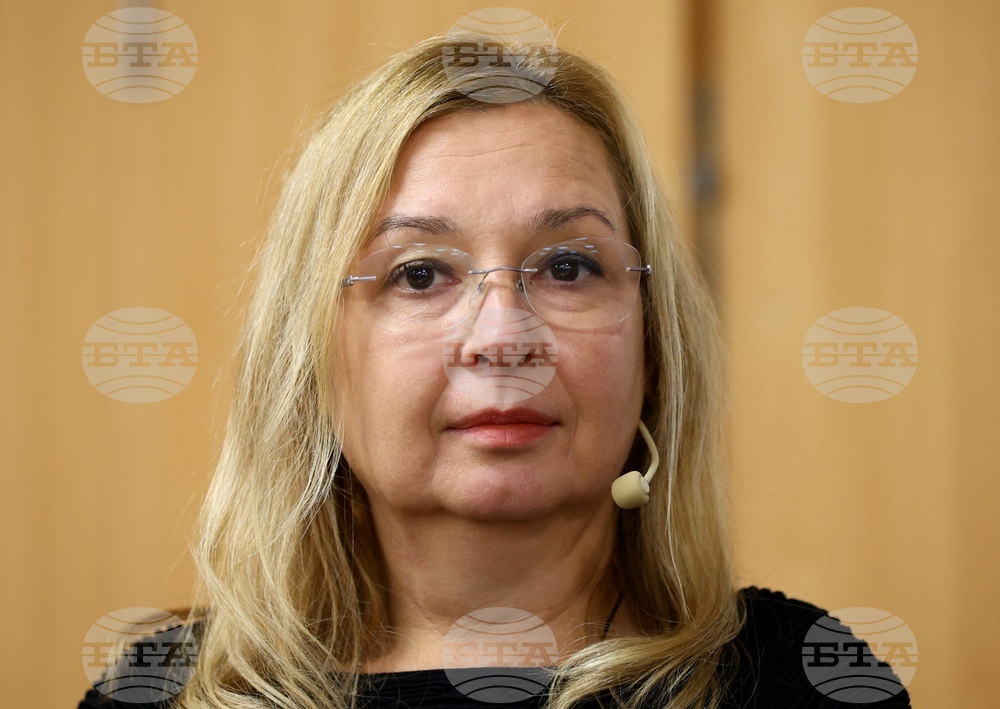
“The extension budget will not hinder Bulgaria’s smooth entry into the eurozone,” said Zornitsa Russinova, Chair of the Economic and Social Council on Bulgarian National Television.
“We have already worked with an extended budget during other political crises and early parliamentary elections,” Russinova added. According to her, from this point onward, the timing of early elections and the formation of a regular government will determine when Bulgaria has a regular budget. She added that this is directly related to the benefits Bulgaria can gain from being a member of the eurozone, particularly in terms of the various economic policies that a regular government can implement in the coming years, as well as income policies. “These are important topics for a large portion of Bulgarians,” she said.
Joining the eurozone does not require renegotiation of any agreements - whether for labor contracts, civil contracts, or with banks and loans, Russinova recalled. She said that bank accounts are already denominated in euros.
Russinova noted that there are sufficient control mechanisms in place, and there is no need to fear that political instability will affect Bulgaria’s financial stability within the eurozone. “The eurozone is a symbol of trust and financial stability, and this cannot be changed by individual politicians,” Russinova stated.
“There are enough control mechanisms introduced through the euro law, as well as an additional coordination mechanism, entirely at a lower expert level between the different institutions, set up by the government. This is a good sign that we will have stability,” she added. She encouraged citizens to report any irregularities so that the established control mechanisms can work effectively.
Bulgaria officially introduced the euro on January 1, becoming the 21st member of the eurozone. This occurred exactly 19 years after the country joined the European Union.
Until the end of January, the lev remains a legal tender in Bulgaria, and from February 1, the euro will be the sole currency, according to the Law on the Introduction of the Euro in the Republic of Bulgaria. However, until August 8, 2026, prices will continue to be displayed in both euros and leva, following legal requirements for the same font, size, and color.
Throughout January, citizens will be able to pay in cash in commercial establishments using either leva or euros, while traders will be obliged to return change entirely in only one of the two currencies - euros, or, if there is a temporary shortage, in leva.
/PP/
news.modal.header
news.modal.text