site.btaCabinet Submits Fourth Payment Request under Recovery and Resilience Plan, Warns Part of Funds at Risk
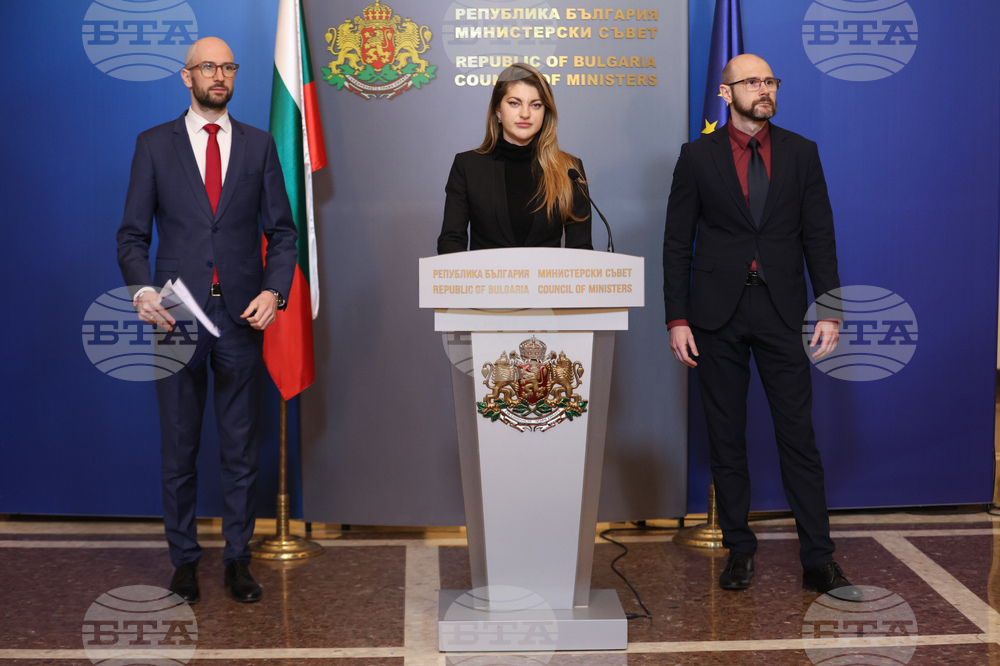
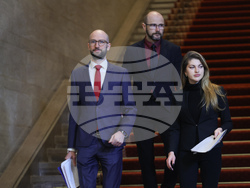
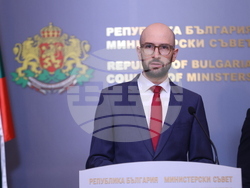
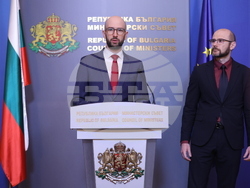
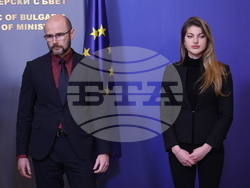
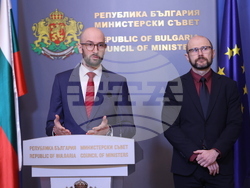
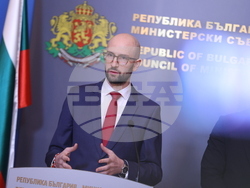
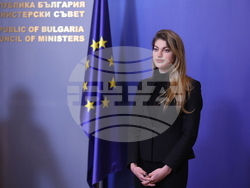
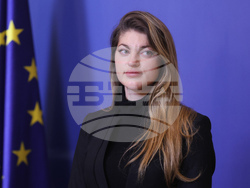
The caretaker government has submitted to the European Commission the fourth payment request under the National Recovery and Resilience Plan (NRRP), amounting to EUR 900 million, caretaker Deputy Prime Minister for European Funding Maria Nedina told a briefing here on Friday. Caretaker Finance Minister Georgi Klisurski warned that the aim is for the funds to be received before the end of June, but due to reforms required under the tranche that have not been adopted by the National Assembly, part of the funds are at risk.
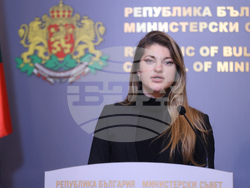
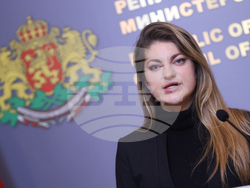
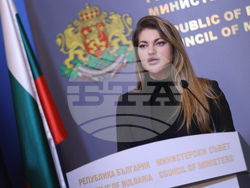
Deputy Prime Minister Nedina specified that the fourth payment request includes over 2,500 investments in key economic sectors such as healthcare, social services, education, and energy. She noted that two of the planned measures will not be able to be implemented. These are the Water Supply and Sewerage Act, on which no consensus has been reached in the National Assembly, as well as an interim stage of the reform of the Bulgarian Energy Holding. According to her, Bulgaria could lose up to EUR 437 million due to the Water Supply and Sewerage Act. Nedina also drew attention to the delayed reforms related to the second and third payments under the NRRP - regarding the Anti-Corruption Commission and the Prosecutor General. She noted that May 4 marks the deadline by which the National Assembly must adopt the reform regarding the Anti-Corruption Commission. “After this deadline, these funds will not only be withheld but will be lost irrevocably,” Nedina stated. According to her, this involves EUR 214 million from the second payment, which have already been withheld, and after May 4, the total amount of potentially lost funds could reach EUR 357 million. She warned that under certain circumstances, Bulgaria may be forced to return funds already spent from previous payments.
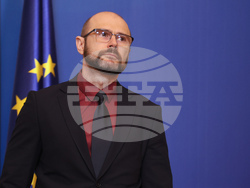
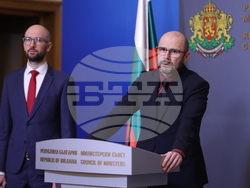
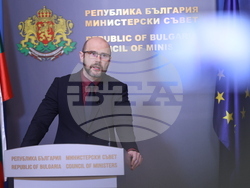
Caretaker Finance Minister Klisurski assured that the Cabinet will make every effort for Bulgaria to receive the maximum possible amount of the funds. "This is important because by the end of August we must complete payments for all investments mentioned by Maria Nedina. From the beginning of 2026 until the end of August, the Bulgarian State must disburse around EUR 4 billion for all investments," Klisurski said.
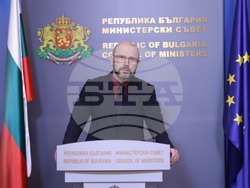
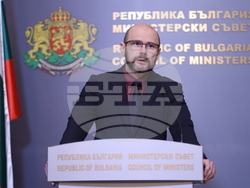
Caretaker Justice Minister Andrey Yankulov told the briefing that two key bills were recently proposed by the Justice Ministry for public consultation - one aimed at restoring the dissolved Anti-Corruption Commission, and another focused on improving the mechanism for the independent investigation of the Prosecutor General. The Minister added that the proposed legislation seeks to guarantee the Commission’s political independence through the way its members are appointed - by ensuring that political bodies entitled to nominate members remain in the minority. As to the mechanism for investigating the Prosecutor General, the proposed improvements include strengthening oversight in criminal proceedings by introducing a figure that supervises the ad hoc prosecutor. A key element of the changes is also the creation of a mechanism for automatic judicial review of major prosecutorial decisions, such as terminating or suspending corruption-related criminal proceedings.
The caretaker minister commented on information the Justice Ministry received from the Interior Ministry regarding the head of the Sofia City Prosecution Office, Emilia Rusinova. He said that the documents showed that Rusinova had repeatedly left the country, travelling with Petyo Petrov and another individual allegedly linked to the criminal network known as The Eight Dwarfs, which had already been exposed at the time. "These are officially established circumstances, and the appropriate actions must be taken, because, in my view, this clearly does not meet the ethical standard expected of a magistrate," Yankulov said.
Petrov, a former investigator known by the nickname "the Euro," is currently being tried in absentia on charges of large-scale document fraud. The Eight Dwarfs case took its name from a restaurant in Sofia which had doubled as an office for Petrov.
/DS/
Additional

news.modal.image.header
news.modal.image.text
news.modal.download.header
news.modal.download.text
news.modal.header
news.modal.text