site.btaCITUB Present Results of Climate Transition, Labour Adaptability Survey
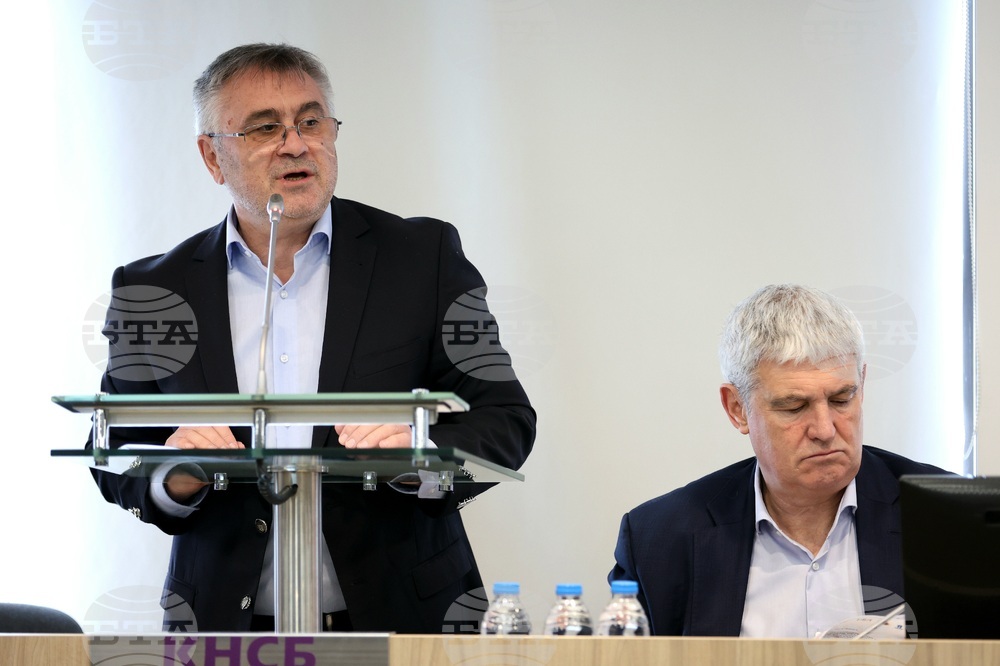
An aging workforce and limited adaptability in the labour market are the findings of a survey conducted by the Confederation of Independent Trade Unions of Bulgaria (CITUB) among those directly and indirectly affected by the climate transition in Pernik, Kyustendil and Stara Zagora. The results of the survey were presented on Tuesday at the headquarters of the trade union organization in the presence of caretaker Energy Minister Traicho Traikov.
CITUB Vice President Ognyan Atanasov said that in 2025, the organization had mapped the 12,000 people that are directly employed in coal mining and coal-fired electricity production. He added that it was imperative to also map those indirectly employed, whose businesses depend directly on coal mines and coal mines. Atanasov for every person directly employed in coal mining and coal-fired electricity production who loses their job, at least three others will suffer.
Atanasov pointed out that within the framework of the current project "Mapping the skills of indirectly affected individuals in the areas most affected by the climate transition", 8,911 people are covered, of which 6,073 work in enterprises in contractual relations with the coal mines and mines, 1,529 are indirectly affected by working in small businesses in the region such as hairdressing salons and restaurants, and 1,309 people are from families of those directly employed in the coal mining and energy sector. The results of the survey also show an extremely high level of perceived risk (80%) of job loss in households related to the energy sector.
According to the survey data among those directly and indirectly affected, the workforce in the three areas is aging with 49% of the workforce in these regions being 50 years old, which limits people's adaptability in the labour market. About 8% are people under 29 years old. The study also shows that 58% of those surveyed have over 11 years left until retirement and more than half of them need adequate labour market policies that would lead to retraining.
When surveyed, 33% of respondents say they have additional skills with a certificate, the remaining 66.8% do not have a certificate or professional qualification, which limits labour mobility outside the sector. There is a significant reserve of "hidden" practical, technical, service and digital skills that are not supported by a document and need validation and recognition, the survey data shows. Nearly 80% have skills in working with tools, machines, and for repair and maintenance.
More than half say they would stay with the same company if they changed their workplace, if it was within 50 kilometers. Nearly 60% are not willing to change their region of residence.
Nearly two-thirds of respondents are willing to participate in training, provided they have a guaranteed job and stay in the same company. Training is perceived as a means of maintaining employment, not a radical professional change, the study shows.
Those directly or indirectly affected by the carbon transition in Kyustendil expect assistance for training and information about new jobs, which indicates active labour adaptation, in Stara Zagora there is a stronger interest in subsidized employment, which reflects an expectation for employment mechanisms during economic restructuring. In Pernik, a high degree of uncertainty and greater concerns about the transition are reported.
Atanasov commented that people expect a minimum of EUR 1,500 in net remuneration, as these are the current real salaries in these regions.
/YV/MR/
news.modal.header
news.modal.text