site.btaBulgaria Remains Challenging Environment for Independent Journalism, Trust in Media Low, International Report Finds
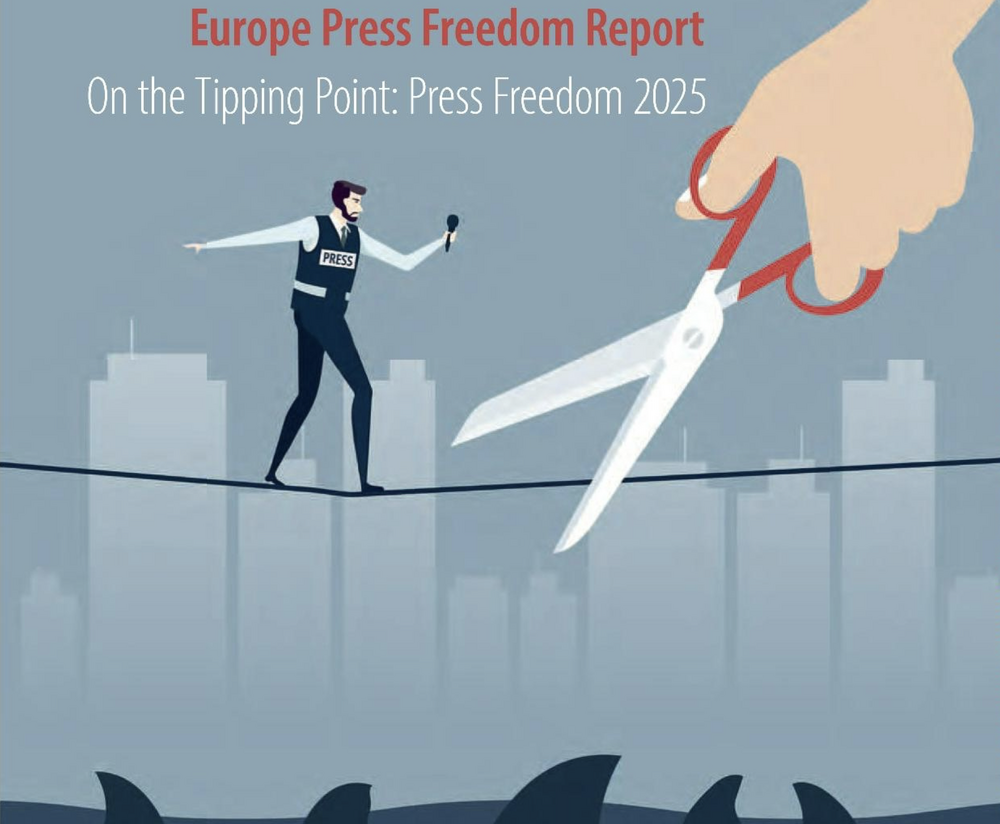
Bulgaria continues to be a difficult environment for independent journalism, according to the annual Europe Press Freedom report, prepared with the support of the Council of Europe and presented here on Tuesday.
The section of the report dedicated to Bulgaria notes “modest improvements” in recent years but highlights deep political polarization, political and economic influence over editorial work, and legal and governance shortcomings. Journalist safety has improved moderately compared to previous years, the assessment notes. Physical attacks are relatively rare, but hostility from politicians, online harassment, and threats contribute to a sense of insecurity.
Trust in law enforcement remains low, with slow and ineffective investigations and no national system for tracking attacks against journalists and media outlets. While no confirmed cases of spyware targeting journalists have been recorded, Bulgaria has become a hub for surveillance technology companies, and there are reports that tools such as Pegasus have been used by authorities in the past.
Legal threats against journalists remain a serious problem, with lawsuits — often filed by major businesses, politicians, or judges — targeting investigative reporting. The October 2025 attempt to amend the Penal Code, which would have introduced fines and prison sentences of up to six years for publishing personal information without consent, regardless of public interest, posed a serious threat to press freedom, the report notes.
The report also highlights that Bulgarian media are affected by political influence, opaque ownership structures, and the economic challenges of a small advertising market. State advertising lacks transparency and is susceptible to politicization, particularly at regional and local levels. The influence of sanctioned oligarch Delyan Peevski continues to raise concerns about indirect political control over parts of the media ecosystem. Market concentration remains high, with two major groups — PPF Group and United Group — dominating key shares of radio, television, and telecommunications.
While a number of independent and investigative outlets provide high-quality work, their numbers remain low, and there are no domestic funding schemes supporting investigative journalism. Bulgarian National Television (BNT) has been in a prolonged leadership deadlock due to the inability of the Council for Electronic Media (CEM) to secure a majority vote to elect a Director General. The report notes that this analysis does not account for the subsequent election of Milena Milotinova.
During a visit to Bulgaria last autumn, the report authors spoke with stakeholders who highlighted that politicization and insufficient resources remain persistent problems for both BNT and CEM. The independence of BNT and Bulgarian National Radio is hampered by limited funding, political pressure, and unresolved regulatory reforms, the report adds.
Access to information is further weakened by institutional opacity and obstacles to filing freedom-of-information requests. Low pay, precarious working conditions, limited self-regulation, and the proliferation of low-quality online outlets undermine the status of journalism as a profession and contribute to low public trust in the media, which in Bulgaria is among the lowest in the European Union, the authors conclude.
/MY/
news.modal.header
news.modal.text