site.btaEU Enlargement Isn’t Currently Top Priority - MEP Kristian Vigenin
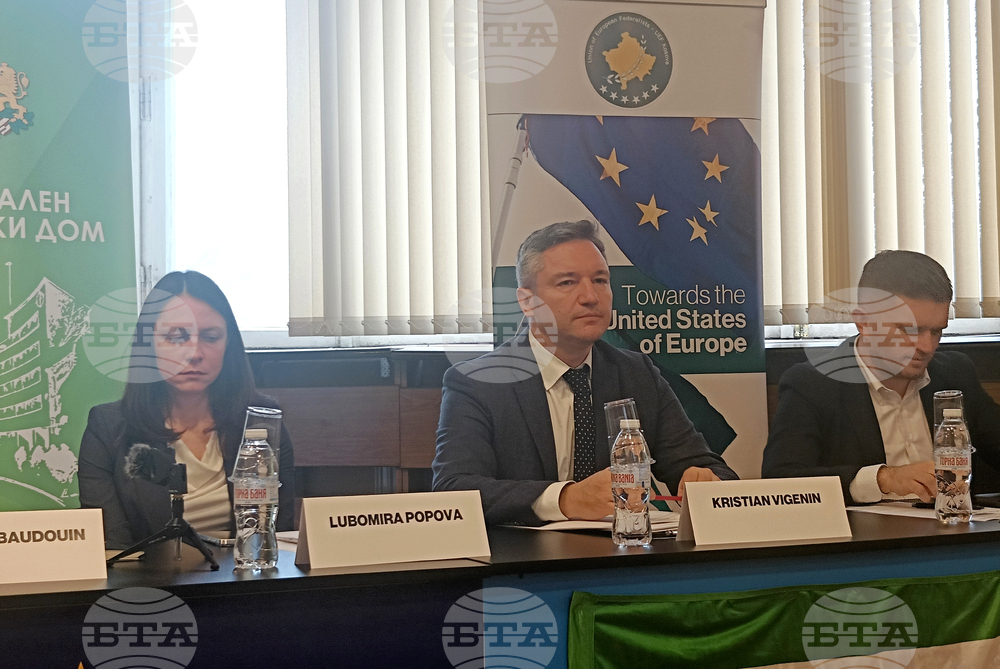
At present, the issue of European Union enlargement is not among the top priorities, although efforts are being made. The EU currently has to deal with a number of internal as well as external challenges, said MEP Kristian Vigenin from the Progressive Alliance of Socialists and Democrats/Bulgarian Socialist Party at a conference on the future of the EU, enlargement, security, and delivering on promises.
According to him, experience has shown that the EU becomes stronger after enlargement, with more opportunities for citizens and businesses. Vigenin noted that there are currently candidate countries for membership, but it is difficult to predict which of them will be ready to join. He highlighted that countries like Montenegro and Albania are the most advanced in this process.
“Work with them is progressing, and they are increasingly aligning with common standards and policies,” he said, adding that it remains to be seen whether the EU itself will be ready, as there are two major questions to address.
Vigenin explained that two major questions for EU enlargement are finances and the institutional framework.
Kristian Vigenin clarified that the two key issues are related to the EU’s finances and its institutional framework. Regarding the first, he said: “In the draft for the next EU budget, starting in 2028, future enlargements are not expected within the 2028–2035 framework. There is a clause allowing the budget to be revised in case of new enlargements, but nevertheless, this priority is not visible in the next budget.”
Concerning the second issue, the MEP said that even with the current 27 member states, it is difficult to make effective decisions and reach consensus on major issues.
“We have 27 commissioners. If another five or six countries join, the question arises how will such a body function?” he said.
Vigenin added that the European Parliament has stated that for future enlargements, the rule should be applied that not every member state would necessarily have a commissioner. He explained that it is important to assess how future enlargement will affect the EU budget and policies, as some countries are relatively small and would not pose a major challenge to the Union, like Montenegro and Albania.
“For a country like Ukraine, however, things would look different,” Vigenin said. He also mentioned the Common Agricultural Policy, considering the size of Ukraine.
“It is necessary to see what happens with the cohesion policy as well. It reduces disparities both within regions of member states and between member states,” he added.
Vigenin warned that delaying the accession of some countries could risk alienating their citizens, making them feel unwanted in the EU. He noted that currently, there is strong support for EU membership in each of these countries.
The discussion with the MEP took place at the National Student House in Sofia. The event was opened by Velko Ivanov, Secretary General of the Union of European Federalists (UEF). The conference was organized in cooperation with UEF Bulgaria, UEF Kosovo, UEF Romania, and UEF Europe.
/PP/
news.modal.header
news.modal.text