site.bta2026 State Budget Bill Passes Committee Stage at First Reading
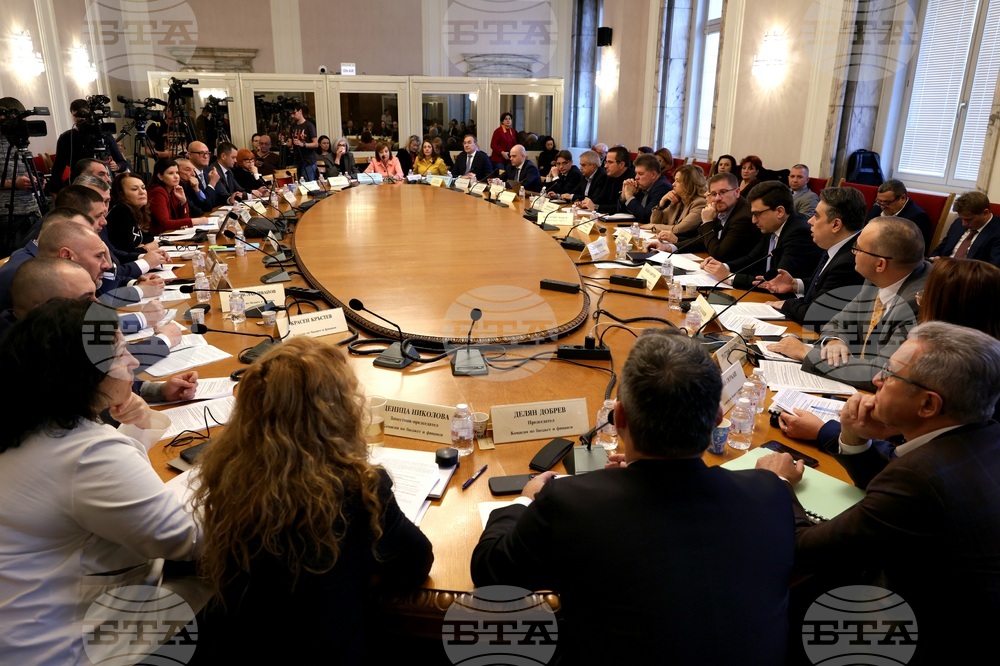
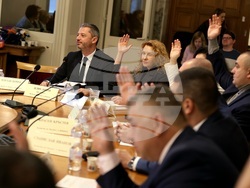
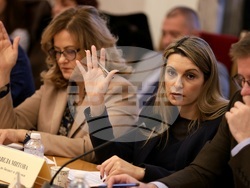
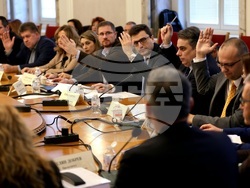
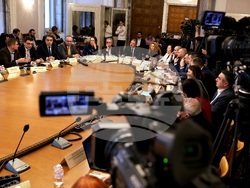
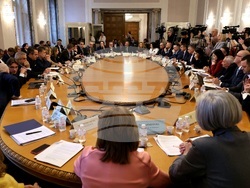
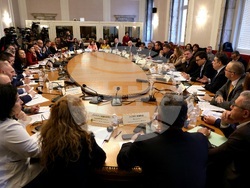
The parliamentary Budget and Finance Committee on Tuesday voted, 12-8 with no abstentions, to approve Bulgaria's 2026 State Budget Bill on first reading.
This is a second version of the country's annual financial plan, after the first one was withdrawn by the Council of Ministers on December 2.
Budget Proposal: Main Points
Next year, the Bulgarian economy is to grow by 2.7%, the average annual inflation is expected at 3.5%, and the budget deficit will stand at 3% of GDP. Up to EUR 10 billion in new public debt may be incurred in 2026, including a maximum of EUR 3.2 billion for strengthening the European defence industry under the SAFE instrument. The fiscal reserve is set at a minimum of EUR 2.4 billion by December 31, 2026. The monthly contributory income next year will range from EUR 620.20 to EUR 2,300.
Under the consolidated fiscal programme, the revenues, grants and donations for 2026 will add up to EUR 50.402 billion. The expenditures will total EUR 54.051 billion (40.1% of GDP), but if the increased defence spending derogation clause is activated, this proportion will fall below 40%. The budget deficit will reach EUR 37.6 billion (31.3% of GDP).
The variable part of the licensing fee for organizing games of chance will be increased from 20 to 22%, effective January 1, 2026. Also from that date, the minimum monthly wage will be set at EUR 620.20, up from EUR 550.67 now. Work-contingent pensions granted by December 31, 2025 will be increased by 7 to 8% as from July 1, 2026.
The monthly child support benefit until the child's second birthday will be increased from EUR 398.81 now to EUR 460.17. The same margin applies to the monthly child support benefit until the child's eighth birthday, to which a biological or adoptive father is entitled.
The benefit for cutting short a pregnancy and child-birth leave and a child-care leave until the child's second birthday or an adoptive child-care leave until the child's fifth birthday will be upped from 50% to 70% of the standard benefit.
The salaries of all public-financed sector employees will be increased by 10%, and those of them who so far benefited from automatic raises linked to the average wage will no longer do so.
The capital expenditures allocation for 2026 amount to EUR 7.020 billion, of which EUR 3.165 billion in national financing and EUR 3.855 billion in European financing (including under the National Resilience and Recovery Plan (NRRP)).
A support programme for medical specialty trainees will be launched on EUR 30 million allocated for 2026.
Next year, EUR 5.077 billion will be transferred from the State budget to municipalities, which is 11.3% more than the EUR 4.563 billion for 2025. At least 5,500 full-time posts in the municipal administrations which have remained unfilled for more than six months will be eliminated over the 2026-2028 period.
The Debate
Finance Minister Temenuzhka Petkova: The Government relies on a further improvement of revenue compliance. These measures have resulted in a EUR 8.6 billion growth of budget revenues by end-October 2025. If the operation of Lukoil Bulgaria is normalized next year, the National Customs Agency will recover its VAT revenues. An option is being explored to secure EUR 100 million from Operational Programme Human Resource Development for a pay rise in primary medical care, including nurses' salaries. A large part of the capital expenditures under the NRRP have been brought forward to 2025 and 2026 because no progress at all was made on these projects in previous years. Bulgaria has to implement the NRRP projects if it is to receive the requisite payments. That is why the 40.1% of GDP level of planned budget expenditures excludes the EU funds.
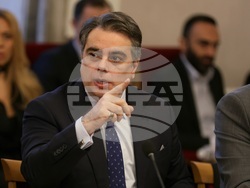
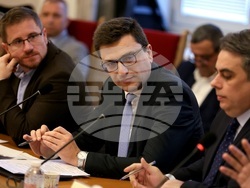
Assen Vassilev MP of Continue the Change - Democratic Bulgaria: The projected EUR 3.3 billion increase in VAT revenues will not come true, and if the planned compliance fails, the deficit will exceed 3% of GDP. The revenue side of the budget is overestimated in a predictably wrong way. EUR 1.5 billion in VAT will not be collected. The Government has not given up the idea to raise taxes and social insurance contributions but has merely deferred its intention by a year. The incumbents are cutting costs on science, education and culture and are freezing the allocations for healthcare despite their plans to increase taxes and social insurance contributions.
Martin Dimitrov MP of Continue the Change - Democratic Bulgaria: Industry and exports record a steep decline, moreover in the year in which Bulgaria has joined land-border Schengen, which is a cause for serious worry. The reason for this are the Government's measures against business and individuals. In 2026 the budget deficit may well top 5% of GDP. The Fiscal Council assesses the planned budget revenues for 2026 as overstated.
Tsoncho Ganev MP of Vazrazhdane: Bulgaria's accession to the eurozone is directly linked to the powerholders' intentions to raise taxes and social security contributions.
Krasimir Manov MP of MECh: Why have the powerholders drooped the funds allocated for a possible acquisition of Lukoil Bulgaria from the draft budget? This was the only sensible measure in the withdrawn budget. If Lukoil is nationalized, budget revenues will rise.
Maria Ilieva MP of Velichie: The draft budget is overoptimistic about its projects on revenues, mainly from indirect taxes.
Mehmed Salim MP of Alliance for Rights and Freedoms (ARF): The ARF will not support this budget because the second version of the draft was hastily prepared without taking account of all viewpoints.
Bulgarian Industrial Capital Association President and Association of Bulgarian Employers Organizations rotating President Rumen Radev: Within the framework of talks held between employers, trade unions and government, the doubling of the dividend tax rate, the 2 percentage points' increase of retirement insurance contributions and the requirement to install a retail sales management software mandatorily approved by the National Revenue Agency have been dropped from the budget. The elimination of 5,500 unfilled public administration posts over three years is a good idea.
Confederation of Independent Trade Unions in Bulgaria (CITUB) President Plamen Dimitrov: In 2026 CITUB will raise the issue about Bulgaria's tax and social-security system. The budget's revenue side is strained and its implementation is at a risk. The budget does not finance wages and pensions by the deficit because the deficit amount is bound to capital expenditures.
National Association of Municipalities Executive Director Silvia Georgieva: The provisions envisaging the elimination of unfilled public administration posts pose a problem. Municipalities may not be denied the discretion to set the size of their staff which they finance by own revenues. Municipalities' posts approximate 28,000, and there are usually several thousand that remain unfilled because personnel with the required high qualifications is not readily available. The pay freeze at the 2025 level may be a problem for lieutenant mayors, who draw the minimum wage which will be raised in 2025.
Bulgarian Industrial Association President Dobri Mitrev: This draft budget is not the best one but is better than the withdraw version because it does not add to the tax and social-security burden. A debate on necessary reform should start even at the beginning of 2026, so that Bulgarian taxpayers would be forewarned of the hard times awaiting them.
Confederation of Employers and Industrialists in Bulgaria Deputy Executive Director Boyan Nikolaev: The organization backs the budget because the sooner Bulgaria enters the eruozone with an unchanged tax system, the sooner domestic inflation will be put under control.
Sofia City Municipal Councillor Boris Bonev: The EUR 8 million increase of the subsidy for Sofia's urban transport will be insufficient. It must be increased by EUR 22 million to EUR 83 million.
/NZ/
Additional


news.modal.image.header
news.modal.image.text
news.modal.download.header
news.modal.download.text
news.modal.header
news.modal.text