site.btaHow Balkan Capitals Handle Parking and What It Costs
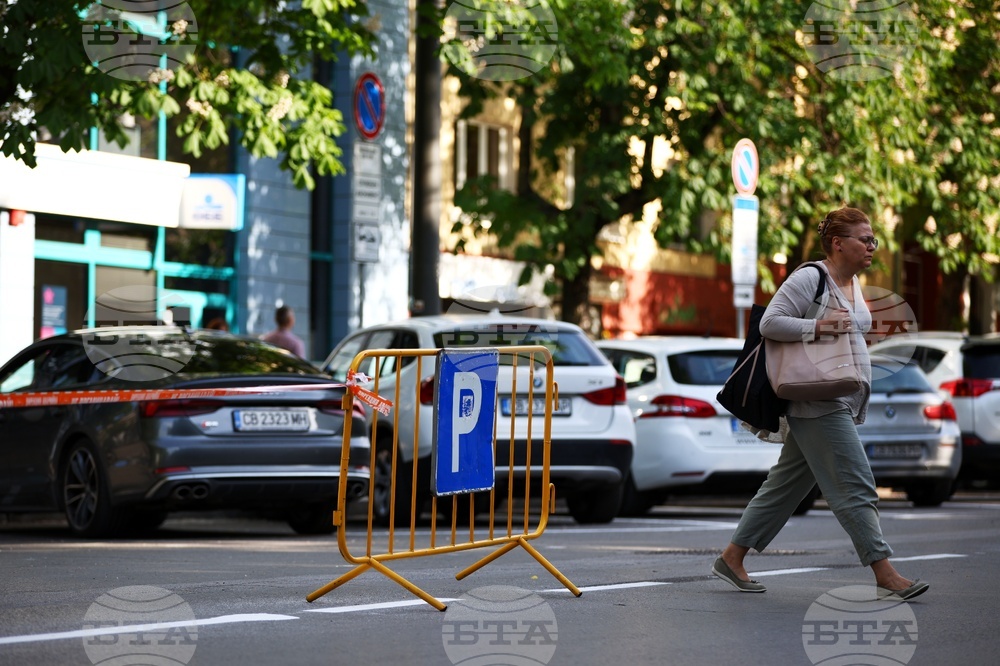
More cars, fewer parking spaces, and the endless search for a place to park — a scene all too familiar not just in Sofia, but in the capitals around us as well. BTA correspondents in five Balkan cities and Istanbul looked into how parking is managed there and what fees the local authorities set.
In Sofia, where the shortage of parking spaces is severe, street parking is regulated by a zoned system. The central area falls under a Blue Zone, while areas further out are in the Green Zone, leaving only the periphery of the city unzoned. A regulation update due to take effect from the beginning of 2026, expands the boundaries of both zones, extend their working hours, and replace paper tickets with digital payment options. It will cost EUR 2 per hour to mark in the Blue Zone and EUR 1 per hour in the Green Zone. Residents can also purchase annual parking permits: EUR 150 for a first car in the Blue Zone and EUR 100 for a first car in the Green Zone, but the number of resident parking permits outnumbers by far the number of available parking spots. These plans are not exactly popular, are being contested in court by political parties and the Ombudsman, among others, and are very much likely to be delayed.
In Athens, the controlled parking system PARKinATHENS, introduced in 2006 and continuously upgraded, helps residents and visitors find parking in busy central areas. The system includes 5,177 spaces for residents, 3,463 for visitors, 1,604 for motorcycles and scooters, and 1,000 designated spaces for people with disabilities. Controlled parking for visitors applies from 09:00 to 21:00 on weekdays and until 16:00 on Saturdays, while resident and disability parking apply around the clock. Payment is made via the myathenspass app, POS terminals in authorized kiosks and shops, or scratch cards. Visitors may park for up to three hours, with fees starting at EUR 0.50 for 30 minutes and increasing by EUR 0.50 every half hour, reaching EUR 2 for two hours, EUR 4 for two and a half hours, and EUR 6 for three hours. Vehicles with disability permits park for free in visitor spaces at all times. Residents can obtain a municipal sticker allowing free parking only within their designated zone. Athens also has two municipal parking garages and numerous private parking lots in the center, where the usual rate is EUR 1 per hour and some charge an initial fee of EUR 12. Due to the high number of vehicles, motorcycles and scooters are often parked on sidewalks, potentially resulting in fines if pedestrian traffic is obstructed.
Ankara, with about 5.8 million residents and 2.8 million vehicles, operates seven large municipal parking facilities with a total capacity of 1,204 cars, divided into roadside parking, rest-area parking, open lots, and closed lots. The latest price changes took effect on January 15, 2025. Roadside parking is free for up to 15 minutes, after which the fee is TRY 60 (EUR 1.20) for 15 minutes to one hour, TRY 70 (EUR 1.70) for one to two hours, TRY 90 (EUR 1.90) for two to six hours, TRY 100 (EUR 2) for six to nine hours, and TRY 115 (EUR 2.30) for nine to twenty-four hours. Open and closed lots offer no free time: both charge TRY 70 (EUR 1.40) for up to one hour and TRY 85 9EUR 1.70) for one to four hours. Open lots charge TRY 100 (EUR 2) for four to eight hours and TRY 115 (EURO 2.30) for eight to twelve hours, while closed lots charge TRY 100 (EUR 2) for four to nine hours, TRY 150 (EUR 3) for nine to twelve hours, and TRY 200 (EUR 4) for twelve to twenty-four hours. Rest-area parking costs TRY 50 (EUR 1) per day. The city does not use blue or green zones and has no SMS parking system.
Istanbul, with nearly 20 million residents and 5.4 million registered vehicles, faces severe parking shortages, exacerbated by past failures to enforce a 2021 requirement that residential buildings include underground garages. The city has 7,195 parking facilities with a total capacity of 1,143,907 spaces — still insufficient. The municipal operator İSPARK runs numerous open and closed lots across both sides of the city, with uniform prices: up to one hour costs TRY 100 (EUR 2) and a full day up to TRY 400 (some EUR 8) . Barrier-controlled open lots are popular for short stays, while multi-storey garages offer greater security and no time limits. Experts say İSPARK reduces the area occupied by parked cars by up to 40%. The shortage of municipal parking has expanded opportunities for private operators, and fees in some central zones reportedly reach TRY 1,500 (over EUR 30) per day. Streets congested with parked cars are common, hindering pedestrians, and no long-term solution has yet been found.
Belgrade introduced new parking fees on February 1, 2025. On weekdays from 07:00 to 21:00, one hour of parking costs RSD 80 (EUR 0.68) in the red zone, RSD 65 (EUR 0.55) in the yellow zone, RSD 55 (EUR 0.46) in the green zone, and RSD 45 (EUR 0.38) in the blue zone. In the purple zone, 30 minutes costs RSD 120 (about EUR 1). An electronic day ticket costs RSD 3,000 (some EUR 25.50) in the red, yellow, green, and purple zones, and RSD 2,000 (EUR 17) in the blue zone. Buying 20 daily tickets provides a 50% discount, reducing the price to RSD 1,500 in the red, yellow, green, and purple zones, and RSD 1,000 in the blue zone. Since July 14, parking in the Stari Grad central area is limited to 30 minutes with no extension possible. Fees apply from 07:00 to 21:00 on weekdays and also on weekends: 07:00–22:00 on Saturdays and 07:00–14:00 on Sundays. Zone boundaries were changed: the former yellow zone became red with a 60-minute limit and a possible 30-minute extension, and a new white zone was introduced with a 120-minute limit and a possible 60-minute extension. Visitors are encouraged to use public transport, which has been free citywide since January 1, 2025, or to rely on public parking lots if they choose to drive into the center.
In Bucharest, there are no blue or green zones. Central parking costs RON 5 (EUR 1) per hour from Monday to Friday between 08:00 and 20:00. A daily pass costs RON 30 (EUR 6) and a monthly subscription RON 500 (EUR 100). Payment can be made via parking machines, SMS to number 7576 (not available for foreign numbers), or mobile apps such as Parking Bucuresti or AmParcat.ro. The maximum stay depends on the zone. Enforcement is strict: failing to pay within 15 minutes results in a RON 200 (EUR 40) fine and a wheel clamp. Using a reserved space without authorization may result in a RON 500–1,000 (EUR 100-200) fine and towing. Monitoring is automated through video surveillance and license plate recognition, and violations accumulate. Fines can be paid online via Ghișeul.ro, in banks, or by bank transfer. Residents may obtain a home-area parking permit, depending on availability, granting free parking in designated resident-only spaces.
In Skopje, central parking is managed either by the public company City Parking or by the Municipality of Centar, as indicated by signage. City Parking operates several multi-storey garages charging RSD 30 (EUR 0.50) per hour. Street parking is zoned by distance from the center, with hourly rates of MKD 75 (EUR 1.20) in zone A0, MKD 40 (EUR 0.64) in zone A, MKD 30 (EUR 0.48) in zone B, and MKD 25 (EUR 0.40) in zones C and D. Monthly and annual subscriptions vary between MKD 4,000 (EUR 65) and MKD 1,000 (EUR 16) depending on the zone. In central Skopje, street parking is also zoned: zone Zero costs MKD 100 (EUR 1.60) per hour, zone One MKD 70 (EUR 1.10), and zone Two MKD 60 (EUR 1). Payment is made via SMS, with rates posted on signs. In other municipalities, parking is less congested and prices are set by local authorities.
/NF/
news.modal.header
news.modal.text