site.btaSofia’s Low-Emission Zone Should Operate Year-Round, Expert Says
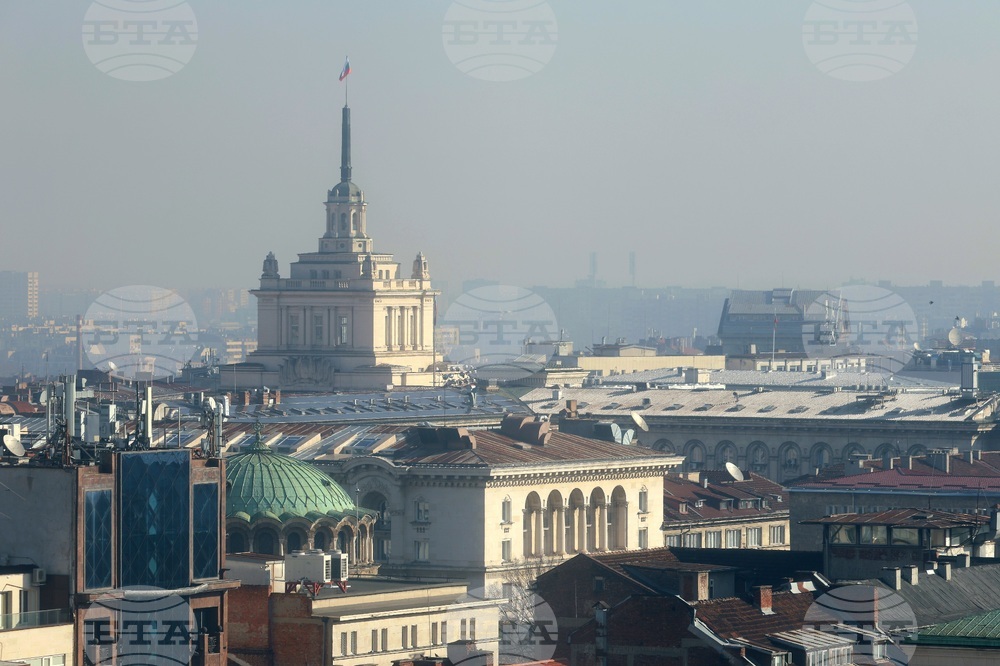
Nitrogen dioxide pollution occurs throughout the year and exceeds permissible levels, especially along Sofia’s major thoroughfares. The city’s low-emission zone for vehicles, which currently operates for three months, should be made a year-round measure, Ivaylo Hlebarov, a consultant to the Sofia Municipality on air quality, told journalists.
Hlebarov took part this week in a forum for journalists in London organized by the global Breathe Cities network, in which Sofia is a key partner alongside cities such as London, Paris, Milan, and Warsaw.
Since the introduction of Sofia’s low-emission zone. from December to February, there has been an approximately 10% reduction in nitrogen dioxide pollution, which is a positive start. However, much more and faster action is needed, the expert stressed.
He emphasized that the issue is primarily a public health concern, rather than a technical one. "Everyone needs clean air, and given that the air in Sofia is not sufficiently clean, action is needed," Hlebarov said.
According to him, the main priority should be the development of public transport as the backbone of Sofia’s transportation system. The connections between different modes of transport and their schedules must be improved to make them much more convenient, and new routes should be introduced wherever necessary, the expert said. He believes that restrictions and limitations are also needed to reduce the use of private cars for at least some journeys within the city.
Hlebarov cited London as a good example because of the genuine political commitment to achieving cleaner air at both the highest levels of government and in local authorities.
He described Sofia’s air pollution monitoring system as generally good, with some exceptions—specifically the monitoring stations in the Pavlovo and Mladost districts, which do not meet the legal requirements for traffic monitoring stations. This issue has also been acknowledged by the Ministry of Environment and Water.
He also believes that a better response system is needed in emergency situations. "When an emergency occurs, we cannot rely on standards that apply to an entire year. An emergency happens within hours or over a day or two and then ends. If we wait to see the average annual values, we have already missed the opportunity to respond. That is why we need mechanisms for action during extraordinary situations, such as the fire [in a waste treatment plant] in Sofia several weeks ago," Hlebarov said.
According to him, the Ministry of Environment and Water and the Regional Inspectorate of Environment and Water did not respond adequately to the fire at the Ecobulpack waste facility at the beginning of the month. Their main message was that there was no air quality problem and that everything was under control.
"There is no way everything can be fine when tonnes of plastic are burning for dozens of hours and thousands of different substances are released into the air, of which only a few are measured and even fewer are monitored," the expert said.
He added that the incident also demonstrated the lack of adequate response mechanisms and emergency protocols. "Only the Sofia Municipality, although with some delay, managed to respond effectively and provide guidance to citizens on what they should and should not do during the day when the pollution was already noticeable," Ivaylo Hlebarov said.
Sofia is the first city in Southeastern Europe to introduce low-emission zones for both transport and heating, said Sofia Mayor Vasil Terziev, who took part in the opening of the Clean Air Hub forum in June as part of London Climate Action Week.
Data from the latest heating season show that the Sofia Municipality’s comprehensive approach is working, Terziev said at the forum. Sofia recorded a 22% decrease in the average concentration of fine particulate matter (PM10), 52% fewer days with air quality limit exceedances compared with the previous winter, and a 42% reduction in violations within the so-called small ring of the vehicle low-emission zone. According to him, this proves that the most polluting vehicles are staying outside the city centre.
The restriction on entering the city centre, introduced to improve air quality, applies during the winter months from December 1 to February 28.
/PP/
news.modal.header
news.modal.text