site.btaBlack Sea Economic Forum in Trabzon Highlights Ecosystem Protection, Connectivity and Energy Infrastructure
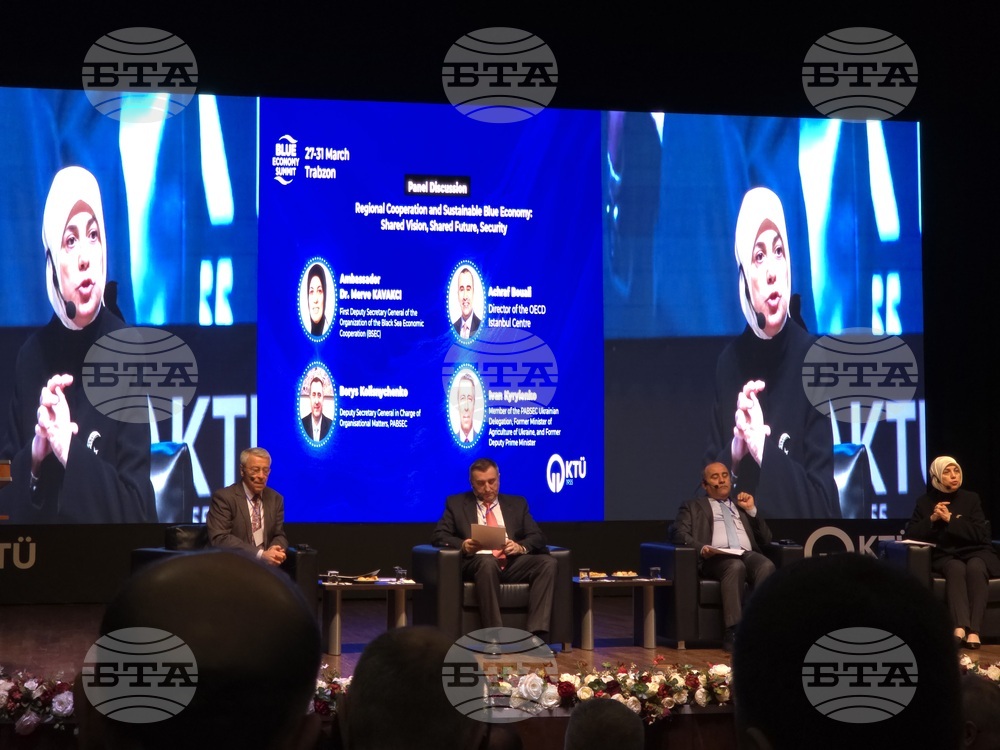
The Black Sea Blue Economy Summit opened in Trabzon with a discussion on the future of the region through the lens of environmental protection and connectivity, to which the Black Sea contributes. Shipping that does not pollute the water or harm its inhabitants, access to clean food, as well as the Black Sea’s critical role in energy connectivity and infrastructure, were the first highlights of the meeting. These topics were also discussed in the context of the war between Russia and Ukraine.
The port of Trabzon, a Turkish city located on the Black Sea coast, 190 km from the border with Georgia, is one of the strategic ports in the region. Its characteristics, such as depth and intermodal transport connections, make it attractive for cargo ships, while the length of the terminal suits passenger vessels. When combined with projects developed by the Black Sea Technical University in the city and the maritime professionals it trains, Trabzon becomes a key hub in shaping the so-called “blue economy.”
“The forum in Trabzon reflects our desire to discuss strategies for the future of the Black Sea. The world is changing at high speed - trade routes and energy connections are being reestablished, and a new world order is emerging. In this process, the Black Sea comes to the forefront as a strategic hub. The ‘blue economy’ is no longer a choice but a necessity, yet this rise is not possible without security, stability, and cooperation. We may come from different countries and have different perspectives, but the sea is ours collectively. Our future is shared, and everything that is shared requires that we protect and develop it together,” said Recep Ilhan Yildiz, Secretary-General of the forum’s organizing committee.
Representatives of international organizations such as the Organization of the Black Sea Economic Cooperation (BSEC), the Organisation for Economic Co-operation and Development (OECD), and the Parliamentary Assembly of the Black Sea Economic Cooperation (PABSEC) took part in the first discussion, dedicated to a shared vision, the future, and security.
Achraf Bouali, head of the OECD Istanbul Centre, emphasized that access to the sea makes a significant contribution to the development of the global economy.
“We view the blue economy as part of the global economy. Historically, the Black Sea has been a very important point connecting the region to global trade. Currently, there are many challenges and conflicts, yet the Black Sea continues to play an extremely important role for many countries. I believe that the organization I represent, the Organisation for Economic Co-operation and Development, can contribute to this with its data, research, and analysis,” said the head of the OECD Istanbul office.
The agenda also addressed the impact of the war between Russia and Ukraine. Former Prime Minister and Minister of Agriculture of Ukraine, Ivan Kyrylenko, commented on the consequences of the destruction of energy infrastructure and the Nova Kakhovka dam, describing the situation as an environmental catastrophe.
“Unfortunately, at this high-level meeting, I will not be able to speak about Ukraine’s successes. Due to Russia’s aggressive actions, 14 million Ukrainians found themselves in the midst of war. Millions of people were displaced, cities were destroyed, and part of our energy infrastructure was completely demolished. When we look at the environmental state of the country, it can be described as tragedy and chaos. Millions around the world witnessed the destruction of the Nova Kakhovka dam and how millions of tons of water swept away everything in their path. Animals and fertilizers were washed into the Black Sea, which will have long-term consequences. Our port infrastructure is subjected to daily attacks, polluting the sea with oil, striking our hydroelectric plants, and mixing petroleum products with rivers,” said Kyrylenko, adding that regional efforts must focus on bringing the war to an end.
The meeting continues with a panel on cruise tourism, which will include Bulgarian participation. Bulgaria is represented at the forum by Maria Belkoleva, Chair of the Board of the Burgas Port Authority and former Deputy Minister of Tourism.
/TM/
news.modal.header
news.modal.text