site.btaDeputy Ministers Emphasize Importance of National Building Renovation Plan for Tackling Energy Poverty, Emissions
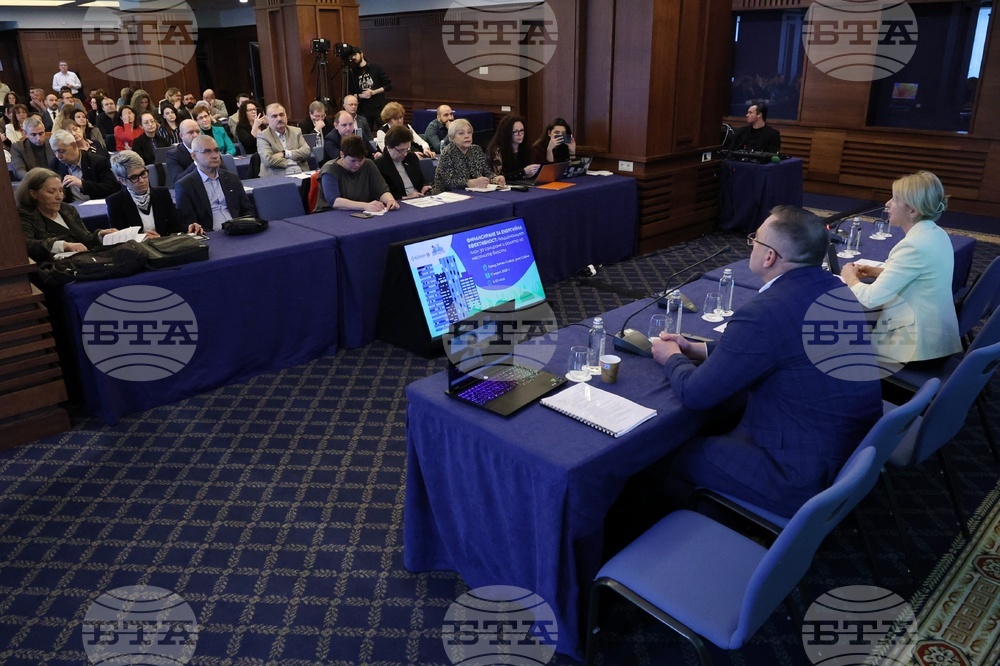
Bulgaria’s National Building Renovation Plan, submitted to the European Commission at the end of 2025, sets out a long-term strategy to modernize the country’s building stock by 2050, combining energy efficiency, social support, and climate goals through coordinated action across institutions and sectors, Deputy Regional Development and Public Works Minister Dora Yankova and Deputy Environment and Water Minister Malina Krumova said during a national conference on financing for energy efficiency here on Tuesday.
Yankova described the National Building Renovation Plan as an ambitious programme and recalled that it is primarily consistent with the framework and requirements set by the EU's Energy Performance of Buildings Directive. She emphasised that the plan is key for Bulgaria, guaranteeing a building renovation policy by 2050.
"It is important for us to hold public consultations on the plan this year. We are starting public consultations primarily on the implementation of the structuring of the plan. We will consult with all sectors that are concerned with securing the plan, including financial institutions, the Fund of Funds, the FLAG Fund, banks, which is needed in order to see the mix of financial instruments outside the public resource currently provided until 2029," Yankova stated.
She indicated that the preparation of the rules for determining energy-poor households is in the final stages. "The National Plan contains mechanisms to ensure that these groups will receive support, and this includes simplified application procedures, coordination with social policies, so that the renovation of buildings reduces energy poverty", she said, pointing out that support for vulnerable households is key for the plan to be socially sustainable.
Deputy Environment and Water Minister Malina Krumova stressed that building renovation is a complex topic that is neither solely green policy, nor solely innovation or industrial, nor solely social, but a complex of policies. "This complexity of the task we have with building renovation makes it difficult and requires inter-institutional coordination", she emphasized, noting that the renovation of buildings leads to people living more comfortably and fulfilling the goals of reducing emissions, as well as reducing the effect of buildings on the climate.
Krumova noted that the National Building Renovation Plan is a long-term policy, which is possible with systematic consistent actions from today for the next 25 years and which also requires actions in terms of innovation. "The plan includes elements and tasks that fall under the responsibility of the ministries of the environment, regional development, innovation and industry, as well as municipalities," she pointed out, adding that international coordination becomes most sustainably at the local level.
The event was organized by the EcoEnergy Municipal Energy Efficiency Network and the EnEffect Energy Efficiency Centre.
/DS/
news.modal.header
news.modal.text