site.btaBulgaria Has Interest in European Emissions Trading System, Caretaker Environment Minister Julian Popov Says
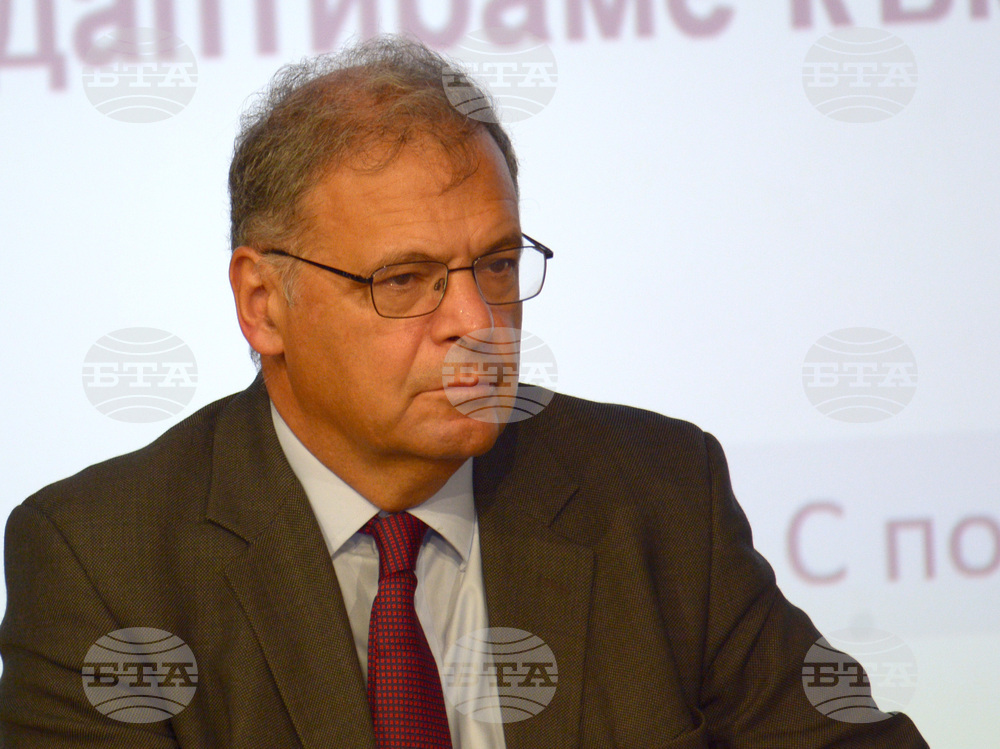
The European Emissions Trading System (ETS) is a key tool for modernizing industry, reducing carbon emissions, and providing financial resources for investments in the green transition, caretaker Minister of Environment and Water Julian Popov said during the forum Regional Energy Summit: Infrastructure, Innovation, Integration, in Sofia, his ministry said in a press release on Tuesday.
According to Popov, Bulgaria has a strong interest in participating in ETS. The system encourages emission reductions and provides significant revenue for member states to modernize the industry and invest in clean technologies, he said.
The Minister added that Bulgaria could secure substantial financial resources through ETS-2 and related European mechanisms, including the Social Climate Fund. “If we try to block or weaken ETS-2, we risk losing around EUR 3.5 billion that could be used for modernization and social support. For a country like Bulgaria, this is a significant resource,” Popov highlighted.
According to Popov, the electrification of final energy consumption, the gradual replacement of fossil fuels in transport, heating, and industry with electricity, is a key indicator of economic modernization and the reduction of greenhouse gas emissions. The share of electrification of final consumption in the European Union is some 21-22%, while in China it reaches 32-33%. Bulgaria performs relatively well with about 27%, which creates favourable conditions for industrial development, he explained.
The Minister said that since 2012, investment proposals for around 17-18 gigawatts of wind power capacity have been submitted, adding that even the implementation of part of them would make a significant contribution to the country’s energy system. “Wind energy is a long-term stabilizing factor in the energy system. Investors are available and ready to invest without relying on public subsidies,” Popov said. In his view, it is extremely important for Bulgaria to develop this sector if the country wants to maintain low electricity prices and preserve its energy autonomy and independence.
Popov also said that the coal industry is gradually disappearing, describing this as an economic reality rather than a political decision. In his opinion, coal-fired facilities should remain as a strategic reserve, maintained and compensated for their readiness, because the world faces wars and other extreme situations.
/RY, KK/
news.modal.header
news.modal.text