site.btaOutgoing Foreign Minister Georgiev Leaves Board of Peace Ratification to Next National Assembly
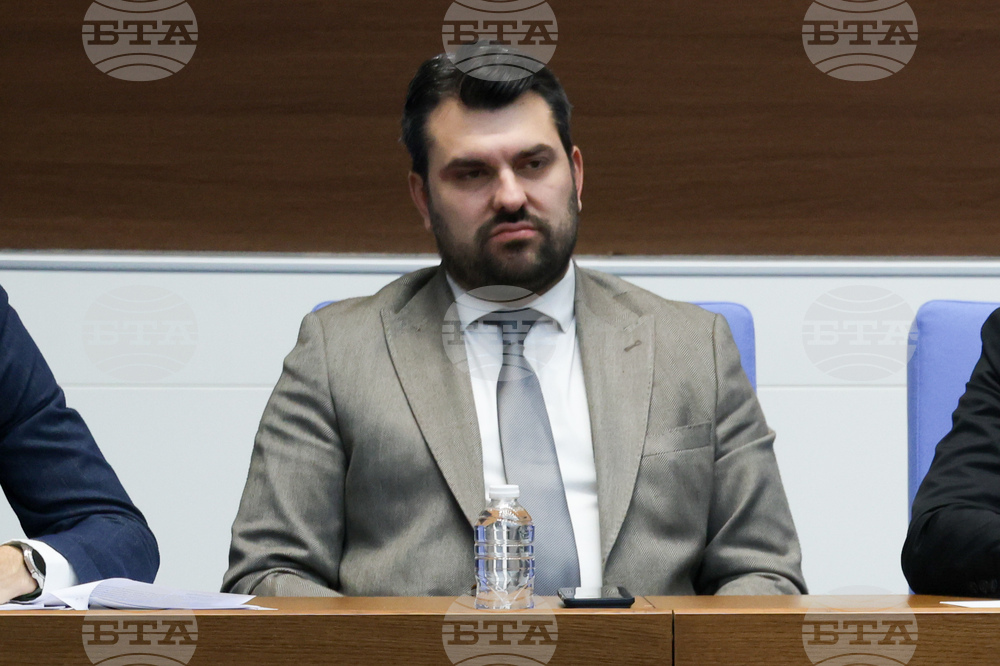
Outgoing Minister of Foreign Affairs Georg Georgiev said the government would leave the ratification of Bulgaria’s membership of the Board of Peace chaired by US President Donald Trump to the next National Assembly in a television interview on Sunday.
His comments followed remarks by Outgoing Prime Minister Rosen Zhelyazkov on January 22 that a draft ratification bill would be submitted to the National Assembly as early as the following week.
Georgiev said he believed the next National Assembly, with a new majority and renewed legitimacy and possibly a newly elected regular cabinet, would be able to decide whether to take up the option. Asked whether the government would leave the ratification to the next National Assembly and a regular administration, he replied that, in his view, “that is the logic”.
Georgiev said the procedure under which Bulgaria takes such decisions “had not been breached in any way”. With a mandate from the Council of Ministers, the prime minister had been tasked with signing the act, he added. Asked whether the Council of Ministers had backed the position unanimously, he said “each colleague can be asked” how they voted and what they thought.
Georgiev said Bulgaria had “no obligation” to make a financial commitment to the Board of Peace.
He said membership was limited to three years, unless countries paid USD 1 billion to fund its activities and received permanent membership. In his view, “the requirement to provide funds may no longer apply after the third year”.
The Board of Peace is chaired for life by Trump and is due to begin work by focusing on the conflict in Gaza, before expanding to deal with other conflicts as well.
Georgiev said Bulgaria was now taking a seat “on one of the highest international platforms” and argued there was nothing wrong with the government expressing an intention that any future regular government and any future majority in the National Assembly could then decide how to proceed with.
Georgiev said Bulgaria backed European unity over Greenland. He added that the people of Greenland should be the ones to decide their future and where they belong.
Asked about his working relations with former president Rumen Radev, he said that at certain moments the President’s administration “was tempted to use its powers to introduce a process of turbulence into some decisions concerning our foreign policy”.
“If the situation escalated, we will use all the tools of diplomacy and talks with our colleagues to ease conditions as much as possible for crossing the western borders,” Georgiev said, referring to plans by hauliers from Serbia, Montenegro and Bosnia and Herzegovina to blockade border crossings in protest.
Freight transport associations in Serbia, Montenegro, and Bosnia and Herzegovina say they will protest on January 26 at border crossings with neighbouring Schengen countries against the strict enforcement of the EU’s Entry/Exit System (EES) and the 90/180-day rule, which they argue will sharply limit the time professional lorry drivers can spend in Schengen states. They say drivers are being treated like ordinary travellers despite mandatory rest periods and long border delays, and warn that unless an exemption or a tailored regime for professional drivers is introduced, the measures will disrupt supply chains and push up transport costs.
/КТ/
news.modal.header
news.modal.text