site.btaEkspertika Laboratory Maps Value of Bulgaria’s Cultural Heritage in New ULSIT Projects
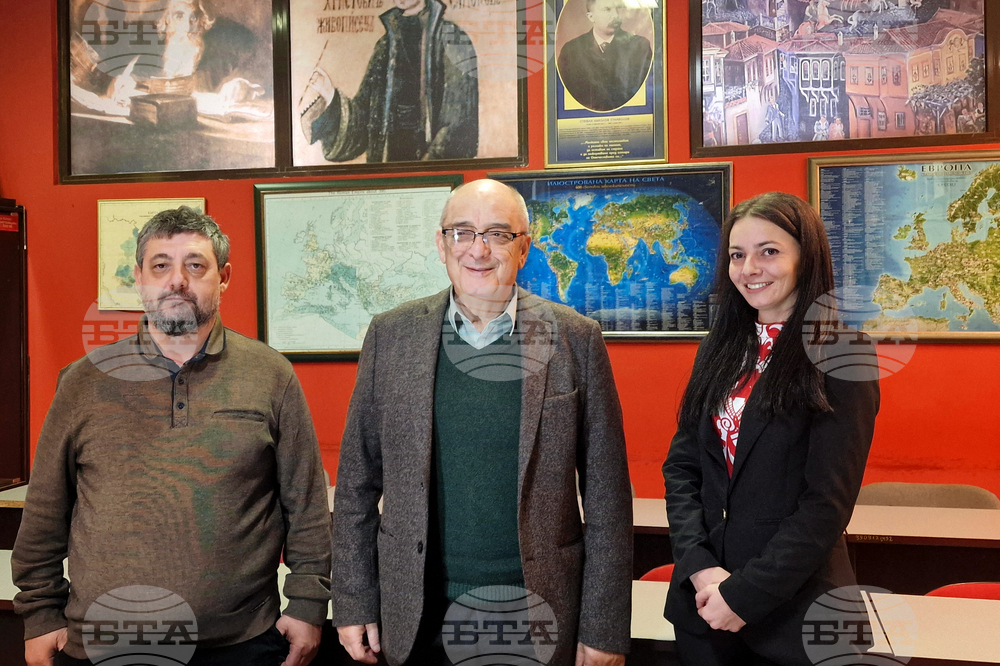
Ekspertika Laboratory at the University of Library Studies and Information Technologies (ULSIT) aims to deliver a full inventory and proof of the scientific, artistic and financial value of Bulgaria’s cultural heritage, ULSIT's Professor Dimitar Ivanov said on Sunday.
He told BTA the laboratory’s work uses a comprehensive expert approach that ends with a financial valuation.
Although the laboratory is less than a year old, it already implements expert projects, delivers educational programmes, and produces specialist publications in the field of cultural and historical heritage. Ivanov noted that the laboratory’s name is a neologism: “a newly coined term that we’ve started to circulate.”
PREPARATION
Ivanov noted that the laboratory was established in response to the need to translate students’ knowledge into practice. “We adhere to the principle of learning by doing, meaning you cannot teach students what cannot be applied in real-world practice,” he said. He added that in the field of movable and immovable, tangible and intangible cultural heritage, there is “a need for specialized expertise and for the stronger practical application of expert knowledge.”
The team delivers the master’s programme in Cultural Property Expertise at ULSIT and runs the postgraduate qualification programme Management, Valuation, and Insurance of Cultural and Heritage Assets at the University of National and World Economy (UNWE).
STRUCTURE AND WORK
Over ten months, the laboratory completed more than five projects commissioned by external institutions. The team’s strategy includes cultural heritage protection work for municipalities, concepts for digital or physical museums, management plans for cultural sites, education-focused concepts, expertise on movable and immovable cultural property, and consultancy in the cultural and historical heritage field, Ivanov said.
Chief Assistant Professor Stefan Bakardzhiev, a ULSIT lecturer and Director of the Regional History Museum in Yambol, said the laboratory’s activities are structured into three primary areas: applied practice, education, and methodology. On the practical side, the team produced documentary expert assessments and delivered projects supporting municipalities. “We supported several Bulgarian municipalities in establishing a Municipal Culture Fund, developing mechanisms for selecting cultural operators, and preparing two concept proposals for digital museums: the Bell-Making Museum in Gotse Delchev and Simitli – The Ancient Land of the Kukeri in Simitli,” Bakardzhiev said.
He added that the laboratory is also developing a conceptual model for comprehensive expertise on movable cultural property. “One of the main things Ekspertika did was publish specialist literature that was completely missing in Bulgaria,” he said.
UNESCO LIST SITES
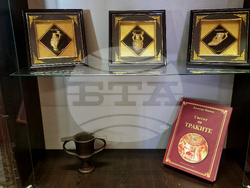
“We have published several textbooks, and I would like to highlight in particular the two on the theory and methodology of expert assessment,” Ivanov said. The publications also include the almanac Cultural Property – National Pride: Bulgarian Cultural Heritage Sites on the UNESCO List, which examines 32 Bulgarian sites. “This is the book we presented to BTA, and it received a very strong response,” he added.
“The UNESCO list includes Bulgaria’s most representative cultural and natural heritage sites, tangible and intangible,” said Assistant Professor Gergana Kyurkchieva, a research expert. She added that the publication aims “to provide a conceptual framework for protecting these sites, ensuring public access to them, and promoting them.”
“The main objective was to present all the sites included on the UNESCO list, as this is being done in Bulgaria for the first time,” Kyurkchieva said. She added that the book consolidates the information in one place and provides expert guidance when needed.
She said the laboratory currently collaborates with three institutes of the Bulgarian Academy of Sciences (BAS). “With the Institute of Physical Chemistry Rostislaw Kaischew (BAS) we study metals, glass and ceramics; with the Institute of Organic Chemistry with Centre of Phytochemistry (BAS), paper and textiles; and with the Stephan Angeloff Institute of Microbiology (BAS), pests and mould,” Kyurkchieva explained. She thanked BAS for the joint work with Associate Professor Georgi Avdeev and Dr Vesselina Chakarova from the Institute of Physical Chemistry Rostislaw Kaischew (BAS), Professor Denitsa Pantaleeva from the Institute of Organic Chemistry with Centre of Phytochemistry (BAS), and Professor Svetla Danova from the Stephan Angeloff Institute of Microbiology (BAS). Some of them also teach in the expertise programme, Kyurkchieva added.
“So far, I have worked with the Rostislaw Kaischew Institute of Physical Chemistry (BAS), as my master’s thesis in the Expertise Programme focused on bell manufacturing and bell casting. There, I studied bells and other bell instruments. I am currently also a PhD student, continuing this research on the instruments, and we are once again conducting tests on these items,” she explained.
Kyurkchieva said the comprehensive nature of the expertise is key to protecting cultural heritage. “All objects must be examined by experts, and each person must give an opinion within their own competence,” she said.
CHALLENGES
Ivanov said today’s challenges for expert work relate to the professional level at which expertise is carried out.
“There is a need for expert assessment of all cultural property entering the collections of history museums, ethnographic museums, private collections, and other major holdings,” he said. To standardize expert work, the team, after establishing the laboratory, submitted a proposal to the Council of Ministers and, through the Ministry of Labour and Social Policy, succeeded in adding a new occupation to the National Classification of Occupations and Jobs (NCOJ-2011): cultural property and works-of-art expert.
Ivanov said this will allow heads of cultural institutions in Bulgaria, such as museums, galleries, municipalities, regional administrations, and the Ministry of Culture itself, to hire such specialists as staff. “Until now, everyone has been called an expert. The museum curator is an expert, the director is an expert, the archaeologist is an expert, and the conservator-restorer is an expert. In fact, we are defining the profession of expert as a role for someone with broad, comprehensive training and a wide scope of responsibilities,” he said.
The team plans to publish five more books covering both the UNESCO World List sites and intangible cultural heritage, as well as immovable and movable cultural property. Ivanov also spoke of the support of the ULSIT leadership, headed by Rector Irena Peteva and Board of Trustees Chair Stoyan Denchev.
Prof. Dimitar Ivanov, working through the Ekspertika Laboratory at the University of Library Studies and Information Technologies (ULSIT), co-authored the monograph Cultural Values – National Pride with Gergana Kyurkchieva and presented it at BTA's National Press Club in Sofia on December 16, 2025. The publication proposes a unified framework for protecting and managing Bulgaria’s cultural and natural heritage and surveys 32 sites, grouped into four thematic parts covering tangible heritage, intangible heritage, natural heritage and intermediate forms of recognition. At the presentation, Ivanov outlined the link between academic training and applied practice, noting ULSIT’s master’s programme in expert assessment of cultural heritage assets and works of art and UNWE’s postgraduate training in valuation and insurance of cultural heritage assets; the book was published in Bulgarian and English, was to be distributed free of charge, and uses photographs provided by BTA.
/КТ/
Additional



news.modal.image.header
news.modal.image.text
news.modal.download.header
news.modal.download.text
news.modal.header
news.modal.text