site.btaUPDATED Euro Coordination Centre Head Says All Conditions for Exchange of Leva into Euro Have Been Ensured
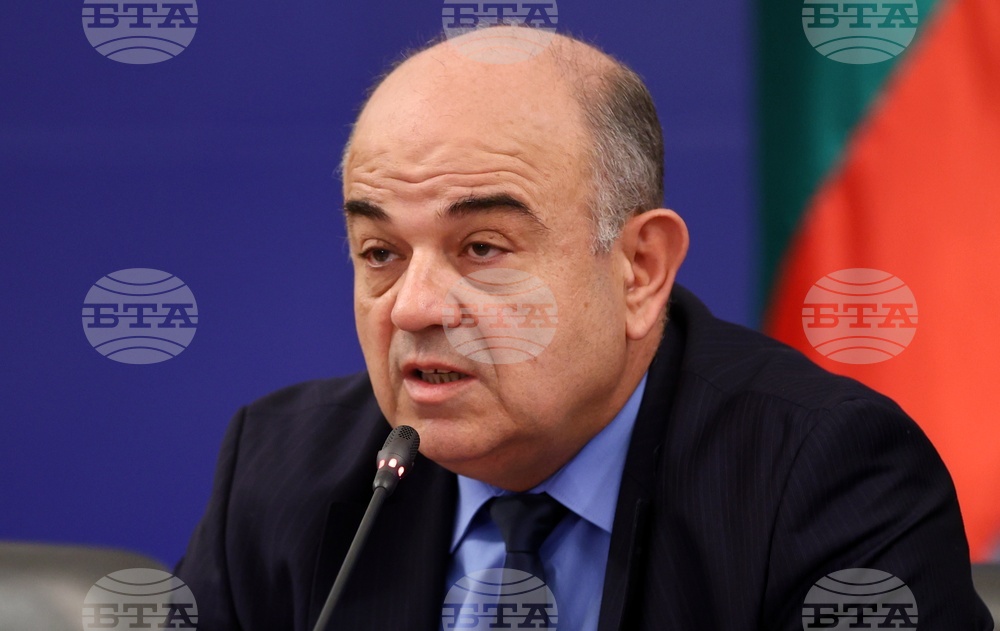
The head of the Euro Coordination Centre in Bulgaria and Commodity Exchange State Commission Chair, Vladimir Ivanov, urged citizens and traders to obtain the necessary quantities of euro banknotes and euro coins without waiting until the last moment, as all conditions for the exchange of leva into euros have been ensured. At a Tuesday briefing at the Council of Ministry, he said that all opportunities have been provided for citizens and traders to acquire euro.
He recalled that on January 31 the period of dual circulation of the lev and the euro ends, and that from the beginning of February the euro will be the sole legal tender.
Ivanov pointed out that 48.3% of the cash mass in leva has already been collected by the Bulgarian National Bank, and that after January 20 the euro is expected to be well stocked in the country’s monetary circulation.
“The process is progressing better than expected,” he said.
Ivanov also pointed out that as of January 13, regional centres have been operating in the country at the level of municipalities or mayoral offices, where citizens can submit reports, including in cases involving issues outside the scope of the Euro Introduction in Bulgaria Act.
According to him, during the period January 5–9 this year, 22,000 currency exchange operations were carried out at branches of Bulgarian Posts.
Ivanov presented data on inspections carried out across the country by the various institutions.
In the period January 5–9, the Consumer Protection Commission (CPC) carried out 136 inspections under the Euro Adoption Act, as a result of which 17 administrative penalty proceedings were initiated, 12 penalty rulings were issued, and 35 settlement agreements were concluded.
In connection with received reports of price increases in school canteens, the CPC has launched inspections across the entire country, including in kindergartens, and regional centres have also been informed for this purpose.
It was established that as of 2026, there has been a price increase in school canteens in the city of Sofia. Five schools were inspected, and one justified price increase was identified. As a result of the actions taken by the CPC, traders and suppliers have returned prices to their pre-New Year levels.
In the period after January 5, 80 inspections of car parks were carried out to check compliance with the requirements of the Euro Adoption Act. Price increases were identified among some traders, which is why inspections are continuing, as there is a statutory period during which traders may provide explanations for the increase in prices.
As of January 5, inspections were also launched of courier service companies and laboratories performing medical tests. Price increases were identified at four of them. Procedural actions are ongoing, but according to Ivanov, in the case of three of the laboratories, a trend is emerging towards the initiation of administrative penalty proceedings.
The National Revenue Agency (NRA) carried out a total of 1,401 inspections in the period January 5–11 under the Euro Adoption Act, Ivanov said. Inspections covered 247 grocery shops, 531 hairdressing and beauty salons, three hotels, 141 car parks, 201 fitness centres, 94 educational service centres, as well as other attractions and catering establishments.
A total of 116 violations of the Euro Adoption Act were identified, with 28 administrative penalty proceedings initiated, 12 penalty rulings issued, and procedural actions pending in the remaining cases.
The Bulgarian Food Safety Agency carried out 158 inspections under the Food Act, resulting in 15 prescriptions and six administrative penalty proceedings.
With regard to public order in the regions of Kyustendil, Montana, Razgrad, Shumen and Stara Zagora, isolated cases of counterfeit euro banknotes were identified, and the Interior Ministry has taken the necessary measures in the form of initiated criminal proceedings.
The Commission for Protection of Competition, for its part, is examining traditional trade and small shops, to which questionnaires have been sent, with the aim of analysing supply chains and determining whether there have been unjustified price increases.
As Commodity Exchange State Commission Chair Ivanov also provided information on wholesale price movements of staple foods since the beginning of the year. According to him, no movement has been observed in international market prices for wheat and maize. Refined sugar shows a downward trend, while unrefined sunflower oil has seen a price increase to USD 1,400 per tonne, which has led to an increase of around BGN 0.30 in retail cooking oil prices in Bulgaria.
Ivanov added that nothing different is happening on the Bulgarian market compared to what is observed in Europe — stable supply and slight fluctuations.
“If we look from the beginning of the year, from January 1, we effectively have a consumer basket of around EUR 51–52 — absolutely stable movement in terms of basic food products, almost without fluctuations. We have seen a small increase over the past week of about five cents in the price of yellow cheese; everything else is almost flat,” he said. For fruit and vegetables, seasonal trends are observed, with prices formed on the basis of supply and demand rather than any other factors, he added. Ivanov was categorical that the euro has not influenced food prices in Bulgaria in any way.
/RY/
news.modal.header
news.modal.text