site.btaAround 40 Craft Beers and Counting Created at Sliven Brewery
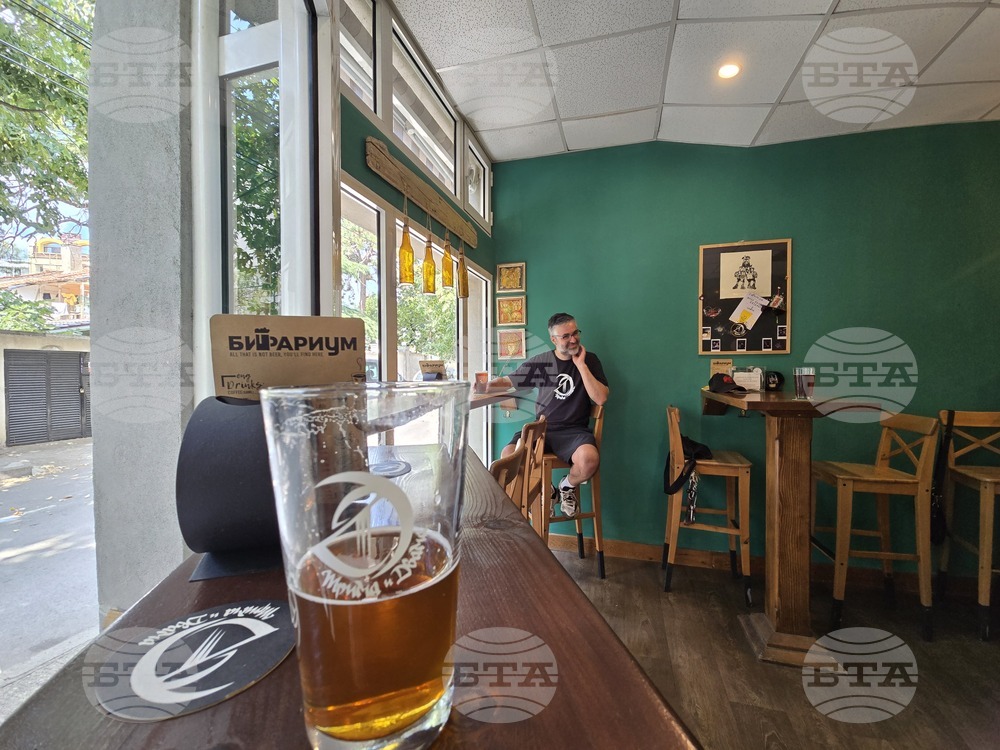
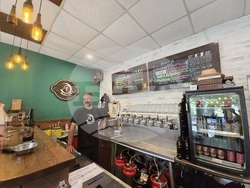
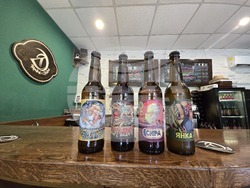
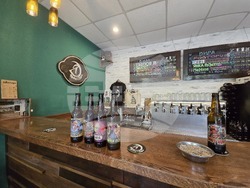
Around 40 different craft beers have come out of the Sliven-based Trima i Dvama (Three and Two) brewery over the years, its founder, manager and head brewer Yordan Chenkov told BTA.
For Chenkov, the freedom to experiment with flavours and ingredients is one of the biggest advantages of being a small brewery. The bigger challenge is competing on price with the major producers, he said, speaking ahead of International Beer Day, celebrated on the first Friday of August.
The idea for the brewery was born in late 2014, when Chenkov and a friend decided to turn their home brewing hobby into a business. The first brewery began operating in 2017. In 2024, the company's second production facility obtained its licence, after which the original facility was closed. The licensing process took about a year, Chenkov said, describing the time as effectively lost for the business.
"At the beginning, we were working with our own money. It runs out very quickly while you are waiting and paying rent, social security contributions and all the other expenses," he said. Unclear procedures and difficulties in dealing with institutions are among the challenges facing small producers.
The quest for variety
The freedom to experiment is what sets small breweries apart, Chenkov said. Large producers can hardly offer such a wide variety of products because they are looking for flavours that will appeal to the widest possible audience.
"A small producer simply cannot match the prices of a large producer," he said. And price is not the only hurdle. Once consumers have been drawn to a craft beer, they still have to be persuaded to try something different, particularly when it comes with stronger or less familiar flavours.
Historically, beer was far more varied from one region to another, Chenkov said. Its character depended partly on local conditions, including the properties of the water. The rise of mass production gradually brought more uniform flavours, he said.
One example is the traditional German Gose style, associated with the Leipzig area. Because of the characteristics of the local water, the beer traditionally had a pronounced salty taste. Brewers discovered that adding acidity made it more refreshing and easier to drink. This style gradually fell out of favour but has been making a comeback in recent years, with small breweries putting their own spin on it by adding herbs and fruit.
That tradition inspired one of the more unusual beers made by the Sliven brewery - a sour and salty beer flavoured with samardala (honey garlic), a herb characteristic of the region. "We decided to make a sour and salty beer with samardala," Chenkov said. The beer has been produced for several years and has been well received by customers, he added.
Another of his less conventional experiments was a beer made with roasted pumpkin. At home, he has even experimented with a beer tasting of tripe soup and garlic, although that one never made it onto the market.
Interest in craft beer in Sliven has been gradually growing. Part of the brewery's production stays in the town and the surrounding area, while its beers are also sold in Burgas, Varna, Veliko Tarnovo, Plovdiv, Silistra, Sofia and Yambol. Chenkov said the price of the brewery's beer is lower than that of some craft beers sold in Sofia.
Could Sliven develop beer tourism? Possibly, but it would take more breweries and better infrastructure, he said.
For now, the brewery is focused on the Bulgarian market. Its beers are neither pasteurized nor filtered, making them less stable during prolonged transport. For exports, the product has to pass through distributors and retail chains, potentially increasing the time it takes to reach consumers and affecting its quality, Chenkov explained.
The brewer is also fascinated by the history behind the drink. One little-known fact, he said, is that the oldest known written records of beer production are not associated with Egypt, but with Sumer. He mentioned the Hymn to Ninkasi, which is at once a song of praise to Ninkasi, the Sumerian goddess of beer, and an ancient recipe for brewing.
According to the Union of Brewers in Bulgaria, 42 beer producers are currently registered in the country: three large companies, seven small and medium-sized enterprises and 32 microbreweries. Beer production reached 4.42 million hectolitres in 2025, while annual consumption stood at 76 litres per person.
/DD/
Additional

news.modal.image.header
news.modal.image.text
news.modal.download.header
news.modal.download.text
news.modal.header
news.modal.text