site.btaMunich Welcomes Major Bulgarian Folklore Gathering
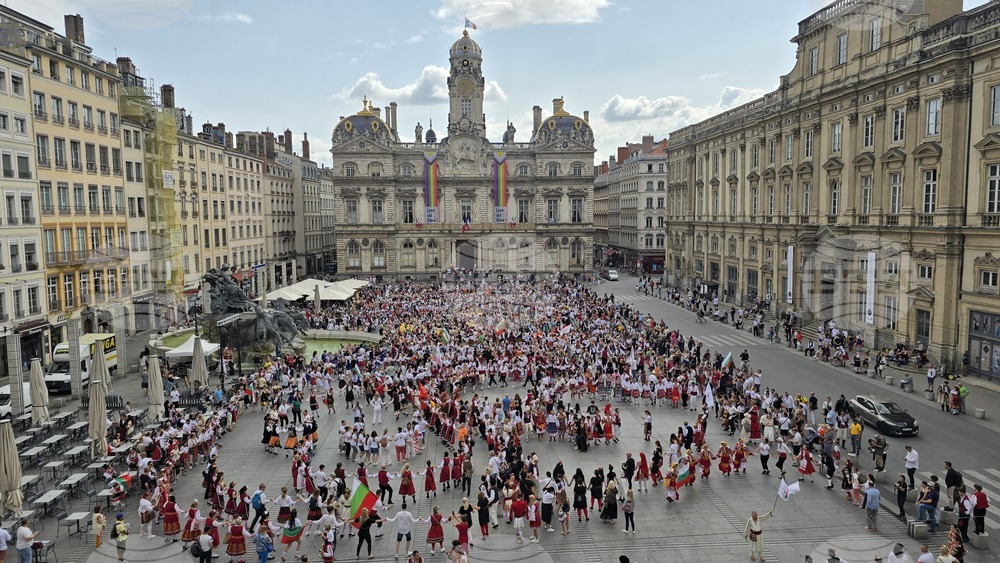
The 11th edition of a travelling Bulgarian folklore festival titled "Expats Join Hands in Worldwide Dance" opens Friday at BMW Park in Munich, Germany, bringing together Bulgarian cultural communities from around the world for a three-day celebration of music, dance and tradition.
The Bulgarian News Agency (BTA) is the official media partner of the event.
The festival will run through May 17 and feature performances, exhibitions and public events dedicated to preserving and promoting Bulgarian folklore abroad. Organizers describe this year’s edition as the largest so far, with a record number of participating ensembles and performers from across Europe, North America and beyond.
The opening day includes a formal opening event and the launch of a photo exhibition titled "Bosilegrad Before and Now 1 and 2", as well as the traditional festival marketplace showcasing Bulgarian crafts, food and cultural products. Concert performances will continue throughout the weekend, culminating on Sunday with the initiative The Great Horo at Munich’s Max-Joseph-Platz, where participants and visitors will join in a large traditional Bulgarian circle dance in the city center.
During the closing events, organizers are also expected to announce the host of the festival’s 12th edition in 2027.
The travelling gathering "Expats Join Hands in Worldwide Dance" was created as a forum for amateur Bulgarian folklore ensembles active outside Bulgaria. Since its launch in 2015, the festival has been hosted in several European cities, reflecting the growing network of Bulgarian cultural communities abroad and their efforts to preserve national traditions through music and dance.
In the lead-up to the event, BTA featured participating groups and related coverage through its BG World section, including English-language reports, and is providing on-site reporting throughout the three festival days in Munich.
Bulgarian Communities in Bavaria and Baden-Wuerttemberg maintain strong cultural presence
Bulgarian communities in the German federal states of Bavaria and Baden-Wuerttemberg continue to expand their cultural, educational and religious activities, supported by a growing diaspora and an active network of organizations.
According to the Bavarian State Office for Statistics, 53,891 Bulgarian citizens were living in Bavaria as of December 31, 2024, accounting for 2.6% of all foreign nationals in the province. In Munich alone, the Bulgarian community numbers 14,561 people, according to the city’s statistical office.
The Bulgarian presence in Bavaria includes a wide network of Sunday schools, folklore ensembles, cultural associations and church communities. Bulgarian schools operate in Munich, Regensburg, Straubing, Nuremberg, Augsburg, Landshut, Schweinfurt and Neumarkt, helping preserve Bulgarian language and traditions among younger generations.
A number of Bulgarian folklore groups are also active across the province, particularly in Munich and Augsburg, contributing to the visibility of Bulgarian culture through music and dance performances. Cultural and academic organizations based in Munich further support community life and integration.
Bulgarian Orthodox church communities have also been established in Munich, Nuremberg and Regensburg. In March 2026, a Bulgarian-language Holy Liturgy was celebrated for the first time in the city of Landshut as part of a newly formed church mission.
In neighboring Baden-Wuerttemberg, official statistics show that 51,145 Bulgarian citizens were residing in the province at the end of 2024. Of them, approximately 47,000 were born outside Germany, while more than 4,000 were born in the country.
The Bulgarian community in Baden-Wuerttemberg likewise maintains an extensive network of educational and cultural institutions. Bulgarian schools operate in cities including Karlsruhe, Mannheim, Heidelberg, Tübingen, Freiburg, Stuttgart and Konstanz.
Folklore dance groups and cultural organizations across the province organize events promoting Bulgarian traditions and community engagement, while Bulgarian student associations remain active in university centers such as Heidelberg, Karlsruhe and Mannheim.
Bulgarian Orthodox church communities are also established in Stuttgart and Mannheim, serving as important spiritual and cultural centers for the diaspora.
/NF/
news.modal.header
news.modal.text