site.btaMedia Most Clearly Demonstrate Link Between Emigrant Communities and Their Homeland, Prof. Lilia Raycheva Says
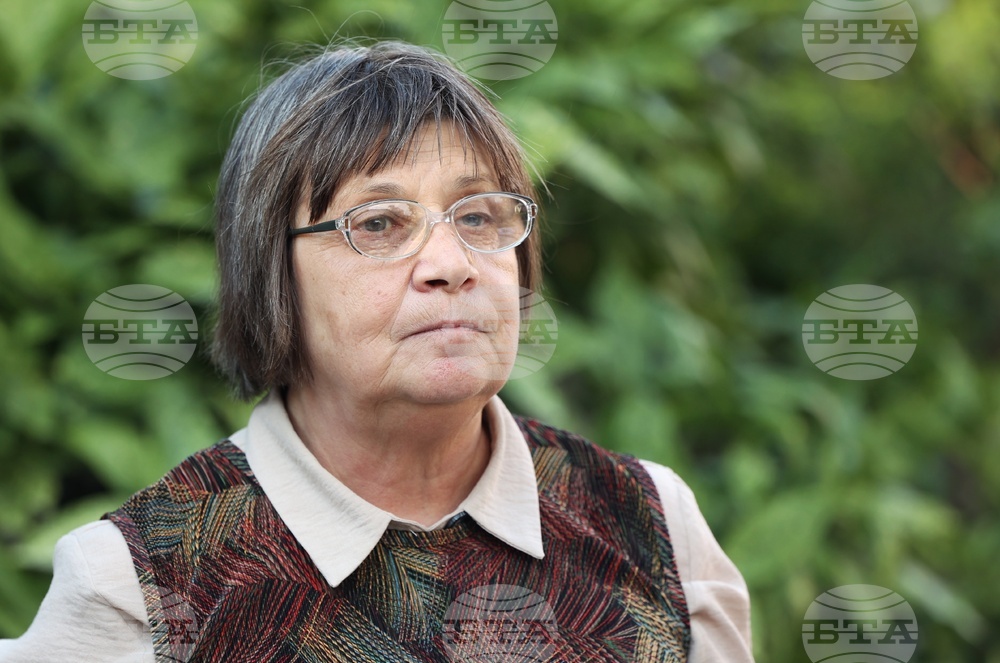
Media in all their forms seem to most clearly demonstrate the link between emigrant communities and their homeland, Prof. Lilia Raycheva told Sanus Et Salvus, a website for health and culture of Bulgarians in Austria, on Sunday.
“The Bulgarian diaspora abroad cherishes the spiritual heritage of the homeland. Alongside Sunday schools and folklore ensembles, media in all their forms seem to most clearly demonstrate the link between emigrant communities and their homeland. Unfortunately, there is no single official register of Bulgarian media abroad, and such a register could hardly be maintained reliably due to their dynamic nature,” Raycheva said.
She described as commendable BTA’s initiative to organize the World Meetings of Bulgarian Media, which bring together Bulgarian-language journalists, publishers and editors working with dedication and enthusiasm outside Bulgaria.
“They now number 20, and the result of this activity was the establishment in 2005 of the Association of Bulgarian Media Worldwide. Today, technology allows media content to be received through various platforms, enabling Bulgarians living abroad to learn what is happening in Bulgaria. Even so, some Bulgarian media reach out to their compatriots abroad,” Raycheva said.
Radio Bulgaria, the international service of the Bulgarian National Radio, whose first broadcasts abroad began in 1936, now provides online news and podcasts in 11 languages for audiences abroad. The Bulgarian News Agency, which has a rich archive, has created the specialized BG World service, aimed at Bulgarians abroad. Bulgarian News is an information portal for Bulgarians around the world, she added.
Raycheva said that leading Bulgarian media maintain correspondent offices and accredited journalists in key international locations, covering the work of political and business institutions. “They take part in the work of international media organizations. Bulgarians have long been accustomed to receiving first-hand information from cultural and sports events, as well as reports and commentaries from conflict zones. Although Bulgarian journalists abroad work at a high professional level in a highly competitive information environment, they face limited resources and low financial budgets and often operate under enormous information pressure,” she said.
In her words, journalists working abroad, whether for Bulgarian media or for media of Bulgarian communities, are among the best prepared, because they have to act quickly in a different cultural and linguistic environment so as to present complex local and international processes to audiences in an understandable way. “It is not uncommon for Bulgarian media and journalists to receive significant professional recognition abroad precisely because of their expertise and qualifications,” Raycheva said.
She noted that digitalization is changing the media environment. In her view, the trend is for print publications to reduce their circulation, move to online versions or turn into niche products. “Printed newspapers cannot compete with the immediacy of events covered simultaneously. However, the longer editorial process allows for a more meaningful selection of published content, more reliable fact-checking and more analytical texts,” Raycheva said.
According to her, the ritual of reading the press carries the special charm of a boutique experience. In some countries, prestigious newspapers continue to have strong public influence precisely by offering quality journalism, she explained.
Prof. Dr. Lilia Raycheva graduated in 1973 as part of the first class of the Television profile of the Journalism degree programme and is now a professor of media and communications at St. Kliment Ohridski University of Sofia. She defended her doctoral dissertation in 1977 at the Faculty of Journalism, Lomonosov Moscow State University.
She is the author of numerous media publications and the creator of radio and television programmes, including the television quiz show A Minute Is a Lot (Minuta e Mnogo), which ran from 1980 to 2011 and had 756 episodes. She was head of the Television and Radio Department from 1998 to 2001 and Deputy Dean for International Affairs and Research at the Faculty of Journalism and Mass Communication from 1999 to 2001. She was a member of the Council for Electronic Media from 2001 to 2008. She has been a visiting lecturer at higher education institutions in Bulgaria and abroad, mainly in the United States.
Raycheva has been an active participant in numerous research networks in the European Union. She is the author of five books, compiler of 14 books, and author of scholarly publications on various media issues. Her research interests include the development of the media ecosystem, screen language, political communication, generational issues, media consumption and media literacy. She has received national and international awards.
/NF/
news.modal.header
news.modal.text