site.btaConsul General in Odesa: Protocol Ensures Bolhrad High School's Status as Institution with 3 Levels of Secondary, Specialized Education
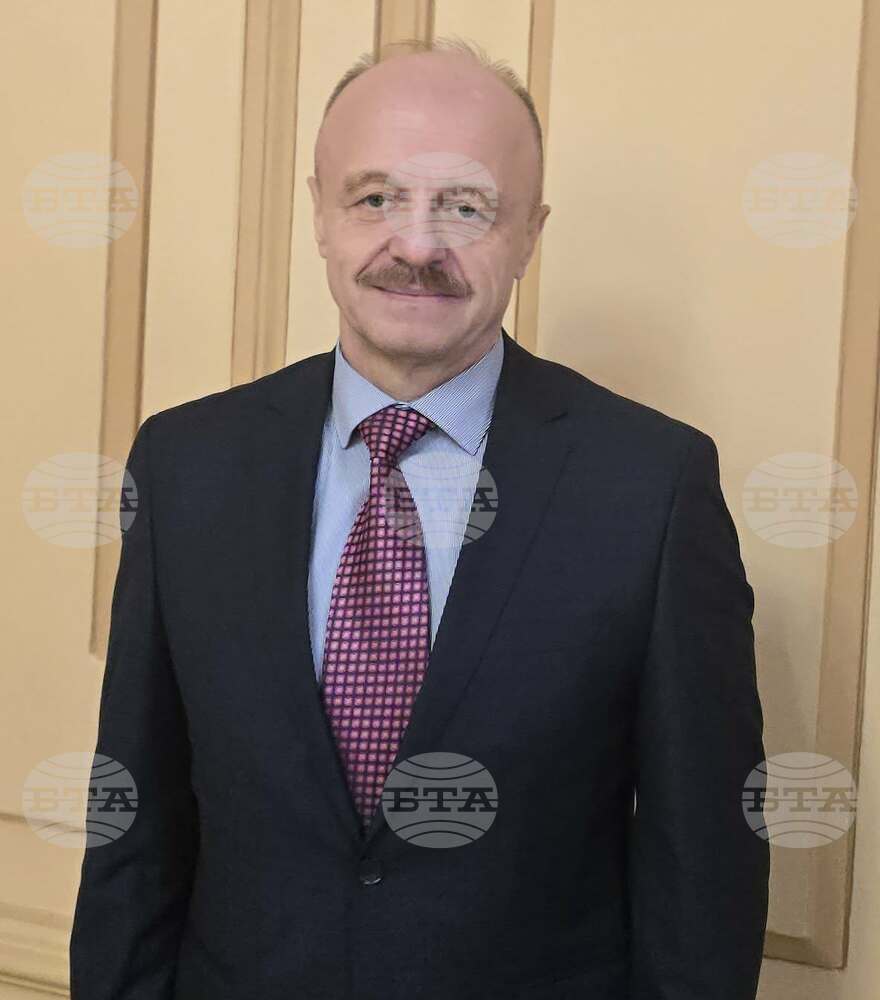
The timely signing of the protocol for the Bolhrad High School in Odesa Region, Ukraine, makes it possible to preserve the upper secondary levels of education (Years 10–12) with in-depth study of the Bulgarian language, as well as to organize preparatory courses (groups) with Bulgarian language instruction for pupils applying for Year 1 at the school, Bulgaria’s Consul General in Odesa Svetoslav Ivanov told the Bulgarian News Agency.
The new protocol was signed on March 30 this year in Kyiv by the Ministers of Education of Bulgaria and Ukraine, Sergey Ignatov and Oksen Lisovyi.
“We, as the Consulate General, made a proposal as early as 2021 for the agreement on the Bolhrad High School to be renewed, after which the war began at the start of 2022. The Consulate General suspended its activities, and when they were resumed in May 2023, we once again initiated and brought to the attention of the Minister of Education and Science of Bulgaria the issue of resuming work on signing the agreement. As part of this proposal, we also included the restoration of teaching at the high school by seconded teachers from Bulgaria,” Ivanov said.
Before the war, three teachers (in history, choreography, and folk music and folklore), delegated by Bulgaria’s Ministry of Education and Science, were teaching at the Bolhrad High School, while a total of 15 teachers had been seconded across Ukraine, but currently there is not a single one due to the war.
He noted that the new agreement does not differ from the previous one (the previous protocol was signed on July 29, 2000 in Sofia).
“There were two points in the new agreement that were contentious. Last year, during the discussion process, we managed to reach agreement on them as well. One was that the Ukrainian side proposed and insisted that it should have a five-year term, but I managed to convince colleagues from the Ministry that the previous agreement had an indefinite term, and I insisted that the new one should also be indefinite. The other point was that when it came to coordinating the protocol, the Ukrainian side had remarks at the level of the Department of Education in Odesa Region regarding the pre-school group for preparing children in the Bulgarian language. They were not very agreeable, explaining that, given the war, there were insufficient funds to pay for the additional hours,” Ivanov added.
“At the end of 2023, a new law on national minorities in Ukraine was adopted, which to some extent regulates the framework for the rights of national minorities, the right to a mother tongue, the right to funding, the right to their own media, and the right to bilingual signage. This law has a very broad scope,” he added.
“Alongside the experts from the Bulgarian Education Ministry, who have made a significant contribution to the signing of the protocol, I would like to note that over the past two years, at our major events at the Consulate General marking March 3 and the Day of the Bessarabian Bulgarians, Bulgarian MP Rositsa Kirova, who currently chairs the parliamentary Committee on Direct Participation of Citizens, Citizens' Complaints and Interaction with Civil Society, visited on three consecutive occasions. At one of these meetings, the leadership of the Bolhrad High School submitted a written request to her to assist with the signing of the protocol. She took the matter to heart, and I would like to express special thanks to her for her efforts, as she held many discussions with the previous Ministers of Education, Galin Tzokov and Krasimir Valchev, as well as with the Ukrainian Ambassador to Bulgaria, Olesya Ilashchuk. We should extend due thanks to Rositsa Kirova regarding the finalization of this lengthy process, which took four years,” Ivanov said.
He shared that there had been a real risk that, if the signing of the protocol had been delayed, pupils from Years 10 and 11 would have been transferred to another school in Bolhrad, which had already been designated. Upon receiving this information, the headteacher of the Bolhrad High School immediately submitted a written request on the matter, which Ivanov forwarded through official channels to the Minister of Education of Bulgaria.
“The preservation of the status of the Bolhrad High School means that, under the Ukrainian standards of the new Ukrainian school system, it will remain a general education institution with three levels of complete secondary and specialized education and will not be downgraded to two levels,” the Consul General noted. “With this status, we provide an opportunity for pupils in the upper years (10–12) to study in depth the Bulgarian language and literature, history, and Bulgarian culture (a total of five hours). This makes it possible to immediately announce the number of teachers in these subjects so that they can be seconded. I am extremely pleased that, through the efforts of many people, we have succeeded,” Ivanov said.
“A month ago, following our enquiry, we received information from the Department of Education and Science at the Odesa Regional Military Administration that, out of 707 general secondary schools in Odesa Region, Bulgarian is studied as a subject in 37 within the Ukrainian education system. The total number of pupils is 5,054, of whom 1,535 are in Years 1 to 4, and 3,511 are in Years 5 to 9,” he said.
/NZ/
Additional
news.modal.image.header
news.modal.image.text
news.modal.download.header
news.modal.download.text
news.modal.header
news.modal.text