site.btaBulgarian Scientists, Winemakers Select Local Yeasts for Regional Wine Production
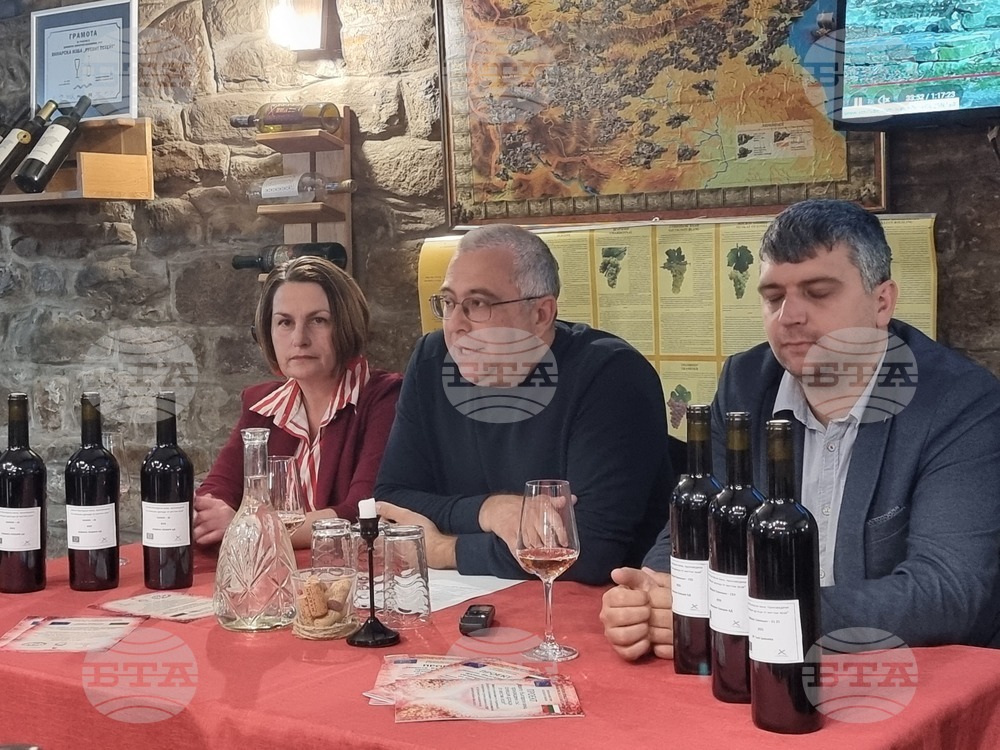
Bulgarian scientists and winemakers met on Tuesday in Veliko Tarnovo, North Central Bulgaria, to select local yeasts for the production of regional wines.
The New Bulgarian Wines project aims to create a more distinctive style and identity for Bulgarian wine that meets the modern requirements of the international market. Oenologist Stanimir Stoyanov emphasized that, after two and a half years of work, the project to select local yeasts from Bulgarian vineyards had been successfully completed, resulting in the development of four yeast strains suitable for producing wines with a distinctive aromatic profile and character. "Our goal was to prove that yeasts living naturally in Bulgarian vineyards could be selected and successfully used for producing quality wines," he said.
The project team pointed out that yeast plays a key role in determining the taste and aroma of wine, and using local strains can make the production more distinctive. They noted that, worldwide, mainly standardized yeasts developed in countries such as France, Italy, Chile and Australia are used. As part of the project in Bulgaria, numerous yeast strains were isolated and tested. After a methodological selection process, four strains were chosen for their excellent fermentation qualities. The scientific research was conducted at the University of Food Technology in Plovdiv, and the produced wine batches were presented and tasted at the Wine Tasting Centre in Veliko Tarnovo.
The strains are currently stored at the university and can be propagated and made available to winemakers before the grape harvest begins. The project team indicated that, at the next stage, the yeast could be prepared as freeze-dried cultures, facilitating their practical application. They noted that the project also considered the impact of climate change on winemaking. This has led to an increase in the sugar content of fruits, and subsequently in the alcohol content. Stoyanov explained that selected yeasts can support the production of wines with a lower alcohol content, which is in increasing demand from consumers.
Funding for the project was provided under the Rural Development Programme.
/KK, YV/
news.modal.header
news.modal.text