site.btaArtificial Intelligence Will Test Europe's Ability to Boost Productivity, Experts Say at ECB Forum in Sintra
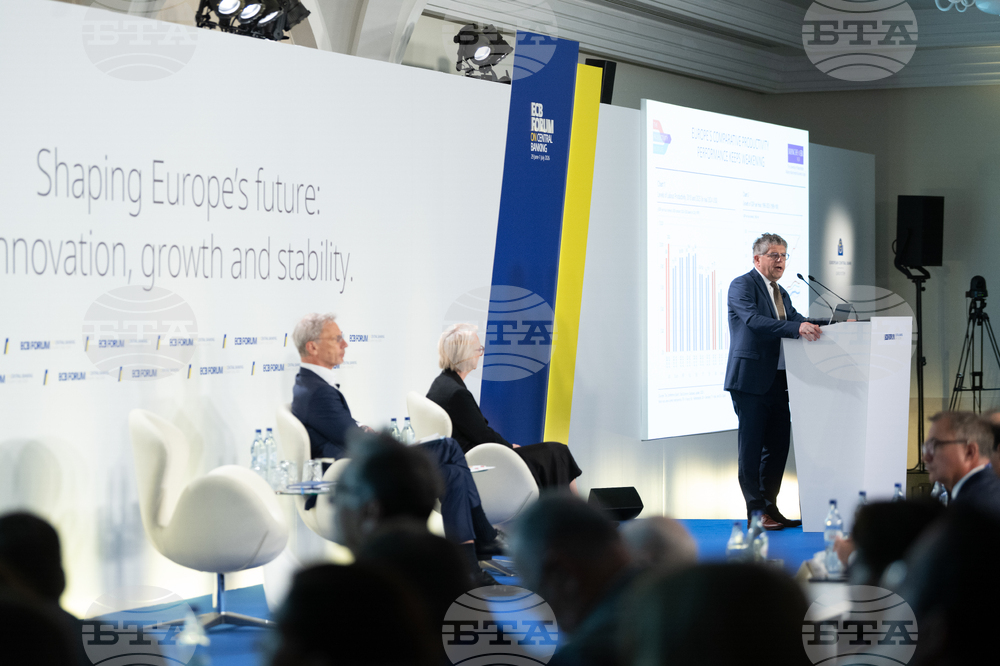
Europe should not view artificial intelligence (AI) merely as a tool for improving efficiency, as it risks using the technology primarily to optimize existing processes instead of building the future, speakers said during the opening panel of the European Central Bank's Annual Forum in Sintra, Portugal, on Tuesday. The discussion focused on the state of European productivity and the challenges posed by the rapid adoption of AI.
Prof. Bart van Ark of the University of Manchester presented his report Rewiring Europe's Productivity Framework, arguing that Europe must strengthen both cutting-edge innovation and the broader diffusion of new technologies, while addressing the weak links between the two.
Van Ark said Europe needed to improve on both fronts, warning that prioritizing one at the expense of the other would be a mistake. Given the rapid pace of technological change and the slowdown in globalization, he argued that Europe could no longer rely on technologies developed elsewhere and then seek to catch up through their domestic adoption.
Opening and moderating the session, European Central Bank Vice-President Boris Vujcic said that research on economic growth had consistently identified two key drivers: innovation, which creates new technologies, and the diffusion of existing technologies.
According to Van Ark, Europe's productivity challenges do not stem from a lack of knowledge or invention. The evidence, he said, does not support the simple claim that Europe lacks innovation. Instead, he argued that the greater obstacle lies in commercialization, which is constrained by fragmented capital markets, insufficient scale-up financing, and inadequate coordination among EU countries on public procurement and technical standards.
Monika Schnitzer, professor at Ludwig Maximilian University of Munich and Chair of the German Council of Economic Experts, said she agreed with the main conclusions of Van Ark's analysis. She argued that Europe's productivity problem was not simply a matter of insufficient frontier innovation or the slow adoption of advanced technologies, but rather a combination of both. Schnitzer also identified computing capacity and energy availability among the key challenges facing Europe as it seeks to capitalize on AI.
Among those attending the discussion were European Central Bank President Christine Lagarde and US Federal Reserve Chair Kevin Warsh.
/RY/
news.modal.header
news.modal.text