site.btaNuclear Energy Requires Predictable Policies, Long-Term Commitment, Energy Minister Says
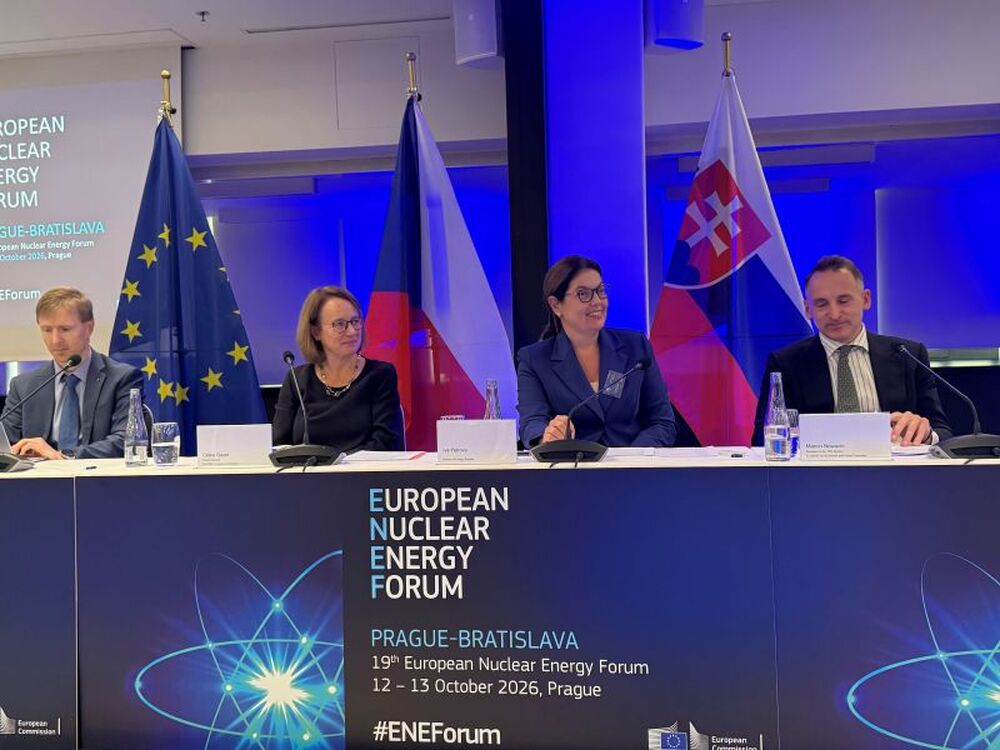
Nuclear energy requires long-term commitment, predictable policies, public trust, skilled workers and sustainable funding, Energy Minister Iva Petrova said in a ministry statement on Tuesday.
Petrova took part in the 19th European Nuclear Energy Forum (ENEF) in Prague. She said planning for nuclear energy needed to extend beyond political cycles and individual projects.
During a panel on European strategic priorities in nuclear energy, policy, the social context and financing, Petrova discussed the conditions needed to turn European ambitions into tangible investments and sustainable industrial capacity. Other participants included European Commission Director-General for Energy Celine Gauer, Director-General for Nuclear Energy and New Technologies at the Czech Ministry of Industry and Trade Tomas Ehler, and President of the European Economic and Social Committee's TEN Section Marcin Nowacki.
Bulgaria draws on more than 50 years of experience in operating nuclear facilities, a strong professional community and established institutional and regulatory capacity, the ministry said. The country is implementing a diversification strategy that began with nuclear fuel supplies and is gradually extending to other activities along the value chain, including maintenance of existing equipment. Work is also under way on a project for new nuclear capacity at the Kozloduy Nuclear Power Plant site, while the potential role of small modular reactors is being assessed. Key conditions for implementing these projects include a predictable investment environment, a clear allocation of risks and responsibilities, and training the next generation of specialists, the ministry added.
Petrova described public trust and workforce development as interlinked priorities. She cited open days organized by Bulgaria's nuclear power plant, which allow members of the public to learn about its operations and safety measures. Universities also help train specialists for future nuclear projects, including through framework cooperation agreements with four Bulgarian higher education institutions, the statement said.
"For Europe to benefit from the potential of small modular reactors, we need to create the conditions for standardization, repeated use of established designs and the development of a competitive industrial ecosystem," Petrova said. European cooperation could accelerate the development of industrial capacity and expertise and the mobilization of financing, she added, while recognizing nuclear energy's full contribution to Europe's energy security, decarbonization and competitiveness.
On October 1, Petrova told the fifth two-day international nuclear conference and exhibition Nuclear Energy: From Ambitions to Implementation that nuclear power was a strategic choice for Bulgaria's energy security, competitiveness and future.
/MR/
news.modal.header
news.modal.text