site.btaSingle Market Requires Single Currency, Says Former Portuguese Finance Minister Jorge Braga de Macedo
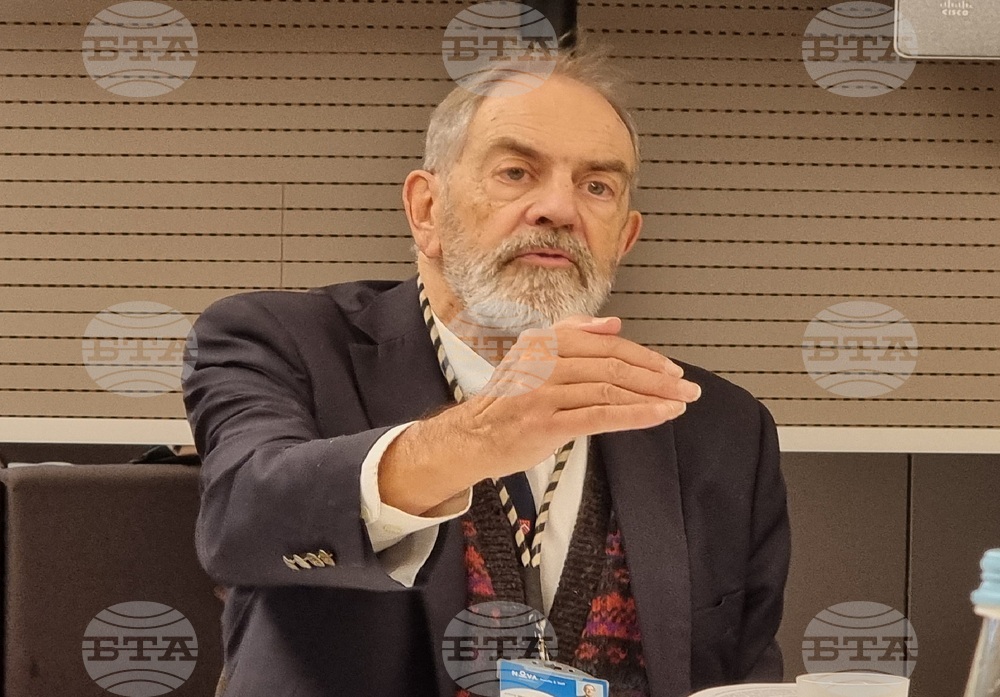
The single market requires a single currency, Prof. Jorge Braga de Macedo, former finance minister of Portugal and currently a lecturer at Nova School of Business and Economics near Lisbon, told BTA.
Speaking at a meeting with Bulgarian journalists at the university in connection with Bulgaria’s forthcoming accession to the euro area on January 1, 2026, Prof. Braga de Macedo was adamant that the single currency is a response to the pursuit of stability and economic growth for European countries. Portugal was among the first 11 countries to introduce the euro electronically in 1999, with banknotes and coins entering circulation in 2002.
“One market, one currency,” he stressed several times, noting that if a country wants the advantages of the European Union’s single market, it cannot prefer a currency other than the euro, as the link between the two is of key importance.
In response to a question from BTA, he said categorically that prices in Portugal did not rise with the introduction of the euro. There were difficulties before the creation of the single currency, while afterwards “everyone was convinced,” he said.
The single currency is used because it facilitates purchases, of course, but it also has advantages of another nature, the former finance minister said. If there is a single market, countries are exposed to shocks, but without a single currency and with rising prices, protection is much weaker. If there is a single market without a single currency, there are losses, and without a single market the losses are even greater, he added.
He recalled that Portugal had an export-oriented industry for a long while as a member of the European Free Trade Association, an agreement that was far less ambitious than the European Community but nevertheless created a single market, particularly with the Nordic countries. When a country has the opportunity to export goods to a given market, this opens up investment opportunities and improves its overall position, he said.
“It would be dramatic to make all the efforts for a single market and then not have a single currency. That would truly be a loss,” Prof. Braga de Macedo commented.
“If you believe you can afford your market not to be the same as your neighbours’, then you might argue for a different currency. But if you already have a single market – and that is clearly the case for your country and many of its neighbours – I do not think there is an alternative,” Prof. Braga de Macedo told Bulgarian media.
This article is the result of an organised visit of Bulgarian journalists to Portugal, part of the activities of Bulgaria’s Ministry of Foreign Affairs under the action plan for implementing the communication strategy on information and publicity related to Bulgaria’s accession to the euro area.
/MY/
news.modal.header
news.modal.text