site.btaUPDATED Trade Unions, Employers, Cabinet Reach Agreement on 2026 Budget Parameters, Bill to Be Submitted to Parliament on Monday
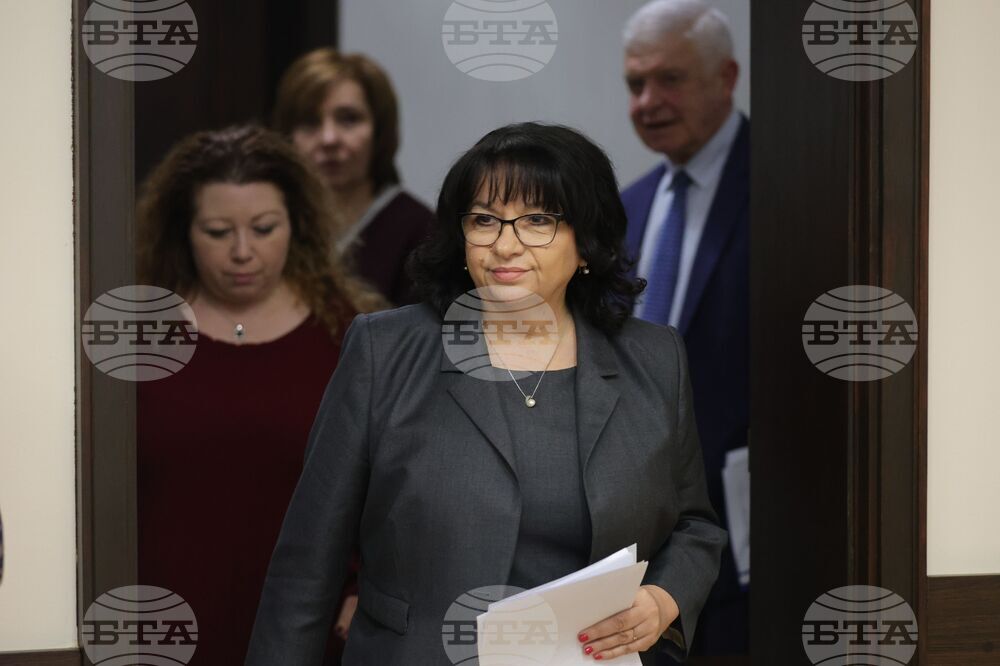
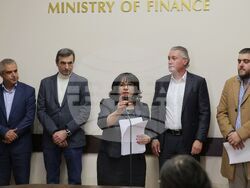
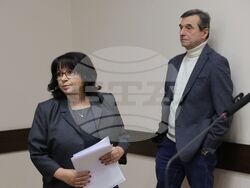
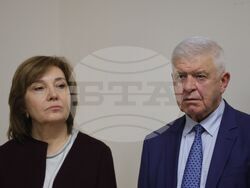
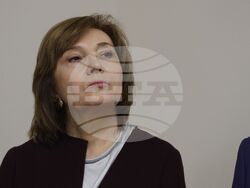
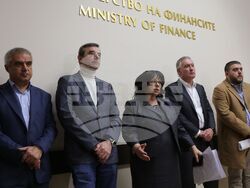
Trade unions, employer organizations, and the government have reached agreement on the main parameters of the draft budget for 2026, Finance Minister Temenuzhka Petkova said at a news briefing at her Ministry following a meeting with the social partners on Friday. She noted that the National Council for Tripartite Cooperation will convene on Monday, after which the Council of Ministers is expected to approve the draft and submit it to the National Assembly that same afternoon.
Petkova outlined the key points on which consensus was reached: keeping the dividend tax rate at 5%; rejecting the proposed 2-percentage-point increase in pension insurance contributions; removing the requirement for businesses to use National Revenue Agency–approved sales management software in commercial outlets; and abolishing the automatic mechanism for setting pay levels in sectors such as defence and security.
Trade unions and employer organizations also agreed that the maximum contributory income for 2026 will be set at EUR 2,300, the Minister said.
As part of its broader income policy, the Finance Ministry plans a 10% salary increase for all public sector employees.
Responding to questions from employer organizations about capital spending, Petkova said that, following evaluations, the capital programme will be reduced by EUR 450 million in national co-financing and EUR 300 million in European funds and programmes.
She added that issues concerning a social roadmap will be addressed in 2026.
"I would like to thank our social partners for the extremely constructive dialogue and highly productive work," Petkova said.
Over the weekend, work will be done on the draft budgets of the Public Social Insurance and the National Health Insurance Fund, which must approve the agreements reached under their supervision.
Petkova reported: "On Monday morning, we plan to hold a national tripartite council meeting, followed, of course, by a meeting of the Council of Ministers, and in the early afternoon, the draft State Budget law will be submitted to the National Assembly."
In response to a reporter's question, the minister said that the automatic adjustment of salaries will be abolished for all budgetary areas. She added that a way had been found to compensate for the necessary EUR 1.5 billion in revenue, so that the new budget could be prepared without all the measures that had been dropped from the initial draft.
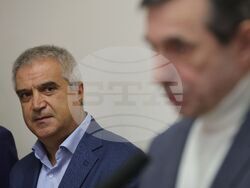
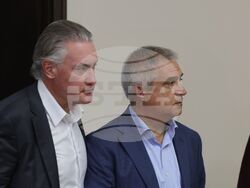
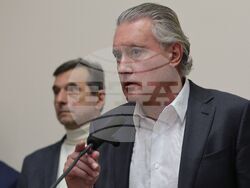
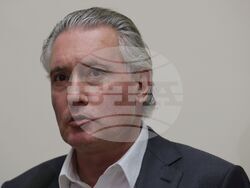
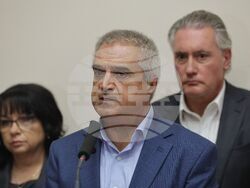
The Chair of the Confederation of Employers and Industrialists in Bulgaria, Kiril Domuschiev, expressed satisfaction that employers and trade unions had managed to agree on key issues in such a short time. He said: "I am glad that, together with the trade unions, we have managed to find common ground on so many issues where we have always had differences. And in the end, we found understanding from both the Ministry of Finance and the representatives of the political parties in the ruling coalition."
Domuschiev stated that the fact that taxes will not be raised is a good sign for investors, as a possible increase would have affected both companies and their workforce. He reported that his organization and the Ministry of Finance had agreed to start work early next year on identifying reform measures that would contribute to an improved budget in 2027.
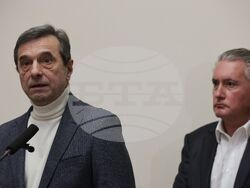
Podkrepa Labour Confederation President Dimitar Manolov said that Podkrepa jointly with the Confederation of Independent Trade Unions in Bulgaria (CITUB) had proposed around 100 measures concerning the draft budget for 2026. "Our agreement and the consensus we have reached can be a good basis for us to continue working," he said and added that administrative reforms are among the topics that will be discussed next year.
CITUB chief economist Lyuboslav Kostov said that at the cost of mutual compromises, an agreement was reached not to raise taxes on businesses, but also to have a policy of increasing incomes in the public sector, especially for underfunded structures. He added: "For this reason, the overall income policy in next year's budget will be 10%, which in monetary terms means just over EUR 1.4 billion."
He pointed out that the funds allocated to public transport in Sofia this year will be included in next year's subsidy by decree, which would allow the mayor to meet the demands of the trade unions in Sofia.
The economist said that Bulgarian Posts has learned that there is a notification from the European Commission allowing for a salary increase of at least 10% based on employee performance.
Commenting on the Bulgarian State Railways (BDZ), Kostov said that a decision is yet to be made, and BDZ staff is on the verge of a strike. A collective labour agreement is currently being negotiated. He specified that the Ministry of Finance has indicated that the problem is not finding funds but a legal way to increase the subsidy for BDZ Passengers.
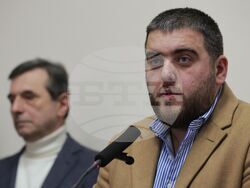
Rumen Radev, Chair of the Bulgarian Industrial Capital Association and Rotating Chair of the Association of the Organizations of the Bulgarian Employers expressed his gratitude for the public support that employer organizations have received in their position not to change the tax and social security model in Bulgaria.
Radev said that talks on pension system reforms are forthcoming, with the aim of separating social payments from pension payments. He said that the automatic mechanism for determining the minimum wage will remain in place, but an agreement has been reached that by 2027 the minimum wage will also be decoupled from the automatic formula.
Vasil Todorov, Deputy Chair of the Bulgarian Chamber of Commerce and Industry, said that if a party has won an election with a pledge not to raise taxes, it is only right that it should keep its promise. He stated: "If there is a vision to change this commitment, it is right that this should be done through new elections."
/RY/
Additional


news.modal.image.header
news.modal.image.text
news.modal.download.header
news.modal.download.text
news.modal.header
news.modal.text