site.btaCouncil for Electronic Media Holds Discussion on Proper Use of Bulgarian Language in Electronic Media
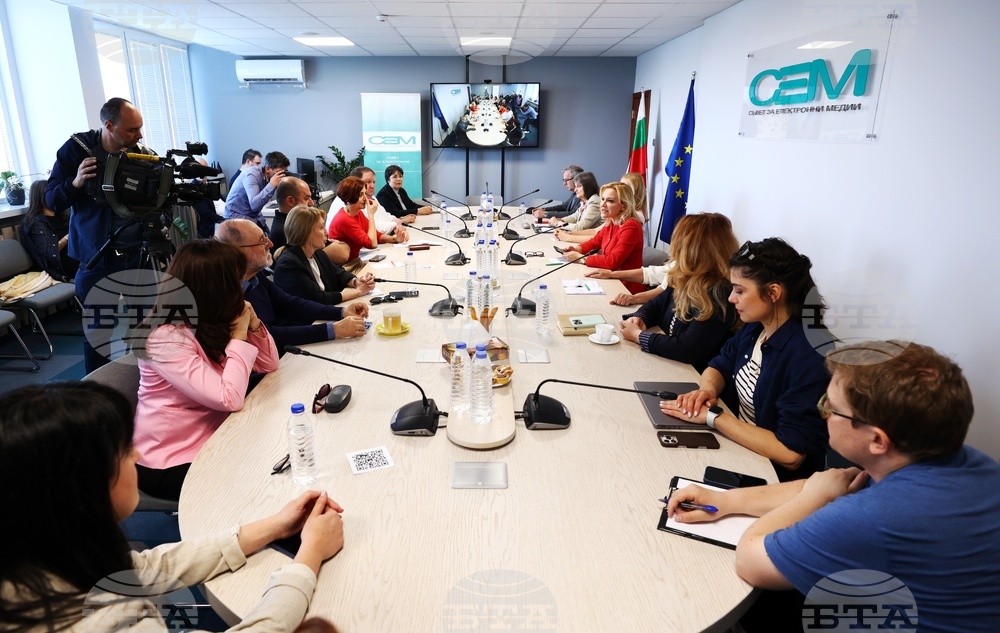
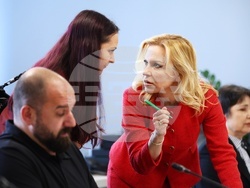
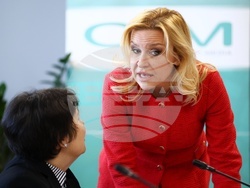
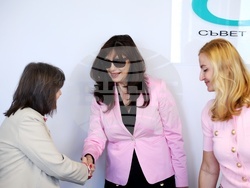
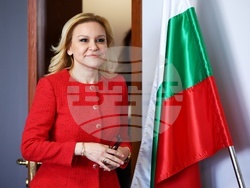
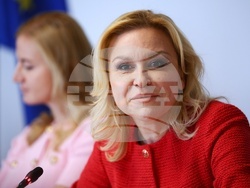
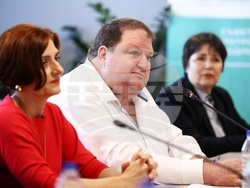
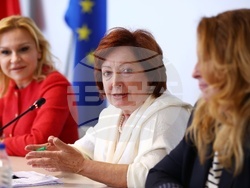
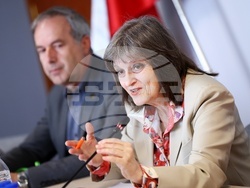
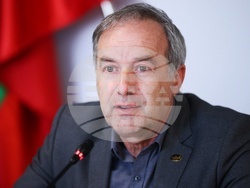
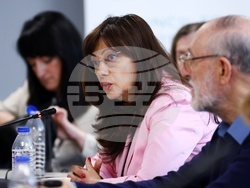
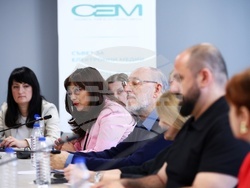
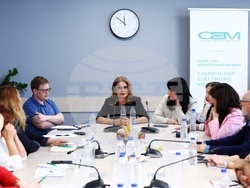
The Council for Electronic Media (CEM) held a meeting on Tuesday with representatives of the media and academia dedicated to the proper use of the Bulgarian language in electronic media. Held ahead of the Day of the Holy Brothers Cyril and Methodius, of the Bulgarian Alphabet, Education and Culture, and of Slav Letters, celebrated on May 24, the initiative was described by participants as an important step toward closer cooperation between the regulator, journalists and linguists.
CEM Chair Gabriela Naplatanova said that the idea for the forum had been under consideration for a long time. She noted that the goal was to discuss issues related to pronunciation, spelling and punctuation, as well as to receive feedback from media representatives on how the regulator could be of assistance.
CEM member Prolet Velkova pointed to several language-related problems that have emerged in recent years, including “digital slang” containing terms that remain incomprehensible to audiences and should not enter the language so easily. Another issue, she said, is the feminization of many terms in the language, particularly job titles and positions.
CEM member Kadrinka Kadrinova said that artificial intelligence (AI), often used by television channels for subtitles, produces “very strange transcriptions” of spoken language. She explained that she had personally encountered situations in which AI interpreted speech incorrectly, resulting in subtitles that displayed something entirely different.
CEM member Simona Veleva also highlighted problems related to automatic translations and the uncritical influx of foreign words, especially in children’s programmes, as well as the foreign expressions used by politicians in their public remarks.
Prof. Vladislav Milanov from the Faculty of Slavic Studies at St. Kliment Ohridski University of Sofia said that for 15 years he and his students had been collecting examples of incorrect use of the Bulgarian language. “In just a few years, we have collected more than 800 examples in which we registered various deviations from almost all literary language norms,” he said, adding that some of these mistakes appeared technical, but were the ones most likely to attract public attention and create a negative impression of the media.
Representatives of Bulgarian News Agency (BTA), Bulgarian National Radio (BNR), Bulgarian National Television (BNT), Nova Broadcasting Group and the academic community took part in the event.
BTA Deputy Director General Evgenia Drumeva said that new technologies provide opportunities but cannot replace editorial responsibility. “AI will provide new opportunities for the media, but it will not work without human oversight,” she said. According to her, BTA has already adopted internal rules for the use of AI, under which a human must be involved both at the beginning and at the end of the process.
BNT Director General Milena Milotinova said that mistakes, although occasional and sometimes minor, can change meaning. BNT morning programme executive producer Albena Kolchakova said that the dynamics of live television production make editorial control especially important. BNT News Director Dobrina Cheshmedjieva said she was pleased that her colleagues from BTA attended the event. “I recommend everyone read BTA for its impeccable written language,” she said.
At the end of the meeting, participants completed a survey related to the use of the Bulgarian language in their professional practice. 91% said there was a need for regular thematic meetings aimed at improving language culture in the media.
/NF/

Additional






news.modal.image.header
news.modal.image.text
news.modal.download.header
news.modal.download.text
news.modal.header
news.modal.text