Wrap-up
![Road Safety Roundtable Calls for Risk-Based Action, Integrated Data]()
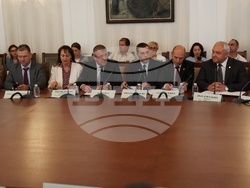
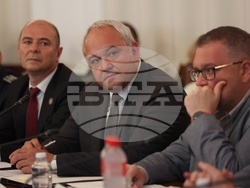
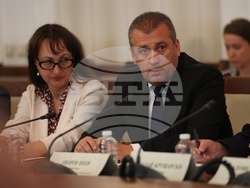
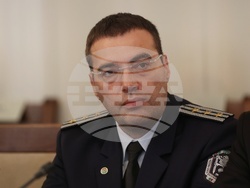
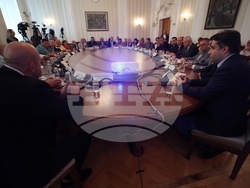
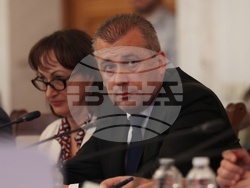
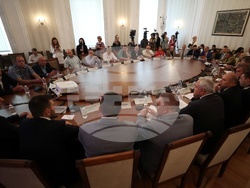
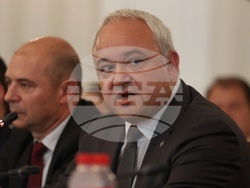
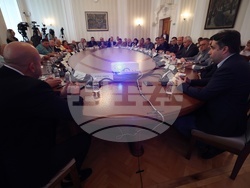
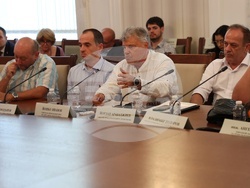
![Road Safety Roundtable Calls for Risk-Based Action, Integrated Data]() Roundtable discussion titled "Road Safety, Risk Assessment and Effective Management of Public Resources", organized by Democratic Bulgaria, takes place in Parliament, Sofia, July 28, 2026 (BTA Photo/Nikola Uzunov)
Roundtable discussion titled "Road Safety, Risk Assessment and Effective Management of Public Resources", organized by Democratic Bulgaria, takes place in Parliament, Sofia, July 28, 2026 (BTA Photo/Nikola Uzunov)
![Народно събрание - „Пътна безопасност, оценка на риска и ефективно управление на публичните ресурси“ - кръгла маса]()
![Народно събрание - „Пътна безопасност, оценка на риска и ефективно управление на публичните ресурси“ - кръгла маса]()
![Народно събрание - „Пътна безопасност, оценка на риска и ефективно управление на публичните ресурси“ - кръгла маса]()
![Народно събрание - „Пътна безопасност, оценка на риска и ефективно управление на публичните ресурси“ - кръгла маса]()
![Народно събрание - „Пътна безопасност, оценка на риска и ефективно управление на публичните ресурси“ - кръгла маса]()
![Народно събрание - „Пътна безопасност, оценка на риска и ефективно управление на публичните ресурси“ - кръгла маса]()
![Народно събрание - „Пътна безопасност, оценка на риска и ефективно управление на публичните ресурси“ - кръгла маса]()
![Народно събрание - „Пътна безопасност, оценка на риска и ефективно управление на публичните ресурси“ - кръгла маса]()
![Народно събрание - „Пътна безопасност, оценка на риска и ефективно управление на публичните ресурси“ - кръгла маса]()
![Народно събрание - „Пътна безопасност, оценка на риска и ефективно управление на публичните ресурси“ - кръгла маса]()
![Народно събрание - „Пътна безопасност, оценка на риска и ефективно управление на публичните ресурси“ - кръгла маса]()
![Народно събрание - „Пътна безопасност, оценка на риска и ефективно управление на публичните ресурси“ - кръгла маса]()
![Народно събрание - „Пътна безопасност, оценка на риска и ефективно управление на публичните ресурси“ - кръгла маса]()
![Народно събрание - „Пътна безопасност, оценка на риска и ефективно управление на публичните ресурси“ - кръгла маса]()
![Народно събрание - „Пътна безопасност, оценка на риска и ефективно управление на публичните ресурси“ - кръгла маса]()
![Народно събрание - „Пътна безопасност, оценка на риска и ефективно управление на публичните ресурси“ - кръгла маса]()
![Народно събрание - „Пътна безопасност, оценка на риска и ефективно управление на публичните ресурси“ - кръгла маса]()
![Народно събрание - „Пътна безопасност, оценка на риска и ефективно управление на публичните ресурси“ - кръгла маса]()
![Народно събрание - „Пътна безопасност, оценка на риска и ефективно управление на публичните ресурси“ - кръгла маса]()
![Народно събрание - „Пътна безопасност, оценка на риска и ефективно управление на публичните ресурси“ - кръгла маса]()
site.btaRoad Safety Roundtable Calls for Risk-Based Action, Integrated Data

A roundtable on road safety, risk assessment and the effective use of public resources was held in Parliament by Democratic Bulgaria (DB) on Tuesday.
The event followed a series of serious road crashes in July. On July 12, the Road Safety Institute called for an urgent investigation into similarities between two fatal crashes involving heavy goods vehicles on the Trakia Motorway, accusing State institutions of failing to examine possible common causes. On July 17, Minister of Regional Development and Public Works Ivan Shishkov told Parliament that the motorway crash-barrier regulation needed a comprehensive review. On July 27, a city bus broke through a central reservation barrier on Sofia’s Tsarigradsko Shose Boulevard and crossed into oncoming traffic.
Minister of Interior Ivan Demerdzhiev said the Interior Ministry had taken steps to address problems with crash barriers. The National Police General Directorate was working on the issue after inspections found that the system was incomplete, with some components missing and others compromised.
Demerdzhiev said high-risk locations had to be identified, including sites where people had been killed or injured and roads used for illegal racing. He also identified poor skid resistance on some road surfaces as a major infrastructure problem. The Interior Ministry had installed traffic bollards at several high-risk locations. Deputy Minister of Interior Kaloyan Kaloyanov was leading a team working on further road-safety measures, Demerdzhiev added.
The Interior, Regional Development and Public Works, and Transport and Communications ministries were discussing possible legislative amendments. These included changes to ineffective provisions and restrictions on heavy goods vehicles using the left-hand lane of motorways. The Interior Ministry was also examining measures targeting high-risk drivers, particularly young and inexperienced motorists, and problems with serving penalty notices. Work was under way to make full use of toll-system cameras and deploy more unmarked Interior Ministry vehicles to detect traffic offences.
Demerdzhiev said joint inspections by the Interior and Transport and Communications ministries had found many heavy goods vehicles and their tyres in poor condition. Demand for tyre replacements was therefore expected to make appointments difficult to secure over the following weeks.
Minister of Transport and Communications Georgi Peev said the greatest weakness of Bulgaria’s road-safety control system was its fragmentation and the absence of an integrated database that could support preventive action.
Peev said too much attention was being paid to penalties and too little to prevention. Comprehensive solutions were essential, he added. Improving road safety was an absolute government priority, and all constructive initiatives were welcome.
DB MP Bozhidar Bozhanov identified seven priorities: major infrastructure improvements; targeted action on high-risk road sections; curbing corruption in regulatory bodies; firm measures against high-risk drivers and behaviour; reform of driver training and testing; improvements to criminal proceedings for traffic offences; and digitalization, system integration and better-quality data.
Bogdan Milchev of the Road Safety Institute said the Interior Ministry’s efforts had yet to produce results. Road-safety improvements necessarily took time, but the system was too unstable to prevent crashes without proper risk assessment and a clear methodology, he argued. Legislative changes took years, while action was needed immediately, Milchev added.
Krasimir Pargov of Road Safety Autotechnical Experts said the organization had proposed a structural reform in 2019 to create a single supervisory body responsible for specialized, in-depth inspections. He proposed establishing a unit independent of the Executive Agency for Automobile Administration, possibly within the Transport and Communications Ministry.
Association for Qualification of Motorists in Bulgaria Deputy Chair Petar Vutov said the organization had prepared proposals to reform driver training and licensing tests. The aim was to make every stage fully traceable, Vutov said, adding that the proposals had been sent to the relevant ministries and institutions.
General Manager of the Institute of Transport Infrastructure Hristo Grozdanov said the regulation governing road restraint systems had entered into force in 2024, although the order for its preparation dated from 2019. He questioned why the process had taken so long. Grozdanov said the standard underpinning the regulation was flawed and that the European Committee for Standardization had acknowledged the error, yet the regulation had still been adopted. In 2028, a new standard would expose restraint systems installed under the current rules as non-compliant, allowing serious crashes to continue, he warned.
Bulgarian Drivers’ Union Chair Hristo Radkov, who had helped draft the regulation, said the process had been delayed by the COVID-19 pandemic. “We translated the German regulation on restraint systems, with minor adjustments, and in 2023 we submitted it for approval,” Radkov said. “The fact that the restraint systems do not comply at all with the regulation we transposed is not our problem,” he added.
Peev said results would become visible soon, adding that they could not have been achieved in only two months.
/TM/
Additional










news.modal.image.header
news.modal.image.text
news.modal.download.header
news.modal.download.text
news.modal.header
news.modal.text