site.btaMedia Review: July 6
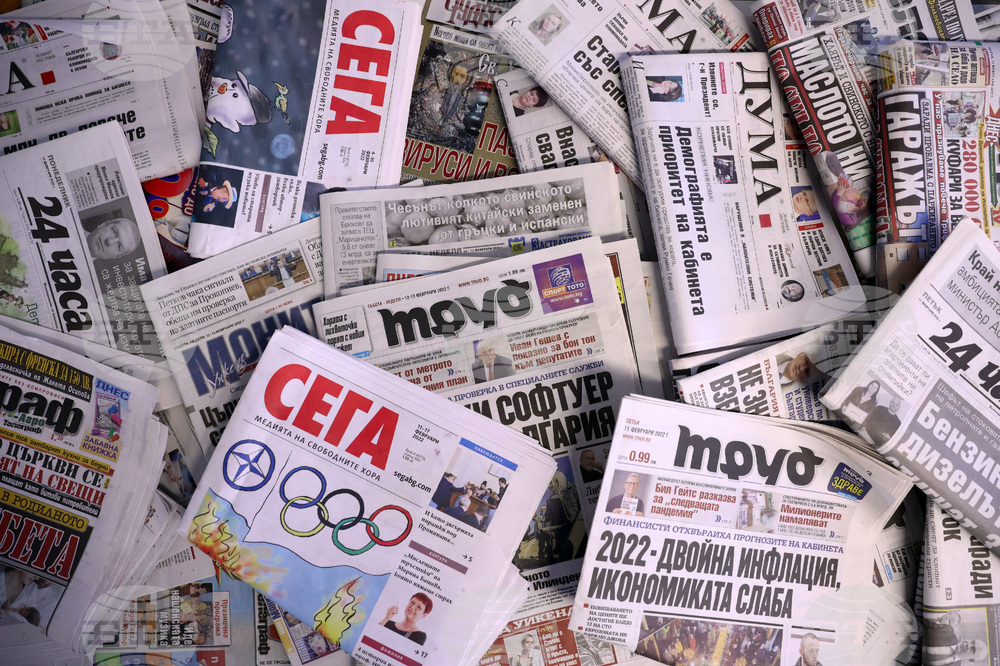
No single topic dominates Monday's media.
POLITICS
Capital.bg reports that, two months after the government of Prime Minister Rumen Radev took office, it has begun reshuffling the management of major state-owned companies. In early July, new leadership was appointed at the Bulgarian Water and Sewerage Holding and Motorways EAD, with several appointees linked to previous governments alongside some unexpected new faces, the publication says. According to the text, Plamen Manolov has been named Chair of the Bulgarian Water and Sewerage Holding after leading the National Sports Base for a decade under GERB-led governments. Meanwhile, Regional Development and Public Works Minister Ivan Shishkov appointed Ivan Kunev to head state-owned Motorways EAD company. Kunev previously served as a GERB municipal councillor in Blagoevgrad between 2011 and 2017. Ivelina Marinova, the sister-in-law of former Interior Minister and current GERB MP Mladen Marinov, retains her position on the state construction company's management.
2026 STATE BUDGET
Dnevnik.bg publishes an analysis by economist Petar Ganev, who argues that the 2026 state budget does not translate the government’s promises for consolidation of public spending and reduction of excessive deficit into concrete legislative measures. The article warns that although numerical targets for spending control are included in projections for the next two years, there is no explanation of how these goals will be achieved. Ganev notes that the budget currently submitted to the National Assembly foresees record-high public expenditure in 2026, over 45% of GDP, and a deficit of EUR 7.2 billion, nearly double the 2025 level, despite economic growth and rising revenues. He stresses that the medium-term framework projects a return to fiscal normalization by 2028, with spending reduced to 40% of GDP and the deficit to 3%, but questions whether this trajectory is backed by real policy measures. According to the analysis, key expenditure categories such as public sector wages and social spending are presented as “under control” or even reduced in nominal terms, but without binding legal provisions. The conclusion is that these commitments remain declarative and are likely to face strong scrutiny and political pressure already during the 2027 budget cycle.
ENERGY
The Mediapool.bg online daily publishes an in-depth analysis, which says that Bulgaria’s electricity system operator (ESO) is increasingly warning that the rapid expansion of solar power and battery storage is placing the national grid under severe stress, with risks of overloads, instability, and potential damage to substations. The article contrasts Bulgaria’s approach with Lithuania’s more advanced model for managing a high share of renewables.
According to ESO Director Kiril Georgiev (as cited in a previous Mediapool.bg interview), Bulgaria already imports reactive energy from Turkiye and Romania due to insufficient “rotating mass” (inertia) in its system, as only a limited number of nuclear and coal units are currently operational. This, combined with the gradual shutdown or reduced operation of coal plants, is weakening grid stability.
The analysis highlights Lithuania as a comparative case study, where despite similar levels of renewable capacity, the grid remains stable thanks to investments in synchronous condensers and state-managed battery systems. These technologies provide inertia and frequency control, enabling reliable integration of renewables. The Lithuanian transmission operator Litgrid and its state-owned subsidiary Energy Cells are cited as key implementers, using EU-funded infrastructure to stabilize the system independently of fossil fuel plants.
In contrast, Bulgaria has no synchronous condensers in its transmission infrastructure and no state-owned battery systems under its grid operator. Instead, ESO continues to rely on thermal power plants as a balancing mechanism, although their availability is decreasing. The article notes that while a state company (“National Energy Operator”) was created to develop storage capacity, it has not yet implemented any battery projects or successfully accessed EU funding.
The comparison further extends to Lithuania’s use of grid-scale batteries dedicated solely to system balancing, unlike Bulgaria where battery projects often participate in market trading. Lithuanian infrastructure is described as tightly integrated with grid needs, operating under operator control to maintain frequency stability.
Finally, the analysis points to broader structural differences: Lithuania has adopted “dynamic grid connection” models and hybrid capacity allocation for renewables, allowing more efficient use of grid infrastructure. Bulgaria, meanwhile, is described as lagging behind, still debating similar concepts in policy forums without practical implementation, which the article attributes to institutional inertia and conflicting economic interests.
HEALTHCARE
The Trud tabloid daily publishes a frontpage analysis titled “Bulgarians Pay Highest Out-of-Pocket Healthcare Costs in the EU”, which says that Bulgarians cover a record 36% of healthcare costs from their own pockets, compared with an EU average of 16-17%, citing health economist Arkadi Sharkov and Eurostat data. According to Sharkov, the main reason is low public healthcare funding, which covers only 63% of total health expenditure, while medicines account for more than two-thirds of households' out-of-pocket spending because the state reimburses just 23% of drug costs, compared with an EU average of 59%.
The analysis says patients also face substantial additional payments for medical devices, implants, stents, joint replacements, robotic surgery consumables and eye surgery, while unofficial payments for patient care are also reported. Health Minister Katya Ivkova acknowledges that co-payments remain a serious issue and says patients often do not know exactly what they are paying for. The Bulgarian Medical Union calls for a 25% increase in healthcare funding, centralized pricing of hospital medicines and warns that 77% of clinical pathways remain underfunded.
The article also cites the Bulgarian Hospital Association, which says hospital costs have risen by an average of 85% between 2021 and 2025 while public funding has failed to keep pace. Orthopaedic surgeon Dr. Ivaylo Mitkovski argues that Bulgaria is likely the only European country where patients still pay large sums for implants, limiting access to treatment.
Sharkov says an additional EUR 1.42 billion is needed to offset inflation and bring reimbursement levels in line with actual treatment costs. He suggests gradually increasing health insurance contributions by two percentage points over the coming years or allocating part of excise tax revenues to healthcare. He also notes that clinical pathway prices have not been updated since 2024, supports abolishing hospital spending caps following the Constitutional Court's ruling, and highlights the severe shortage of long-term and palliative care facilities in Bulgaria.
FOOD AND BEVERAGE INDUSTRY
The 24 Chasa daily frontpages an article titled "Outrage: Restaurant and Café Prices Up by More Than 100%, Despite No Crisis Since 2023", based on an analysis by the Bulgarian Industrial Association. According to the text, the turnover of restaurants and cafés in Bulgaria has exceeded EUR 3.5 billion over the past year – more than double the level recorded before the COVID-19 pandemic.
AGRICULTURE
24 Chasa publishes a lead interview with Agriculture and Food Minister Georgi Abrovski, who argues that the EU's Common Agricultural Policy has weakened European farming by encouraging competition among member states' farmers instead of building a strong export-oriented sector. He says Bulgaria will promote voluntary producer associations, particularly in the fruit and vegetable sector, to improve competitiveness and access to foreign markets. Abrovski says investments in irrigation cannot begin in 2026 because there are no completed designs, permits or procurement procedures for the necessary infrastructure. He also says the government will introduce stricter controls across the food supply chain to improve traceability and combat food fraud, while monitoring the National Care Basket initiative, a joint campaign between the government and leading retail chains, to ensure retail discounts are not passed on to Bulgarian producers. The Minister also calls for Bulgaria's rose-growing sector to receive a dedicated EU budget and special protection, similar to Greece's support scheme for cotton, arguing that rose oil is a unique product that deserves separate recognition at European level.
CHILD PROTECTION
bTV has an interview with outgoing UNICEF Representative to Bulgaria Christina de Bruin, who reflected on her five-year mandate in the country, describing encounters with “incredible children, parents and families” and highlighting Bulgaria’s strong traditions, family bonds, and cultural continuity. She stressed that UNICEF treats social media and online safety as a global priority, noting that children increasingly use AI tools for learning and personal support, which brings both opportunities and risks. De Bruin called for stronger digital literacy in schools, closer parental involvement, and cooperation with technology companies to ensure child safety online. The UNICEF representative also pointed to child poverty in Bulgaria, stating that the country ranks first in Europe in this indicator and identifying regions such as Sliven and Montana as particularly affected. She noted that Bulgarian authorities have set ambitious goals to lift around 200,000 children out of poverty by 2030, but emphasized that this requires sustained political commitment. De Bruin concluded by expressing gratitude for her five years in Bulgaria and said she is moving on to Serbia after what she described as a deeply emotional farewell.
***
Bulgarian National Radio (BNR) has an interview with Zhoro Penchev, Chair of the Obshchestvo.bg Foundation and World Bank data policy consultant, who commented on proposals to restrict children's access to social media. He argued that age-based bans can serve as an important policy signal to technology companies, but warned that technical restrictions are easy to circumvent and that greater emphasis should be placed on prevention and educating children about the impact of social media. Penchev said effective age verification would require continuous identity checks, raising serious privacy concerns by creating extensive digital tracking for all users. He cautioned against linking this debate too closely to the European Digital Identity Wallet, arguing that the wallet is a valuable technology that should not suffer reputational damage because of disputes over age verification. He also criticized social media platforms for designing addictive features under the guise of improving user experience, while noting that the European Commission has made meaningful progress in regulating the practices of major technology companies.
/KK/
news.modal.header
news.modal.text