site.btaMedia Review: June 1
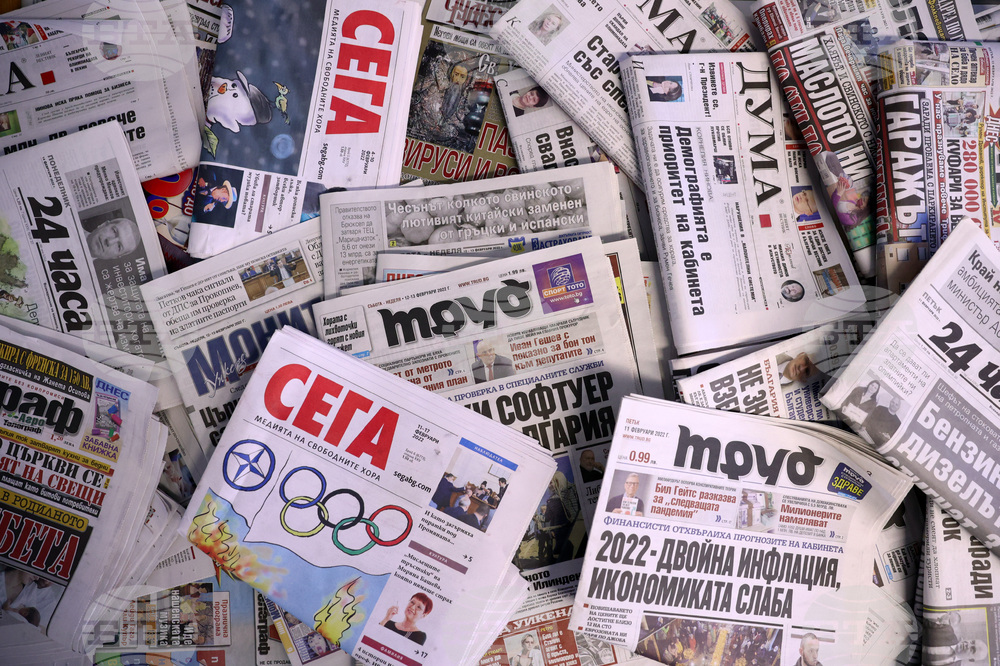
BABA ALINO CASE
Discussions surrounding the Baba Alino case dominate the media on Monday. It first came to public attention a week ago following investigations by the anti-corruption platform BIRD and reports from local activists, who raised concerns about extensive construction activity on forest land near the Golden Sands resort area.
In an interview with the Bulgarian National Radio, journalist Spas Spasov commented on the topic. He highlighted the position of the people who had purchased properties in the holiday village. “I doubt that anyone is thinking about them. Now the situation is becoming impossible to resolve, because it is difficult to deprive bona fide purchasers of their properties,” he said. According to him, the complex will not be demolished. “These are bona fide purchasers, and there will be a wave of court cases that will continue for years. The term bona fide purchaser means there is a possibility of failing to resolve the situation,” Spasov pointed out.
On Bulgarian National Television’s morning show, journalists Ruzha Raycheva and Emilia Milcheva also discussed the case. “What we are seeing in Baba Alino, which has taken place during the terms of six governments, several of them caretaker Governments, and two mayors, clearly shows the extent to which ‘cohesive corruption’ does what it does,” Milcheva said. “In the Baba Alino case, the state’s double standards are very clearly visible. When it comes to illegal buildings in Roma neighbourhoods, the state is very harsh, very uncompromising, regardless of the fact that in most cases these structures are people’s only homes - they are demolished, the bulldozers move in, and we journalists report on it. Whereas here, even if a decision to demolish is reached, and I am not at all certain that there will be demolition in the real sense of the word, because, as the Chair of the Chamber of Architects in Varna also said, it will be followed by a very long series of court cases,” she predicted. “Here we are not simply talking about a municipal problem, we are talking about a problem of national security and of how the State Agency for National Security functions, how power operates from the lowest level to the highest,” Raycheva stressed.
bTV’s morning show featured an interview with one of the owners of a property in Baba Alino - Bulgarian of South Korean origin Pavel Niy. “We are looking at the reactions in the media, on Facebook, the comments, and I hope these are not real people, because these comments are full of hatred and xenophobia towards Ukrainians and towards the residents of this complex, regardless of their Bulgarian origin. I wonder how this is possible, given that Bulgarians saved so many Jews during the Second World War. I ask myself whether these are the same people,” he said. The anger is not directed at the people who clearly turned a blind eye or built illegally, but at the homeowners who have documents, he added. “It is strange, because I am not some oligarch and I have no political connections. I am an ordinary Bulgarian citizen. I lived with my parents until I was 30 years old, saved money, my family helped me raise the capital, and I took out a mortgage. All of this was done so that I could have the opportunity to own my own flat,” Niy stressed. According to him, the major question is how it is possible that, given that people’s documents have been notarised and registered with the Registry Agency, they could end up on the street: “This shows that no one is fully protected. If someone buys a flat in Varna or elsewhere in Bulgaria, the same thing could happen to them.”
On Nova News’ morning show, former caretaker minister of regional development and public works Nikolay Naydenov described the case as “emblematic and scandalous”. “For years, the system has allowed such practices,” he stated, adding that cases like this raise serious questions about oversight of construction and administrative procedures. Naydenov further commented that in this particular case there are suspicions of improper actions and omissions on the part of certain officials, including in the fields of cadastre and municipal administration. He hinted at the existence of an “organised scheme” and stressed that numerous reports had been submitted and investigated over the years. The former Minister stated that illegal constructions must be removed and cannot be legalised through subsequent administrative procedures. “This is a criminal case that requires the intervention of the investigative authorities,” he pointed out. Regarding institutional responsibility, Naydenov commented that it is necessary to trace the entire chain of documents - from the initial spatial development plans to the notarial transactions - stressing the role of all experts and administrations involved.
POLITICS
On Bulgarian National Television’s morning show, former agriculture minister Mehmed Dikme commented on the questioning of Kardzhali Mayor Erol Myumyun. According to him, it is entirely normal for inspections to take place wherever public resources are being managed. “This is not the first time. Even when I was a municipal mayor, there were denunciations and reports, we were summoned for questioning, and we provided written explanations. Anyone who manages public resources must be accountable both to society and, where there are reports, information or suspicions of abuse, must provide the appropriate explanations,” Dikme explained. According to him, anyone attempting to use the case to create tension and conflict will be punished by voters. “Support for the Movement for Rights and Freedoms is declining at both national and regional level, but this is not the way to increase it. Support increases when you go out and ask people what their problems are and start solving them, not through coercive methods. The ethnic model exists in Bulgaria, but the time of ethnic confrontation is over. Anyone who tries to exploit it will not reap political dividends,” Dikme said.
ECONOMY
Mediapool features an article tracking how investments in improving energy efficiency in Bulgaria are in fact failing to produce the expected effect. Only in the past five years, hundreds of millions of euros from the European Union’s Cohesion Fund have been poured into improving energy efficiency in businesses, transport and households, while before that billions were spent from the national budget on the thermal refurbishment of prefabricated apartment blocks, the article reads. The objective of the cohesion mechanism was clear - to help the most energy-intensive economy in the EU reduce its consumption and carbon footprint and achieve convergence with average European standards. The result, however, has been exactly the opposite. Data from the Electricity System Operator (ESO) for the first five months of 2026 show that, instead of reducing its needs, the country consumed 7.18% more electricity than a year earlier. Energy intensity in transport is increasing, while the effect of the large-scale campaign to refurbish multi-family residential buildings is virtually imperceptible in macroeconomic balances. The billions poured into refurbishing prefabricated housing estates did not lead to a reduction in residential energy consumption. The reason is that a large proportion of residents in flats renovated with funds from the national budget and the EU subsequently do not save energy, as the programmes proclaim, but instead improve their living comfort. “If they previously had a certain budget for energy bills, they keep the same budget but use it for greater consumption and improvements - for example - by raising the indoor temperature of their homes in winter or cooling them in summer,” EnEffect Centre for Energy Efficiency Director Dragomir Tsanev explained to Mediapool. Instead of reducing their bills, people simply heat rooms that previously remained cooler and have invested massively in air conditioning for the summer season. This pursuit of thermal comfort has also been fuelled by parallel European programmes replacing old solid-fuel stoves with heat pumps and air-conditioning systems. And while the Environment Programme reported 101 GWh of energy savings from reduced coal use in households in 2024, those same new air conditioners placed an additional burden on the electricity grid. An additional factor is the 3.4% economic growth recorded in 2024, which offset the effects of modernisation in businesses. Internal urban migration and the relocation of families into larger, albeit more modern and energy-efficient homes, have also contributed. Consumption is further driven by the rapid spread of new household appliances. “If ten years ago only 5% of households had dishwashers, today 15% have such appliances,” Sustainable Energy Development Agency Director Ivaylo Aleksiev commented to Mediapool.
* * *
In an interview with the Bulgarian National Radio, Georgi Vuldzhev, Editor-in-Chief of the Expert Club for Economics and Politics, commented on Bulgaria entering the excessive deficit procedure. “Since 2021, all regular Governments that were able to propose and adopt budgets bear responsibility for what we have now. The fiscal trajectory began to deviate from what had been stable and sustainable,” he said. “But in my view, the greatest responsibility lies with the last regular Government. It implemented the most dramatic increase in salary expenditure.” Bulgaria has previously been subject to an excessive deficit procedure, but the context was very different, Vuldzhev recalled: “In 2010, during a global economic crisis and a crisis in Bulgaria. The deficit that accumulated in recent years is linked less to a deteriorating economic environment and more to the political actions of recent governments.” The expert linked the current development to accession to the eurozone and attempts, to a large extent, to conceal the fact that there is a deficit problem. “The European Commission also bears some responsibility. It could have raised concerns earlier. Under a strict interpretation of the eurozone rules, the convergence report should not have approved our accession,” he argued. Vuldzhev explained that the first step is the European Commission’s formal determination of the breach. “A six-month deadline will be given to prepare a correction plan for fiscal consolidation. With next year’s budget, they will expect to see the deficit reduced by around half a percentage point of GDP per year. This monitoring will remain in place until we return within the 3% deficit limit. Bringing more of the economy into the formal sector is also a very important factor.” According to him, the main problem lies in expenditure, but he does not believe that freezing wages is a sustainable solution. “There needs to be restructuring. It is not a good idea to freeze the entire public sector. In the Ministry of Interior and the judicial system, we have significant overspending compared with the European norm. Long-term staff reductions need to take place there. In other sectors, however, we have underfunding.”
On Bulgarian National Television’s morning show, former economy minister Nikola Stoyanov also commented on the topic. “It is not unexpected, as in recent years Bulgaria has struggled to keep its fiscal framework under control,” he said. “The forecasts for 2026 and 2027 are currently poor. Of course, all eyes will be on the new regular budget. This budget should have been adopted in the autumn, and if it had been properly adopted then, the forecasts for 2026 and 2027 would not be like this,” Stoyanov argued. This is certainly a negative signal and raises serious concerns among everyone observing Bulgaria and its economy and public finances, he added.
* * *
A survey by 24 Chasa shows that Bulgarians are optimizing their spending by cutting back on expenses that are not essential or are driven by prices they consider unjustifiably high. One such expense is dining out. Some 18.01%, or almost one in five people, are reducing restaurant visits, while one in ten is cutting back on travel and holidays. Although the current crisis was triggered by oil prices following the outbreak of the war in Iran, spending on fuel and the use of private cars is far from being the most frequently cut expense - in fact, it ranks last, cited by only 4.25% of respondents. Approximately the same share said they were foregoing certain foods, which suggests that consumption is declining but not in relation to basic products, rather to expensive and delicacy items for the table. The purchase of new clothes and carrying out home renovations are also being postponed, with almost two percentage points more people admitting that they are cutting such expenditures. More than 7% of respondents gave these answers. An unusually small number of people reported giving up cultural activities - books, cinema or theatre visits - only 5.41%. However, this has its explanation: it is difficult to cut spending that you do not normally make in the first place, the article reads. According to household budget surveys conducted by the National Statistical Institute, spending on culture ranks last on the average Bulgarian’s list of priorities, and therefore the scope for further reductions is not particularly large.
CULTURE
Trud features an interview with Italian actor Franco Nero, who received the special award for lifetime achievement at the thirteenth edition of the Golden Linden 2026 International Festival of New European Cinema in Stara Zagora. “Bulgaria is a wonderful place for making world-class cinema. I know that over the years Sylvester Stallone, Arnold Schwarzenegger, Mel Gibson, Harrison Ford and others have come here to shoot films,” Nero said. The actor also shared memories from the production of the 1966 film Django, which turned him into a star: “Sergio Corbucci had a terrific sense of humour. He had seen me in some film and wanted me for the role of Django, but the producers had two other actors in mind. They came up with the idea of going to the distributors, showing them our photographs and letting them decide who would be Django. And the distributors chose me. Corbucci was very funny. He loved telling the cinematographer: ‘Light those two blue lakes on Franco’s face properly. They’re going to make me rich!’ And he was very lazy. He never came to the set before noon. We were always waiting for him, and he always had an excuse. Once he came up to me and said: ‘Franco, I’m sorry, everyone is waiting for me and thinks I have an idea of what we’re going to shoot, but I have no idea. Let’s go to the bar.’ That was Corbucci.”
/MR/
news.modal.header
news.modal.text