site.btaMedia Review: March 30
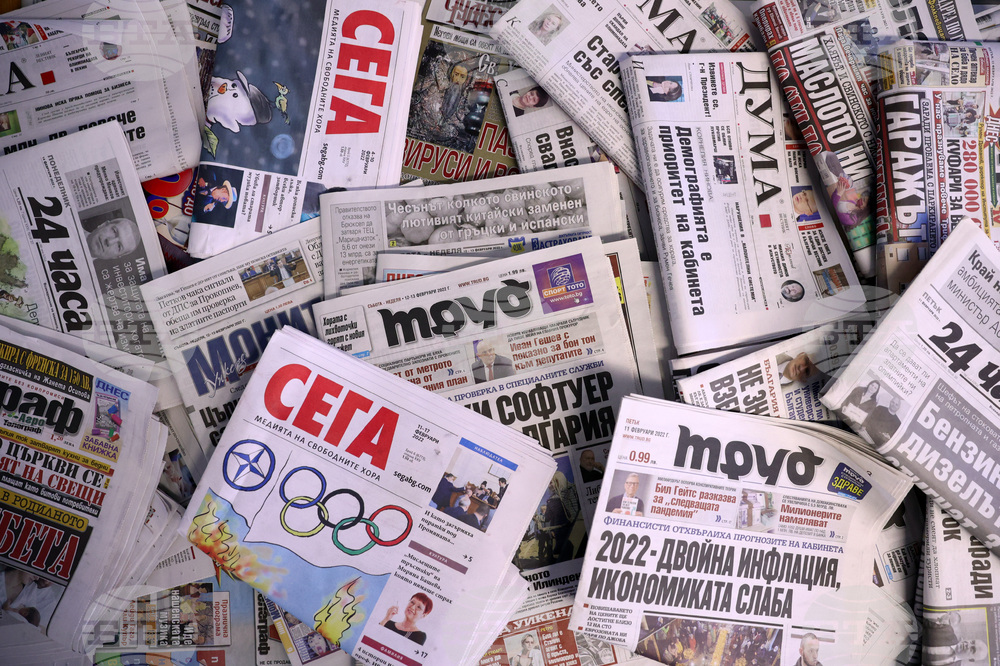
Television and radio coverage on Monday is largely dominated by the conflict in the Middle East and its impact on Bulgaria’s economy, as well as the measures the Bulgarian Government is taking to address the price increases. In contrast, print media do not focus on a single topic; their coverage is more varied, addressing issues ranging from transport sector to other domestic matters.
ECONOMY AMID MIDDLE EAST CRISES
In an interview for Bulgarian National Radio, former social policy and economy minister Lidiya Shuleva said that measures to curb price increases in Bulgaria should be targeted at sectors most affected by the Middle East conflict, rather than applied universally. Shuleva noted that the extended budget restricts the Government’s options but emphasized the importance of targeted support, citing lessons from the COVID crisis, when broad measures led to higher inflation. She highlighted the positive impact of supporting businesses when it comes to electricity costs, which influence prices more than fuel. The proposed compensation when the average monthly electricity bill reaches EUR 122 is considered an effective step. Early subsidies for agriculture were also seen as appropriate. Shuleva stressed the need for careful monitoring and potential expansion of measures, noting that oil prices will strongly affect goods. Currently, EUR 50 million is allocated for the transport sector, with scope for an increase if needed. Financial expert and investor Max Baklayan also commented inflation, saying that the global economic impact of the Middle East conflict has not yet fully hit markets. He warned that oil and LPG shocks, as well as potential fertilizer shortages from the Persian Gulf, have yet to significantly affect global supply. Baklayan noted that Yemen’s Houthis threaten to close a second key shipping route in the Red Sea, which, together with the Strait of Hormuz, controls roughly one-third of the world’s oil supply, potentially triggering a severe inflation surge. He criticized United States policy, saying Iranian control over the straits could hit the global economy hard. Regarding investments, Baklayan said prolonged conflict may temporarily depress gold prices, but long-term it could be an ideal opportunity to buy. He added that real estate is no longer a favorable investment, as rising interest rates in Europe could cool the market.
Speaking on Bulgarian National Television’s morning programme, Association for Modern Trade Executive Officer Nikolay Valkanov said that it is still too early to assess the impact of government measures to mitigate the fuel crisis. He emphasized that fuel price increases over the past three weeks are not yet a major problem and that Bulgaria is still far from a full-blown crisis. Valkanov explained that price increases in stores are driven mainly by two factors: annual supplier indexation of prices and seasonal spikes in energy-intensive imported products like fruits and vegetables. He stressed that retailers have managed to contain consumer price growth despite these pressures. Also commenting on the topic, Yordan Arabadzhiev, Executive Director of the Union of International Haulers, warned that transport costs are approaching critical levels due to fuel dependency. He called on the Government to implement urgent measures, including a mechanism to help carriers pay social security and VAT without tapping directly into the state budget, which he said would relieve the transport sector.
Speaking on Nova TV’s morning programme, Petar Ganev, senior researcher at Institute for Market Economics, and economists Rumen Galabov and Shteryo Nozharov discussed the Government’s fuel support measures, noting they are largely social rather than anti-inflationary and mainly aim to calm public perception. Ganev stressed that sector-focused interventions, such as in transport or food production, would achieve more with fewer resources. Nozharov added that rapid Government action was primarily intended to prevent “psychological inflation” from escalating. Galabov emphasized that Bulgaria maintains some of the lowest diesel and gasoline prices in the Eurozone, and that the Government is combining administrative measures, tax adjustments, and compensation schemes to maximize effect with limited funds. Experts also highlighted the introduction of targeted criteria, such as support for “energy-intensive businesses,” and called for clearer assessment of actual losses to better direct aid.
TRANSPORT SECTOR
24 Chasa’s front-page story reads “Drive Smart – Insurance Drops to EUR 102, but Jumps to EUR 600 for Reckless Drivers”. The daily reports that Bulgaria is moving toward the introduction of a long-anticipated bonus-malus system in compulsory motor third-party liability insurance, expected to come into force in January 2027. The reform, proposed by the Financial Supervision Commission, will make premiums fully individualized, based on drivers’ behavior, claims history, and risk profile. The system will divide drivers into bonus and malus classes, rewarding safe driving with discounts while significantly increasing costs for high-risk motorists. According to industry estimates, the current average premium of around EUR 204 could drop to approximately EUR 102 for low-risk drivers. At the same time, those with multiple violations may face sharp increases, with premiums reaching EUR 600 or more. Insurers warn that the measure may segment the market, clearly separating careful drivers from a smaller group of high-risk individuals. There are also concerns that rising costs could lead to an increase in uninsured drivers. The pricing model will rely on data from the National Guarantee Fund, including claims and violation records. The report also highlights a projected increase in Casco insurance premiums, driven by higher repair costs. Modern vehicles, particularly those with advanced electronics and electric components, are more expensive to service, with expected price growth of 5–10% by 2027. Separately, the Supreme Administrative Court has ruled against provisions granting the Interior Ministry access to toll system data. The Court found that such practices raise concerns over personal data protection and privacy, stressing the need for stricter legal safeguards. The ruling is subject to appeal.
***
Telegraph’s main story reports that more than 13,000 pedestrians have been sanctioned by the Bulgarian Ministry of Interior since the Road Traffic Act was amended on September 7, 2025, tightening enforcement against unsafe road crossing. Smartphones have become the most expensive accessory for Bulgarian pedestrians, with fines for using a phone while crossing now set at EUR 51.13. Regional police data show active campaigns against distracted pedestrians, with Varna among the leading cities. Since September, 45 people have been fined in Varna for using phones or wearing headphones while crossing. Other fines include EUR 51.13 for climbing barriers or running red lights, and EUR 25.56 for crossing outside designated pedestrian zones. The intensified controls respond to a sharp rise in pedestrian accidents: in the first 45 days of 2026 alone, nearly 200 serious collisions involving pedestrians were recorded. Authorities stress that pedestrian right-of-way is not absolute and applies only when safety rules are followed.
***
24 Chasa publishes an article titled: “Project Puts Country at Risk with 9 Motorways by 2040”. A proposed long-term infrastructure plan envisaging the construction of nine motorways across Bulgaria by 2040 is drawing criticism over its scope, feasibility and strategic focus. The concept, outlined in a national spatial development framework, goes significantly beyond the country’s existing motorway network, which currently relies mainly on the Trakia, Hemus and Struma motorways, alongside partially completed routes. The new vision includes additional corridors such as Rila, Maritsa, Black Sea, Yantra and Europe, aiming to improve internal connectivity and links to neighboring countries. According to the report, the plan reflects ambitions to strengthen East-West and North-South transport corridors, as well as access to the Black Sea coast and cross-border routes toward Romania, Turkiye and Serbia. Some of the proposed motorways are tied to broader European transport corridors and are seen as potentially beneficial for trade, tourism and regional development. However, the article underscores serious concerns among experts. Bulgaria has managed to complete only a limited number of major motorway projects over several decades, raising doubts about the realistic implementation capacity for such an extensive network within the given timeframe. Critics argue that the proposal risks repeating past patterns of delays, underfunding and shifting priorities. Economic viability is another key issue. Some of the planned routes are expected to pass through regions with low traffic intensity, calling into question whether the high construction and maintenance costs would be justified by actual usage. There are warnings that certain projects could generate limited economic return, effectively burdening public finances. The report also points to rapidly rising construction costs, with at least one proposed motorway estimated at around EUR 1.5 billion, further complicating the financial outlook. In this context, analysts stress the need for more careful prioritization and cost-benefit evaluation. Particular attention is given to the idea of new corridors crossing mountainous terrain, including routes through the Balkan Mountains, which would require complex engineering solutions such as tunnels and would significantly increase costs and construction time. Overall, the report questions whether the vision of a fully developed motorway network by 2040 is realistic or financially viable, warning of potential inefficiencies and misallocation of public funds.
SCIENCE & EDUCATION
Mediapool.bg reports that a team of Bulgarian scientists from the National Center for Mechatronics and Clean Technologies is demonstrating that high-tech solutions can be developed domestically, faster and at a fraction of the cost of conventional approaches. Among the center’s achievements is a patented method to repair the damaged hydroelectric unit at Chaira Pumped Storage Hydro Power Plant (PSHPP), the largest pumped storage plant in the Balkans, in less than a year and at roughly one-tenth of previously budgeted costs. In 2022, an accident put the fourth hydroelectric unit at Chaira out of operation, with its condition declared irreparable. Three consecutive public tenders failed to attract any bids. Professor Georgi Todorov, coordinator of an expert group appointed by the European Public Prosecutor’s Office, said his team completed an analysis in 40 days that had taken German and Swiss teams a year. Building on this work, researchers at the National Center for Mechatronics and Clean Technologies have developed and patented a method to repair the unit on-site in less than a year and at roughly one-tenth of the previously budgeted cost. Todorov stressed the national importance of the project, noting that major companies had assumed the repair was impossible. In fact, this is not the only occasion on which the Center’s experts have been involved with PSHPP. They are also participating in the development of Bulgaria’s energy strategy up to 2050. “In it, we recommended the construction of two new pumped-storage hydroelectric plants. The National Electric Company established a project company; the sites have been designed and identified as one of 200 strategic facilities. An EU credit line has also been opened,” explained Todorov. “We consider this initiative a major achievement. The proposal to build these two plants originated here – from the Center. This issue even has European significance because, if they are built, Bulgaria will become a hub for energy storage in the Balkans,” he added.
***
Sega.bg reports that tuition fees at Bulgarian public universities for the 2026/27 academic year show mixed trends, influenced by the euro introduction and increased state funding. Some universities maintain tuition levels, others round fees in favor of students, while a few increase them significantly. Mathematics tuition rises slightly in most universities, with Plovdiv University remaining lowest at EUR 358 and Sofia University charging EUR 3,950, fully covered by the State due to the programme’s protected status. Similarly, other “priority” programmes at Sofia University, such as Chemistry, Physics, Theology, show high fees, which students do not pay directly as the State covers them. Medical studies see the largest rise at Varna Medical University, with first-year tuition up to EUR 800, while Sofia, Plovdiv, and Pleven remain around EUR 614–620. Pedagogy fees range widely, from EUR 252 to EUR 570, reflecting differences among universities. National Security varies from EUR 107 to EUR 150. Economics tuition varies from EUR 236 to EUR 500, with notable rises at University of National and World Economy (+ EUR 70) and Shumen University (+ EUR 80). General Engineering fees increase moderately, with the highest jumps at National Military University (+ EUR 100) and Todor Kableshkov University of Transport (+ EUR 130).
SKI SAFETY
Trud’s top story says reckless behavior by overconfident skiers and snowboarders is a major cause of daily accidents at Bulgarian winter resorts. According to rescuers, incidents frequently involve individuals who overestimate their abilities, as well as tourists skiing under the influence of alcohol or drugs. Victims are often hit from behind, while those responsible leave the scene. In Borovets, specialized ski patrols, supported by police units, actively monitor the slopes to maintain public order. Ivo Tsvetkov, Executive Director of Borosport, explained that the most frequent violations include excessive speed, ignoring slope congestion, and skiing under the influence of alcohol. Patrols have the authority to issue warnings and official protocols, and a second offense results in the immediate deactivation of the offender's lift pass. Tsvetkov emphasized that the danger lies not in speed itself, but in a lack of control. “When skiers who haven’t mastered the basics go fast, they can’t maneuver around unexpected obstacles, which often leads to high-speed collisions,” he said. He compared the risk to drunk driving, noting that while cars have safety systems like airbags and ABS, skiers have no such protection when their reflexes are impaired. Ivan Obreikov, Marketing Director at Ulen AD, shared a personal account of being bedridden for a month after a skiing collision. He emphasized a particular risk group: beginners who skip professional instruction. Obreikov observed that tourists from certain regions, specifically Israeli and Greek nationals, tend to be extremely frugal when it comes to hiring ski instructors, often attempting to learn through trial and error on active slopes.
The daily also reports on on the case of Bulgarian athlete Malena Zamfirova, who was injured in the Czech town of Spindleruv Mlyn while preparing for the upcoming World Cup on March 3. She was hit in the back by a skier descending uncontrollably. Initial reports suggested the skier who hit Zamfirova was intoxicated, but later tests proved negative. The accident occurred on a flat section, where skiers presumably reduced speed and did not anticipate danger. Malena’s family plans to pursue legal action against the perpetrator. She faces a long recovery following surgeries before she can return to sports. She is expected to return to Bulgaria to continue treatment, with her father and coach Anatoliy Zamfirov indicating September as a potential date to resume training.
/MY/
news.modal.header
news.modal.text