site.btaUPDATED Bulgarian President, Foreign Diplomats Discuss Women's Empowerment at Conference in Sofia
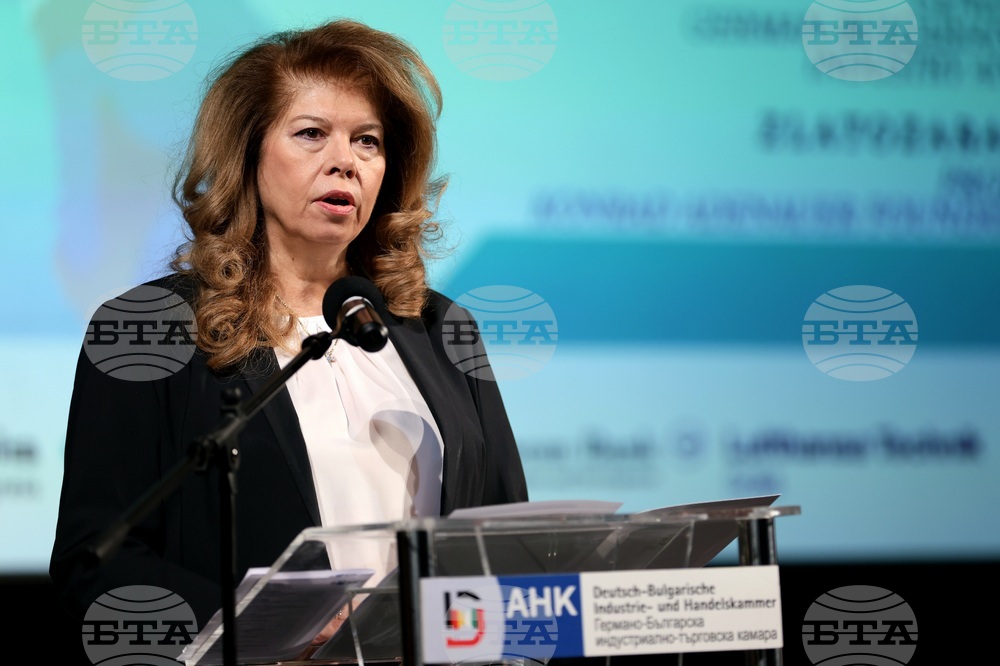
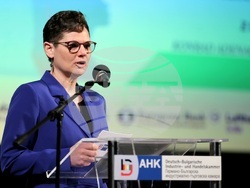
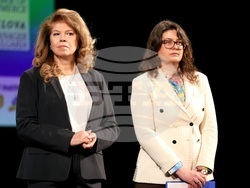
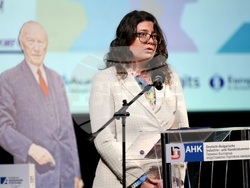
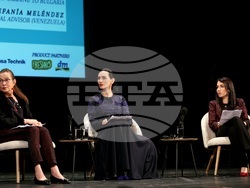
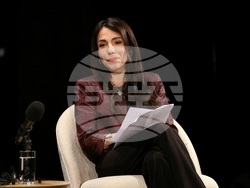
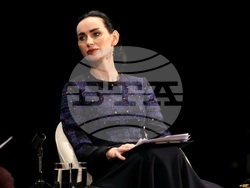
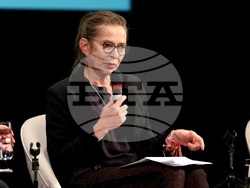
A conference titled "Shaping the Future: Women at the Helm" took place in Sofia on Friday. The event, timed in with the upcoming International Women's Day, was organized by the German-Bulgarian Chamber of Industry and Commerce through the Women's Network@DBIHK initiative in partnership with the Konrad Adenauer Foundation Bulgaria.
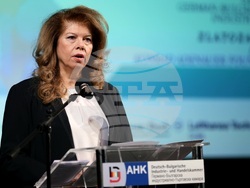
Opening the forum, Bulgarian President Iliana Iotova said that "gender equality is not a slogan but a strategic interest in States' development."
In her words, States that invest in women leadership invest in higher competitiveness, stronger democracy and fairer society. "The present-day world is facing a number of crises that give rise to a sense of division, polarization and scarcity of leadership," she pointed out.
"We need leaders who do not weaponize differences but rationalize them as an advantage. It is an advantage being different but also respecting the difference of the person next to you. Only thus can we achieve durable peace, stable economy, and fair society," the President argued.
She noted that institutions, non-governmental organizations and political forces often use notions like democracy, equality and justice, but they become meaningless unless backed by tangible action.
Iotova is proud of what Bulgaria has achieved in gender equality policies. At some 7.3%, the employment gender gap in this country is below the EU average. The pay gap is narrowing, too, and the share of women working in ICT approximates 30%, which is way above Europe's average, she said.
Despite the positive statistics, challenges linger because particular positions and occupations are still hard to reach for women owing to widespread prejudice, the speaker pointed out.
The head of State also discussed domestic violence. She recalled that during the COVID-19 pandemic quite a few countries recorded an increase in such cases.
"Legislation is important, but it will not suffice unless propped up by a shift in social dispositions. The issue needs to be tackled from an early age, by instilling intolerance of aggression and personal responsibility in children," Iotova pointed out.
German Ambassador in Sofia Irene Maria Plank highlighted the role of women when sharing in peace negotiations. "UN Security Council Resolution 1325 raised exceedingly many hopes, its underlying idea is that when women participate in peace process, the world can become a safer and more peaceful place," the diplomat pointed out. "Today we should ask, though, whether the intentions of that resolution have been achieved or things got worse," she added.
The resolution in question, dated October 31, 2000, reaffirmed the important role of women in the prevention and resolution of conflicts, peace negotiations, peace-building, peacekeeping, humanitarian response and in post-conflict reconstruction and stressed the importance of their equal participation and full involvement in all efforts for the maintenance and promotion of peace and security.
Ukrainian Ambassador in Sofia Olesya Ilashchuk said the war against Ukraine has changed the life of everybody in her country in all respects. "When life is under incessant attack, even the most mundane things turn into a challenge: cooking during an air raid, seeing a doctor or taking your kids to school from the shelter with infrastructure in ruins," the diplomat said, adding that Ukraining women are rising up to that difficult challenge. "Ukrainian women are holding on, they are resilient and responsible and are perfectly well aware why they are doing it: in order to keep defending their motherland, to shoulder the responsibility of taking care of life and of their fellow Ukrainians," Ilashchuk said.
Women for Democracy in Venezuela platform co-founder and former Venezuelan ambassador in Sofia Estefania Melendez pointed out that her country is in a humanitarian crisis in an authoritarian context. "Between 2013 and 2021, Venezuela's GDP shrank by over 75%, which is the steepest decline in peacetime. Women in Venezuela are taking the brunt of this crisis, which has forced nearly a third of the country's population to emigrate," she said. In her words, Veneuzela is currently in a unique situation, with two women at the forefront of the political scene: opposition leader and 2025 Nobel Peace Prize winner Maria Corina Machado, and the country's acting President Delcy Rodriguez. "This opens up an unprecedented opportunity to view the crisis in Venezuela from the perspective of women's leadership, of human rights, and to propose solutions, because in Venezuela we're finally seeing a light at the end of the tunnel and our democratic aspirations seem more realistic," Melendez said.
/DD/
Additional
news.modal.image.header
news.modal.image.text
news.modal.download.header
news.modal.download.text
news.modal.header
news.modal.text