site.btaMedia Review: January 9
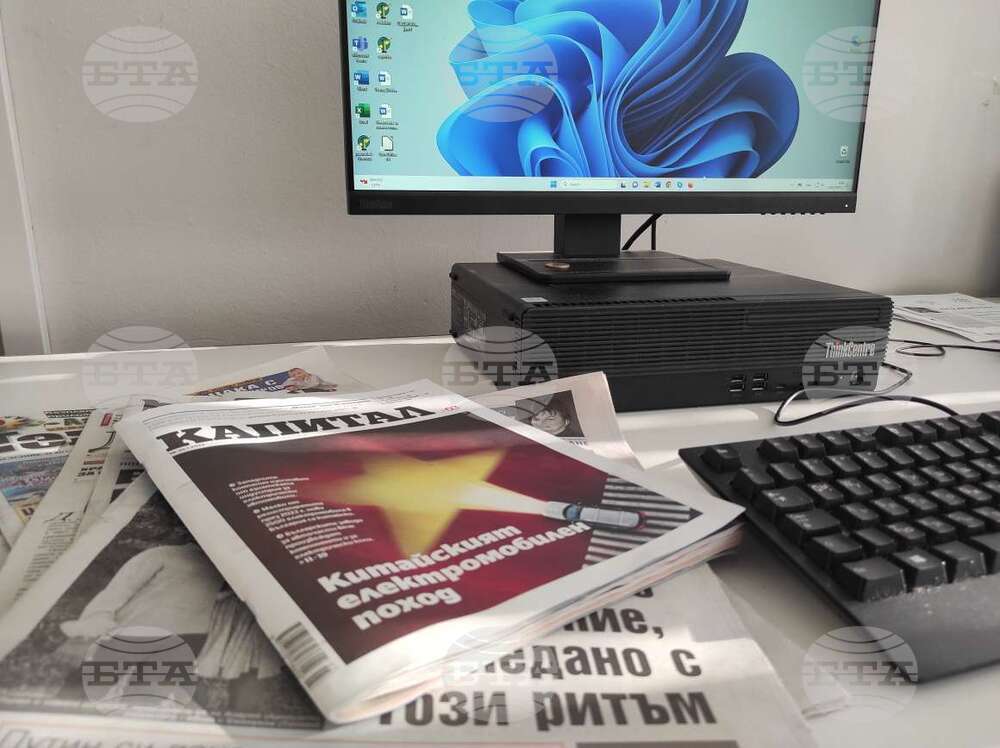
The Thursday media highlights Bulgaria’s smooth euro adoption, promising long-term economic stability and investment gains, and international security issues, with analysts stressing NATO, Arctic strategy, and the need for Bulgaria to take a clear stance in global debates.
ECONOMY
In an interview for Capital Weekly, Bulgarian National Bank Governor Dimitar Radev emphasizes that joining the eurozone will create additional disciplinary pressure on Bulgaria to improve competitiveness and maintain fiscal sustainability, noting that low national debt is an advantage but fiscal health depends more on the trajectory of public finances than on current levels. He highlighted that over the past five years, Bulgaria’s fiscal trajectory has been unfavorable, and professional institutions signal a need to restore a disciplined fiscal position, with state spending ideally capped at around 40% of GDP to avoid higher taxes or debt. Radev called on political parties to clarify their long-term vision for the role and size of the state in their economic programmes, as these choices must be reflected in the budget. Reflecting on past delays in euro adoption, he stressed that Bulgaria has maintained a strategic line despite political instability, and that the currency board, while successful, cannot replace the discipline that eurozone membership will bring. Looking forward, he identified three key priorities to maximize the benefits of joining the euro: implementing a predictable macroeconomic policy with a stable fiscal framework, carrying out long-postponed structural reforms, and actively participating in eurozone decision-making. Regarding the technical euro conversion, he noted that over a third of lev in circulation have already been withdrawn, similar to experiences in other new eurozone countries, but cautioned that structural issues like the shadow economy remain and should not be oversimplified or overhyped. He does not expect major changes in loan interest rates as a result of euro adoption and confirmed that the central bank supports initiatives to allow citizens to invest in government securities, likely to be realized by the end of the year.
***
Nine days after the introduction of the euro in Bulgaria, economists and financial analysts report a generally smooth transition, with temporary difficulties in circulation and public adaptation. In a discussion on Nova TV, economists Vasil Karaivanov, Dimitar Sabev, and financial analyst Deyan Vasilev shared their assessments.
Sabev noted minor discrepancies in prices observed during shopping, suggesting that businesses could raise prices if they wished, but the public’s initial experience remains largely positive. Vasilev highlighted that banking and payment systems, including ATMs and online payments, functioned normally, though initial starter kits for euro coins and banknotes were insufficient for widespread public use. He expects this issue to resolve within the month. Karaivanov reported no major negative effects in the first days.
Experts underlined the long-term economic benefits of euro adoption, including higher investment attractiveness and improved credit ratings. Sabev explained that being part of the eurozone enhances Bulgaria’s credibility in international financial markets, encouraging investment. Vasilev noted that economic growth will remain gradual, but currency stability with the euro ensures steady wealth accumulation, contrasting with neighbouring countries with less stable currencies. Karaivanov emphasized that Bulgaria has maintained financial stability, avoiding potential losses that could have arisen if the currency board had failed during the transition.
***
Dnevnik.bg publishes an analysis examining whether and by which indicators Bulgaria was catching up with other EU member states in terms of wealth, on the eve of its expected accession to the euro area in 2026. According to the article, successive governments have set the goal of narrowing the gap with the EU average since Bulgaria joined the bloc in 2007, yet the country has traditionally ranked at the bottom of most welfare indicators. Shortly before euro area entry, outgoing Prime Minister Rosen Zhelyazkov stated that Bulgaria had overtaken Romania, Greece, Slovakia, Hungary and Lithuania in purchasing power parity (PPP), three of which are euro area members. Dnevnik notes, however, that according to the main Eurostat indicators used for international comparison, the picture is more nuanced. By GDP per capita in PPP terms, Bulgaria remains last in the EU, although the gap with the second-to-last country has narrowed in recent years. By actual individual consumption, which reflects what households actually consume, Bulgaria has overtaken Hungary and Latvia and is close to Estonia, according to data released in December and cited by Institute for Market Economics economist Adrian Nikolov.
The government clarified that Zhelyazkov’s claim is based on a different indicator, median equivalized disposable income measured in purchasing power standards. By this measure, Bulgaria surpasses Romania, Greece, Slovakia and Hungary, while data for Lithuania are preliminary. For 2024, Bulgaria’s median equivalized disposable income stood at 13,079 purchasing power standards, compared with an EU average of 21,245.
Economists quoted by Dnevnik explain that this indicator is more strongly influenced by wage increases, pension growth and social transfers, as well as by Bulgaria’s relatively low income taxes. Rising incomes, including rapid increases in the minimum wage, have translated directly into higher consumption, which has been a key driver of economic growth in recent years.
At the same time, analysts warn that Bulgaria’s relative improvement also reflects weaker performance elsewhere. Hungary and Estonia experienced very high inflation in recent years, which dampened consumption, while Bulgaria’s domestic demand expanded strongly.
Looking ahead, Dnevnik outlines investment, education and infrastructure as the main factors needed for faster convergence with developed EU economies. Economists express hope that euro area membership will help accelerate this process, although the effect for Bulgaria may be more moderate given the long-standing currency board, which has already limited currency risk.
***
Mediapool.bg reports that after ten years at the helm of ICGB, the company that invests in and operates the gas interconnector between the Greek city of Komotini and Stara Zagora, the Bulgarian executive director Teodora Georgieva has been replaced, while the Greek director Georgios Satlas has also been removed from his post and transferred to the supervisory board. Maya Hristova has been appointed as the new executive director, alongside Greek national Pieros Hatzianis, with the two jointly representing the company. The management and supervisory changes were decided in November, approved by the Bulgarian and Greek energy regulators in early December, and registered in the Commercial Register on January 6, 2026. No official reasons have been given for the near-complete overhaul of the company’s governing bodies, but the changes come amid long-delayed decisions on ICGB’s participation in the Vertical Gas Corridor. ICGB owns and operates the pipeline through which Bulgaria’s state gas supplier Bulgargaz receives 1 billion cubic metres of Azerbaijani gas annually, with a total capacity of 3 billion cubic metres, and it remains to be seen whether the new management will move toward expanding capacity and joining the regional gas corridor project, the story says.
***
Mediapool.bg focuses on Sofia Airport, which continues to set passenger traffic records while the concessionaire, SOF Connect, does not pay a concession fee. In 2025, Sofia Airport served a record 8.41 million passengers, up 6.2% year-on-year, confirming its role as a key regional aviation hub. Despite the strong recovery and growth well above pre-pandemic levels, the concession fee payment remains suspended under a deferral granted during the COVID-19 crisis. The government has been negotiating for months to restore payments from 2026, but talks have so far been unsuccessful, with the state seeking around EUR 40 million annually and SOF Connect offering only EUR 9 million, while also demanding compensation for runway repairs. Yes, Bulgaria announced it will submit a draft parliamentary decision obliging the government to resume concession fee collection from 2026, arguing that the deferral has resulted in significant missed revenues for the state.
***
Dnevnik has a story about the Bulgarian company Antarta, which produces freeze-dried food originally developed for astronauts and is expanding it into broader applications such as tourism, long-term storage, military logistics and everyday use. Founded about five years ago, the company builds on Bulgarian lyophilization technology developed in the 1970s at the Institute of Cryobiology. After years of research and partnership with the institute, Antarta has recently entered the market with products that preserve most nutrients, flavour and quality without preservatives.
***
In an interview with BNT, Yordan Arabadzhiev, Executive Director of the Union of International Carriers, warned that the ongoing Greek farmers’ blockades of Greek roads and border crossings are causing serious losses and missed opportunities for Bulgarian transport companies. Arabadzhiev said that one hour of enforced delay at the border costs a carrier between EUR 10 and EUR 12 per truck, forcing companies to adjust supply chains and logistics. Many transporters have begun using alternative routes, but this increases travel time and operating costs. He noted that the Union has written to the Greek Attorney General demanding enforcement of Greek laws that prohibit road and border closures. Despite this, the roadblocks continue. A second letter requested that the authorities sanction the owners of agricultural machinery causing the blockages, but Arabadzhiev added that the machinery is often off the road, with police stopping traffic using cones and citing the blockade. He said the Union expects the issue to be resolved by the Greek authorities within a day.
WORLD
Quoting the Associated Press, Mediapool.bg, among other outlets report that Israeli Prime Minister Benjamin Netanyahu announced Thursday the appointment of Bulgarian diplomat Nikolay Mladenov to serve as Director General of the Peace Council envisaged under the ceasefire plan for the Gaza Strip presented by US President Donald Trump. Netanyahu announced the appointment after meeting Mladenov in Jerusalem earlier in the day. The Israeli Prime Minister described Mladenov as the designated Director General of the Council, which is to oversee the implementation of the second and more complex phase of the ceasefire. There was no immediate confirmation from Washington. According to AP, the appointment marks an important step in advancing Trump’s peace plan, which has stalled after the launch of its first phase that led to an end to the two-year war in the Palestinian enclave. Efforts to move forward with the second phase have so far failed to gain momentum. It is expected that President Trump will announce the members of the Peace Council later this month, with Mladenov representing the body on the ground. A senior US official, speaking on condition of anonymity, confirmed to AP that Mladenov is the Trump administration’s choice to act as the Council’s day-to-day administrator in Gaza.
Mladenov’s candidacy was put forward after several Arab and Muslim countries objected to the Peace Council being headed by former UK Prime Minister Tony Blair, China’s Xinhua news agency reported.
Nikolay Mladenov has held a number of senior positions in Bulgaria and in international organizations. He is currently Director General of the Anwar Gargash Diplomatic Academy in the United Arab Emirates. He previously served as a member of the Bulgarian National Assembly (2001-2005), a Member of the European Parliament (2007-2009), Bulgaria’s Minister of Defence (2009-2010) and Minister of Foreign Affairs (2010-2013). From 2013 he headed the UN Assistance Mission for Iraq (UNAMI), and between 2015 and the end of 2020 he served as UN Special Coordinator for the Middle East Peace Process, playing a key role in efforts to de-escalate tensions between Israel and the Palestinians.
***
In an interview with BNR, diplomat and former Bulgarian ambassador to the UN Stefan Tafrov commented that US President Donald Trump is becoming increasingly unpopular, with Republican senators beginning to distance themselves from him. Tafrov described as a political setback for Trump the Senate vote in which five Republican senators sided with Democrats in favour of limiting the president’s military powers. He noted that a key safeguard against autocratic tendencies in Trump’s governance remains the US judicial system, which upholds the rule of law. Commenting on US claims on Greenland, Tafrov warned that such moves amount to "cutting the branch the United States is sitting on," adding that implementation of such plans would spell the end of NATO. He criticized the lack of public debate in Bulgaria on international law and questioned whether Sofia has taken a position in support of Denmark, saying that Bulgaria "is disgracing itself" by remaining silent.
On the appointment of Nikolay Mladenov as Director General of the Peace Council, Tafrov said that diplomacy in the Middle East represents the highest level of complexity, describing the region as the most challenging arena in international relations.
***
In an interview with bTV, former Bulgarian Defence Minister Velizar Shalamanov said that the US actions against Nicolas Maduro in Venezuela could lead to new rules between Washington, Moscow, Beijing and Tehran.
Shalamanov described US steps, which he said represent breaches of established norms, as a signal that Russia, China and Iran cannot continue to flout international rules. He noted that 2026 is a key year for the United States, with the 250th anniversary of the republic on July 4 and the NATO summit in Ankara days later. "Greenland is critical for North Atlantic security and control of shipping routes," Shalamanov said.
He stressed the importance of NATO for European security and warned against disinformation campaigns targeting the Alliance. Shalamanov also highlighted the strategic and economic significance of Greenland, comparing its Arctic role to Taiwan’s position in the Pacific. The region’s natural resources are expected to attract investment, with a clear distinction between NATO-aligned countries and potential Chinese involvement.
***
24 Chasa reports 12 bold predictions for 2026 by a group of foreign policy experts from the European Council on Foreign Relations, who argue that while the world is unlikely to collapse, the liberal international order will continue to weaken under pressure from rising powers and internal legitimacy crises. They foresee political erosion in Europe with growing far-right influence, a Trump-era-style nuclear deal with Iran, rising tech protectionism in the EU, and a cautious US military posture toward Europe. The analysts also project an uneasy Ukraine-Russia truce, stalled UK-EU economic alignment, a limited impact of a Democratic House majority in the US, expanded state use of AI, a shift in climate policy toward energy security, China refraining from attacking Taiwan, ongoing challenges in Gaza, and deepening debt issues in the global South.
SOCIETY
Duma.bg reports that the Ministry of Labour and Social Policy will provide over EUR 40 million to municipalities to hire unemployed and vulnerable people for disaster prevention activities such as cleaning riverbeds and afforestation. The funding, under the Employment without Barriers measure, aims both to reduce disaster risks and to support employment, with municipalities able to hire workers for 6 to 24 months at minimum wage or higher for graduates. The initiative, welcomed by local authorities, is expected to start within a month and follows calls for better preventive measures after recent flood-related tragedies.
***
In an interview with BNR, constitutional law expert Dr. Stoil Mollov warned that the total blockage of the Supreme Judicial Council (VSS) will maintain the status quo in Bulgaria’s judiciary.
Regarding the acting Prosecutor General Borislav Sarafov, Mollov argued that the issue is constitutionally clear: the principle of fixed mandates is fundamental in a democratic state governed by the rule of law. Attempts to bypass the new provisions in the Judicial System Act cannot override constitutional principles, he said. He also noted that the Constitutional Court does not have authority to directly resolve the matter of Sarafov’s tenure.
Mollov described recent refusals by some courts to process Sarafov’s requests as a positive sign that elements of judicial normalcy remain. However, he warned that the deeper problem lies in Bulgarian society and the electoral system, which allows state institutions to operate beyond their mandates and suffer from a legitimacy deficit.
***
In an interview with bTV, Stefan Bakalov, head of the Anti-Narcotics Department at the Customs Agency, said that drug trafficking through Bulgaria is increasingly aimed at Turkey and the Middle East, with traffickers timing shipments around holidays to avoid detection.
He noted that the Middle Eastern market is increasingly demanding higher-value drugs, including marijuana and methamphetamine, while cocaine is also appearing. Turkey remains a particularly large and active market due to its tourist traffic.
Bakalov highlighted a shift in trafficker profiles over the past 20 years, from poorly educated individuals to more intelligent operators with broader global awareness, complicating law enforcement efforts. He warned that all narcotics are dangerous, with fentanyl use being especially lethal, due to its high mortality rate.
***
In a Trud interview, forestry professor Georgi Kostov says that many of the mountain forests are inherently risky because they are aging and unmanaged. He explains that without regular forestry care, trees become physiologically old, weakened, and prone to rot, making them vulnerable to strong winds and heavy snow. Kostov argues that public resistance to any tree cutting on Vitosha mountain, near Sofia, combined with economic constraints and unclear land ownership, has led to neglect rather than protection. He stresses that dangerous trees, especially near roads and infrastructure, should be systematically removed, but current legislation does not allow forestry authorities to intervene in private or ambiguously owned land, even when public safety is at risk. As a result, forests are left to deteriorate naturally, increasing the likelihood of fallen trees, road closures, and tragic accidents.
***
In a 24 Chasa interview, Nikolay Bozhilov, Grand Master of the Grand Lodge of Bulgaria, says there is strong interest in freemasonry in Bulgaria. He notes that the average age of new applicants is about 30 years old, which he sees as a sign of vitality and growth within the organization. He highlights that, in contrast to declines in some Western countries, Bulgarian lodges are attracting young, educated men seeking spiritual and personal development.
/NF/
news.modal.header
news.modal.text