site.btaBulgaria Has Most Centralized Governance in EU, Says Municipalities Association Deputy Chair
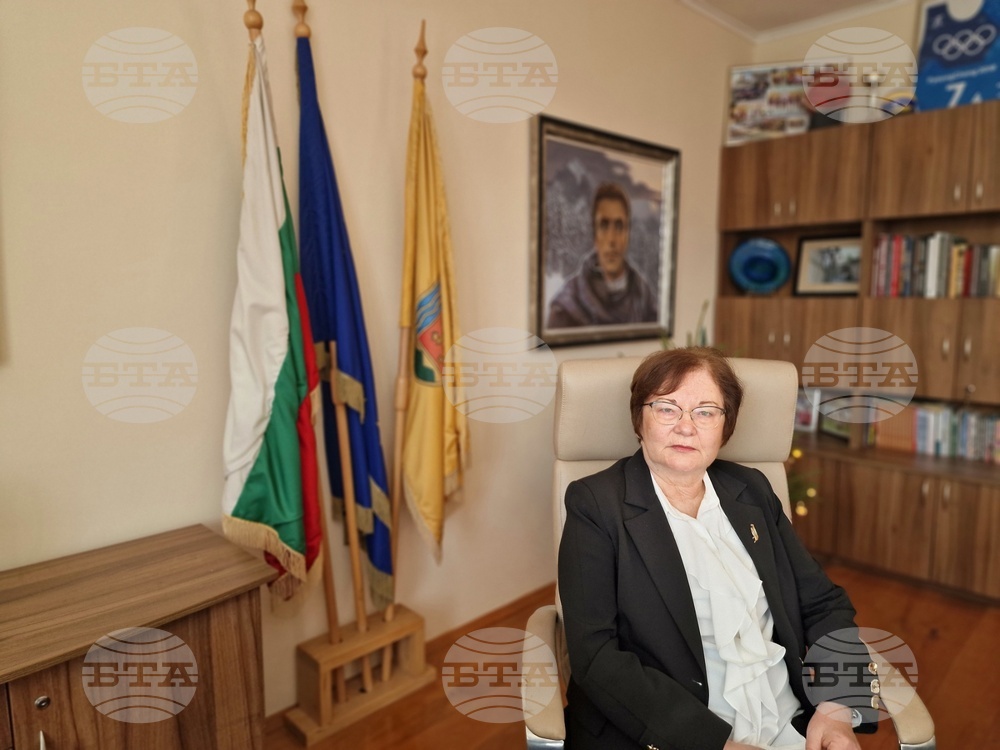
Bulgaria is the country with the most centralized system of government in the European Union as its municipalities are entirely dependent on the national authorities and the state budget, said Donka Mihailova, Mayor of Troyan and Deputy Chair of the Management Board of the National Association of Municipalities in the Republic of Bulgaria (NAMRB), interviewed by BTA.
In her words, in none of the other European systems she is familiar with does the state retain in full both corporate tax and personal income tax – revenues generated with the active involvement of municipalities. “It is extremely unreasonable that not a penny from these taxes remains with the municipalities,” she stressed, adding that for municipalities it is humiliating to be permanently cast in the role of “asking, waiting and pleading” for funds from the central budget.
Mihailova said that the absence of a regular state budget in crisis situations leads to extreme uncertainty for municipalities and directly affects people’s taxes and the functioning of municipal services. This is the case now, following the government's resignation on December 12 and a subsequent resolution by which the National Assembly extended the 2025 state budget into 2026 instead of adopting a new budget for next year.
Mihailova expressed disappointment that all political parties include decentralization in their pre-election promises, yet after elections the issue is pushed into the background and mayors remain dependent on the will of central government.
“It is sad that all political parties promise us decentralization before elections and forget about it afterwards. It is also sad that political parties seek to make mayors, who are majoritarian figures elected with the people’s trust, dependent on the will of central government,” she added.
As regards public investment and its dependence on state funding and EU programmes, the Mayor of Troyan highlighted two main risks: the regularity of financing under the Investment Programme for Municipalities and the possibility that projects under the Recovery and Resilience Plan will be completed and reported on time.
According to her, the Investment Programme for municipal projects creates opportunities but also carries serious risks for the sustainability of public finances. The municipality has already signed contracts and opened accounts with the Bulgarian Development Bank, through which funding will be provided via loans. “Otherwise, the risk is great – both for Bulgarian municipalities and for the construction sector,” Mihailova warned.
Commenting on the extension of the 2025 state budget into 2026, she said it has brought a degree of calm, but real certainty would come only with the adoption of a regular state budget for next year. In her words, concern also remains that funds for staff remuneration in education, kindergartens and healthcare facilities will not be increased to the necessary extent.
According to Mihailova, the demographic crisis is a problem that local authorities can influence but cannot resolve on their own. “Unless municipalities and the state together make demography a national priority, the impact will be minimal. In this sense, I believe the time has come not only for demographic strategies that remain on paper, but to join forces for real policies producing real effects,” she stressed.
Experience in Troyan shows that investment in quality of life and conditions for raising children has a tangible impact. “Most young people return to Troyan because they believe our municipality offers good conditions for raising children,” the mayor said, highlighting efforts in education, sport, culture and social life.
Among the most important projects expected to begin in 2026, Mihailova singled out a large-scale project for the Troyan riverfront, for which funding will be sought under the Regional Development and Environment programmes within the so-called integrated territorial investments. The project envisages redefining the role and place of the river as a centre for urban activities and a venue for small cultural events, walks, meetings and leisure. In March Troyan Municipality announced it had submitted a concept for integrated territorial development of the areas along the Osam River and its tributaries. Troyan is the lead municipality, with Lovech and Letnitsa as partners.
The most difficult decision for next year, Mihailova said, was the already adopted decision not to raise local taxes and fees. “Decisions linked to major projects such as the riverfront project are also difficult. We are currently discussing another serious issue with the people of Troyan – where the preparatory groups should remain, in schools or in kindergartens. We face difficult decisions on the town’s infrastructure, the green system and certain streets. Experience has taught us that such decisions can be taken well only when we take them in partnership with the citizens of the municipality,” the Mayor of Troyan said.
For Mihailova, the success of a mayoral term is measured not only by funds absorbed or projects completed. “For me, success is the success of the citizens,” she said, adding that true satisfaction comes when the work of local government contributes to changing people’s lives for the better. Trust at local level, in her words, is earned through work and love.
/VE/
news.modal.header
news.modal.text