site.btaZero Waste in the Balkans: Which Country Is Closest to Target?
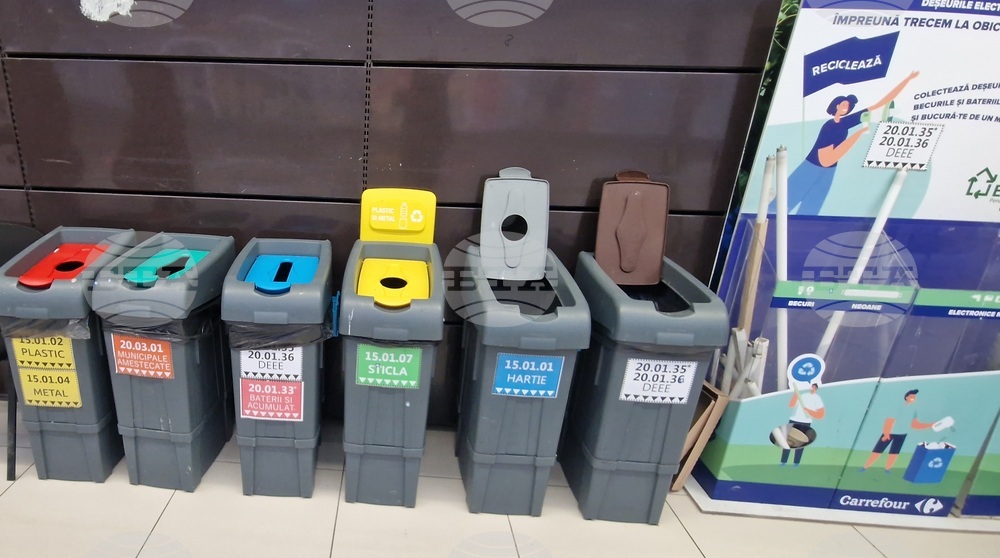
This week, the world marked for the fourth time International Zero Waste Day, celebrated on March 30th since 2023 by a UN General Assembly resolution initiated by Turkiye.
Bulgaria is among the EU countries with the lowest recycling rates - less than 20% of household waste is recycled, compared to an EU average of nearly 48%, recently noted Nikolay Nedelkov, Deputy Mayor for Ecology of Sofia Municipality, citing official data from the European Commission. At the same time, national targets aim for over 65% of waste to be recycled by 2035, with landfilling reduced to 10%, he recalled.
Indeed, according to 2023 data from Eurostat, Bulgaria recycles only 16.7% of its waste compared to an overall EU average of 47.9%. In Europe, the absolute leader for that year is Germany with 68.7%, followed by Austria at 62.8% and Slovenia at 59.8%.
The EU generates 177.8 kg of packaging waste per person per year, of which 35.3 kg comes from plastic packaging, according to 2023 statistics cited by Euronews.
According to the latest Eurostat data for Bulgaria in 2022, the country recycled 58.3% of packaging waste and 39.5% of its plastic packaging waste. In the EU, the average recycling rate for packaging waste in 2022 was 65.3%, rising to 67.5% in 2023. The highest share of recycled packaging waste in Europe in 2023 was in Belgium at 79.7%, followed by Iceland at 77.3% and the Netherlands at 75.8%.
In the EU, a total of seven countries have already met the 2030 target of recycling at least 70% of all packaging waste: Belgium, the Netherlands, Italy, the Czech Republic, Slovenia, Slovakia, and Spain. Only one of these, Slovenia, is in the Balkan region.
Here is how the other countries on the peninsula fare in terms of recycling waste:
(The italicized data for each country comes from Eurostat statistics and refers to 2023 unless otherwise noted.)
Slovenia
Recycled waste: 59.8%
Recycled packaging waste: 73.6%
Recycled plastic packaging waste: 51.5%
In Slovenia, waste is sorted at home into biodegradable waste, paper, plastics, glass, mixed household waste, and textiles. Collection operates on a “door-to-door” system, with most municipalities providing regular pick-up directly from households. Public containers and special collection points are also available for certain types of waste.
Packaging must be separated according to the Packaging Management Regulation. Producers and importers are responsible for the costs of managing the packaging they place on the market. Environmental fees are also applied to packaging, electronics, and other waste.
The country follows the “polluter pays” principle, where households pay a waste tax based on the amount of waste they generate. Fees depend on the size of the container and the frequency of collection. Proper separation results in less mixed waste and lower costs, while improper separation leads to higher fees. Certain types of waste, such as recyclables and end-of-life vehicles, can be disposed of free of charge.
Violations of the separate collection rules can result in fines imposed by municipal companies and inspection authorities.
Turkiye
Recycled waste: no Eurostat data (37.5% according to national statistics for 2025)
Recycled packaging waste: no data
Recycled plastic packaging waste: no data
Over the past nine years, recycling in Turkiye has been an integral part of the Zero Waste programme, implemented under the auspices of First Lady Emine Erdogan. The strategy aims to reach 70% recycled waste by 2053. By 2025, the recycling rate was 37.5%, up from 13% in the first year of the program.
According to the latest data from the Ministry of Environment, Climate Change, and Urbanization, 90 million tonnes of waste have been recycled in Turkiye since the programme began in 2017. The largest share is paper at 36.1 million tonnes, followed by organic material packaging at 30.6 million tonnes. Recycled plastic totals 10.2 million tonnes, glass 3.5 million tonnes, and metal packaging and cans 9.6 million tonnes.
Separate waste collection is implemented in 217,000 buildings across the country.
As of 2019, plastic bags in Turkiye are no longer free. Their current price is symbolic -TRY1 (0.02 euro cents) as of the beginning of this year. According to the online publication Gıda Hattı, the average person in Turkiye uses 312 bags per year, while Europe aims to reduce this number to 40 per person.
Additionally, a deposit system has been established in 53 provinces and is planned to cover all 81 provinces by the end of 2026. Currently, 834 recycling machines have been installed nationwide, used by 117,000 registered individuals. Through these machines, 12.5 million packaging items and cans of various materials have been collected. Of these, 200 tonnes (64%) are plastic, 504 tonnes (31%) are glass, and 11 tonnes (5%) are metal packaging and cans. The deposit system has saved TRY 3 million (approximately EUR 58,305) so far.
Croatia
Recycled waste: 36%
Recycled packaging waste: 51.9%
Recycled plastic packaging waste: 28.2%
Croatia enforces a Waste Management Act that requires strict separation of waste at the household level to increase the recycling rate to 65% by 2030. The law regulates separate collection of plastics, paper, glass, metals, and general household waste. Fines for violating the law range from EUR 100 to EUR 250 for individuals and EUR 600 to EUR 1,300 for legal entities.
Croatia also follows the “pay-as-you-throw” principle, where waste fees are determined by the amount of mixed waste generated. The more citizens separate their waste correctly, the less they pay. Additionally, a deposit system is applied to beverage containers such as bottles and cans; the deposit is refunded to consumers when the container is returned to a store for recycling.
Citizens can also dispose of certain types of waste free of charge, including electronics, hazardous waste, and bulky items, at designated collection points.
Albania
Recycled waste: 18.8%
Recycled packaging waste: no data
Recycled plastic packaging waste: no data
In 2024, Albania produced a total of 862.2 thousand tonnes of waste, most of which went to landfills, according to data cited by the Albanian news portal Pozitivi. According to the Albanian Institute of Statistics (INSTAT), the average Albanian generates 360 kg of waste per year, most of it organic. Despite the significant recycling capacity of the Albanian industry, only about 18–19% of waste is actually recycled in the country, notes Pozitivi.
In 2022, Albania banned the use of thin plastic bags and single-use plastic bags. Today, supermarkets offer thicker, more durable plastic bags, which continue to be widely used by the population.
Last year, Albania established its Ministry of Environment, and as of January this year, the National Waste Treatment Operator (AKEM) has been operational under it. According to Albania’s Environment Minister Sofjan Jaupaj, this fully state-owned operator will manage waste treatment with a clear circular economy approach, applying principles of waste reduction and recycling.
Greece
Recycled waste: 17.4%
Recycled packaging waste: 48%
Recycled plastic packaging waste: 32.7%
Recycling in Greece remains a serious challenge despite growing public and institutional pressure, reports the Greek publication Proto Thema.
According to the cited data, the country recycles less than 20% of its waste, while the majority. about 80%, is still sent to landfills. This places Greece among the lowest-performing EU countries in this regard and has led to financial sanctions and increased oversight from European institutions. The media note that despite strategies and funding, actual results remain limited.
Local media also recall that the EU aims to reduce landfilled waste to a maximum of 10% by 2035, a target Greece is at risk of missing.
The online edition of Kathimerini reported in February that Greece has begun implementing a national system for the return and recycling of plastic bottles and aluminum cans. The system is planned to cover the entire country within two years and will include 4,200 recycling machines and 9,700 collection points. The goal is to achieve 90% recycling of this type of waste.
In February, the Athens local authorities announced an expansion of the network of so-called brown bins for bio-waste. A special programme already includes over 12,000 households, aiming to turn this type of waste into compost suitable for fertilizing and landscaping.
According to Eurostat data, Greece performs best in recycling electronic waste, reaching 82%, which is equal to the EU average.
Cyprus
Recycled waste: 15.8%
Recycled packaging waste: 69.5% (2022)
Recycled plastic packaging waste: 39.1% (2022)
In the Republic of Cyprus, the “polluter pays” principle applies to both businesses and households, implemented through a “Pay-As-You-Throw” system.
According to the system, households and commercial establishments, along with a standard waste collection fee, purchase prepaid bags or containers of varying sizes, which are used for disposing of non-recyclable waste. Citizens pay based on the volume of non-recyclable waste they generate, creating an incentive to separate waste into recyclable and non-recyclable streams.
Organic kitchen waste is collected separately in designated containers, for which no prepaid bag or container fee is charged.
Recyclable waste is collected either in special containers or in designated bags left in front of residences. According to the Green Dot company, which serves over 90% of the population in government-controlled areas, plastic, metal, and beverage carton packaging are placed in special bags for curbside collection. Paper is collected in separate bags and collected similarly, while glass packaging is deposited in designated containers.
Serbia
Recycled waste: 15.2%
Recycled packaging waste: no data
Recycled plastic packaging waste: no data
Serbia generates approximately three million tonnes of household waste annually, but only 15.5% is recycled, according to the NGO National Alliance for Local Economic Development (NALED). Around 90% of household waste still ends up in landfills instead of recycling centers, and in many municipalities, 90–100% of waste is simply dumped.
Official statistics report 2,689 illegal landfills in Serbia, while NGOs estimate over 3,500. In 2025, the Serbian government provided more than 4,200 trash bins and 1,178 containers across 44 municipalities and introduced new modern garbage trucks in 17 cities, according to the Ministry of Ecology.
In December 2025, Serbia passed a new Waste Management Act. However, since the government annulled the previous regulation on funding allocation for recycling incentives, a legal vacuum arose on January 1, 2026, disrupting recycling companies that rely on state financing to operate.
Officials state that the new law aligns with EU standards, introduces greater control through digital monitoring of waste streams, and allows the import of non-hazardous waste for energy purposes, aiming to reduce dependence on fossil fuels and enhance economic competitiveness. The law decentralizes the permitting process for collection, transport, storage, and treatment of non-hazardous and inert waste, giving local authorities the power to issue permits for their territories.
Experts warn that under these circumstances, 120,000 tonnes of waste could enter the Serbian environment in 2026, potentially causing an ecological disaster.
Since January 1, 2026, recycling plants have reduced their workforce by 70%.
Romania
Recycled waste: 12.4%
Recycled packaging waste: 37.3% (2022)
Recycled plastic packaging waste: 32.4% (2022)
Romania ranks at the bottom of the European Union in terms of selective waste collection and recycling, according to a European Commission report from June 2025. Despite EU taxes and fines, the country recycles only about 12% of its waste, compared to an EU average of around 50%.
Romania generates 303 kg of household waste per person annually, with 74% being landfilled, far above the EU goal of a maximum 10% by 2035. According to the National Environmental Guard, 88% of collected waste is not recycled. The law mandates local authorities to provide separate collection for paper, metal, plastic, and glass waste, and since last year, textile waste as well. However, several regions still lack fully integrated waste management systems, and even in Bucharest, recycling bins and containers are scarce.
At the end of 2023, Romania introduced a new bottle return system for plastic and glass bottles. Consumers return bottles via special machines in major retail chains and receive a voucher (RON 0.50 or EUR 0.10 per bottle) redeemable at the checkout for discounts.
Montenegro
Recycled waste: 3.7%
Recycled packaging waste: no data
Recycled plastic packaging waste: no data
According to MONSTAT, Montenegro’s national statistical office, the total waste generated in 2021 was 1,477,865.8 tonnes, a 12.4% increase compared to the previous year. Industrial waste accounted for 46.2% of the total, while hazardous waste made up 20.6%. Household waste totaled 325,707.5 tonnes (a 7.1% increase), equivalent to 526 kg per capita per year, or about 1.4 kg per person per day.
In 2021, 87.6% of Montenegro’s population had access to waste collection services, but only 1.8% of the 297,000 tonnes collected was recycled. Despite the introduction of a separate collection system for “dry” and “wet” waste fractions, results remain poor due to a lack of infrastructure, incentives, and effective enforcement. Recycling is very limited; small amounts of collected materials are often exported, but remain unattractive for processing domestically. Pollution remains a serious problem, with 13% of waste not collected at all, and the absence of penalties or environmental oversight exacerbates the situation.
Kosovo
Recycled waste: 3.5%
Recycled packaging waste: no data
Recycled plastic packaging waste: no data
Recycling in Kosovo is mainly handled by private companies. According to WeBalkans.eu (2021), separate collection bins are rare, and waste collection companies sort materials such as metal, plastic, and paper for sale. Some local initiatives by NGOs exist for separating textile and plastic waste.
In September 2023, Kosovo banned the production of thin plastic bags (0–25 microns), while bags of 25–50 microns thickness became subject to a EUR 0.05 charge.
Bosnia and Herzegovina
Recycled waste: 1%
Recycled packaging waste: no data
Recycled plastic packaging waste: no data
In 2022, the average person in Bosnia and Herzegovina generated 345 kg of municipal waste. Waste management remains a major challenge: a large share ends up in landfills, including over 1,400 illegal dumps, and 20–30% is disposed of improperly, according to the Global Waste Cleaning Network (GWCN).
Separate collection and recycling are very limited, with roughly 95% of waste not being recovered. This leads to river and environmental pollution and health risks. Initiatives like “Zero Waste Municipalities” are attempting to improve management through separate collection, education, and infrastructure investment.
North Macedonia
Recycled waste: 0.0%
Recycled packaging waste: no data
Recycled plastic packaging waste: no data
On the website of the Ministry of Environment and Spatial Planning of North Macedonia, the latest report on waste dates to 2023. According to this report, municipal waste generation follows economic growth and cannot yet be separated from it. The report states that “the amount of municipal waste generated in 2023 is almost 30% higher compared to 2008,” and only 30% of municipalities required to submit annual waste management reports actually do so. The topic of separate collection and recycling of waste practically does not exist in the media space in North Macedonia either.
Although more than 25 companies in the country are licensed to collect waste. including packaging, batteries, oils, tires, cars, and textiles. and there are containers for separate collection in cities, companies face difficulties due to the lack of recycling facilities in North Macedonia. As a result, a large portion of municipal waste is sent abroad for recycling, mainly to Turkiye.
Individual efforts by some companies to run separate collection campaigns, as well as the available online app for waste sorting, still do not show visible results.
In practice, landfilling remains almost the only method of waste collection, and the country has a significant number of illegal dumps. Last summer, some of these dumps caught fire due to high temperatures, causing serious environmental problems for residents and authorities because they were difficult to extinguish.
Contributors: Ayshe Sali, Ivan Lazarov, Magdalena Dimitrova, Marinela Velichkova, Martina Gancheva, Mina Dimitrova, Petar Kadrev, Simona-Alex Mihaleva, Teodora Encheva, Tsvetozar Tsakov
/PP/
news.modal.header
news.modal.text