site.btaMay 17, 2026: Bulgaria Joined UNESCO 70 Years Ago
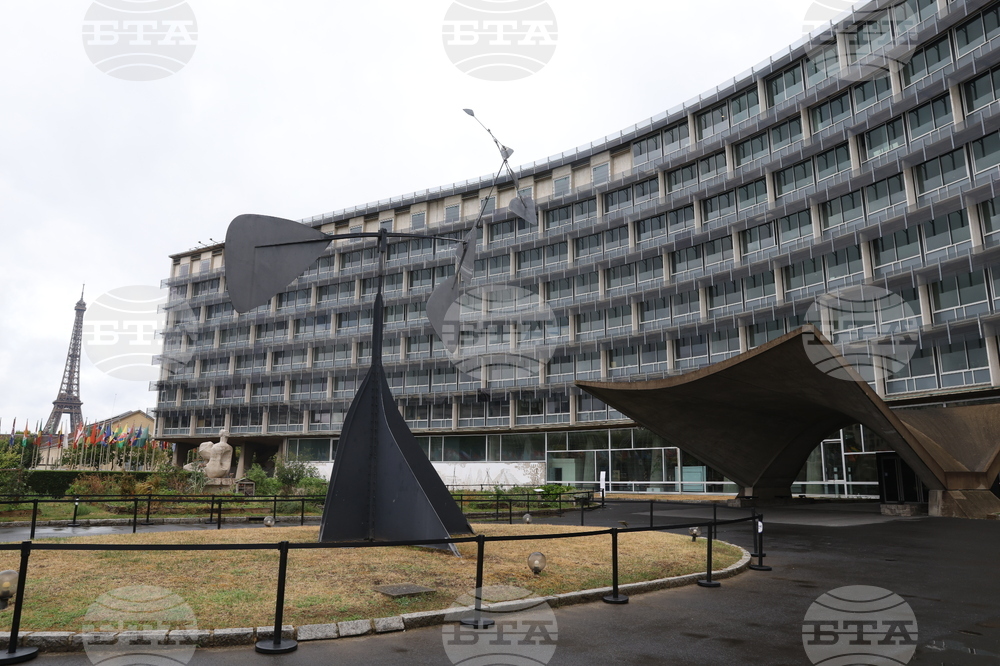
Seventy years ago on Sunday, Bulgaria joined the United Nations Education, Scientific and Cultural Organization (UNESCO) as its 69th member on May 17, 1956. On that date in London, the country deposited its instruments of ratification of the UNESCO Constitution. On June 29, 1956, Evgeni Kamenov was appointed Bulgaria's first permanent delegate to the organization.
Ever since its accession, Bulgaria has been committed to and has actively shared in the accomplishment of the organization's mission: to contribute to the building of a culture of peace, the eradication of poverty, sustainable development and intercultural dialogue through education, the sciences, culture, communication and information.
Intergovernmental Committees, Initiatives, Forums, Programmes
Bulgaria has been member of the Management of Social Transformations (MOST) Programme, the Intergovernmental Council of the International Hydrological Programme, the Intergovernmental Oceanographic Commission, the International Bioethics Committee, the Management of Social Transformations (MOST) Programme, the Man and the Biosphere Programme, the International Committee on Underwater Cultural Heritage, the Intergovernmental Committee for the Safeguarding of Intangible Cultural Heritage, the World Heritage Committee (three mandates: 1978-1983, 1985-1991, 2021-2021), the Intergovernmental Committee of the World Decade for Cultural Development, and the Intergovernmental Council of the International Programme for the Development of Communication.
This country has been invariably involved in all significant initiatives, forums and programmes of UNESCO, and has initiated or organized and hosted some of them:
- Fourth Conference of the European National Commissions for UNESCO (Sofia, June 1962);
- 15th World Congress of Philosophy (Varna, September 1973);
- Session of the UNESCO Executive Board (Varna, June 1974);
- Third Conference of Ministers of Education of UNESCO's Europe Region (Sofia, June 1980);
- 23rd Session of the UNESCO General Conference (Sofia, October 1985 - the only General Conference session to take place outside the organization's headquarters in Paris);
- UNESCO pilot project on Living Human Treasures - Bulgaria (2001);
- Second Extraordinary Session of the UNESCO Intergovernmental Committee for the Safeguarding of the Intangible Cultural Heritage (Sofia, February 2008);
- first international conference on Youth and the Internet: Fighting Radicalization and Extremism (Paris, June 2015);
- 47th Session of the World Heritage Committee (Paris, July 2025).
Conventions
Bulgaria is a Contracting Party to 17 UNESCO conventions (listed in the chronological order of ratification or accession):
- Convention for the Protection of Cultural Property in the Event of Armed Conflict (1956)
- Convention against Discrimination in Education (1962)
- Convention concerning the International Exchange of Publications (1963)
- Convention concerning the Exchange of Official Publications and Government Documents between States (1963)
- Convention on the Means of Prohibiting and Preventing the Illicit Import, Export and Transfer of Ownership of Cultural Property (1971)
- Convention concerning the Protection of the World Cultural and Natural Heritage (1974)
- Universal Copyright Convention as revised on 24 July 1971 (1975)
- Convention on Wetlands of International Importance, especially as Waterfowl Habitat (1975)
- Convention on the Recognition of Studies, Diplomas and Degrees concerning Higher Education in the States belonging to the Europe Region (1981)
- Convention on Technical and Vocational Education (1994)
- International Convention for the Protection of Performers, Producers of Phonograms and Broadcasting Organisations (1995)
- Convention for the Protection of Producers of Phonograms against Unauthorized Duplication of Their Phonograms (1995)
- Convention on the Recognition of Qualifications concerning Higher Education in the European Region (2000)
- Convention on the Protection of Underwater Cultural Heritage (2003)
- Convention on the Protection and Promotion of the Diversity of Cultural Expressions (2006)
- Convention for the Safeguarding of the Intangible Cultural Heritage (2006)
- International Convention against Doping in Sport (2007)
Listings
Ten Bulgarian properties are inscribed on the UNESCO World Heritage List:
Seven cultural sites:
- Boyana Church (1979)
- Madara Rider (1979)
- Thracian Tomb of Kazanlak (1979)
- Rock-Hewn Churches of Ivanovo (1979)
- Rila Monastery (1983)
- Ancient City of Nessebar (1983)
- Thracian Tomb of Sveshtari (1985)
Three natural sites:
- Srebarna Nature Reserve (1983)
- Pirin National Park (1983)
- Ancient Beach Forests of the Central Balkan Natural Park (as part of the Ancient and Primeval Beech Forests of the Carpathians and Other Regions of Europe) (2007, 2011, 2017, 2021)
This country has nine cultural practices and expressions of intangible heritage inscribed in UNESCO's Representative List of the Intangible Cultural Heritage of Humanity:
- Bistritsa Babi, archaic polyphony, dances and rituals from the Shoplouk region (2005, 2008)
- Nestinarstvo, messages from the past: the Panagyr of Saints Constantine and Helena in the village of Bulgari (2009)
- The tradition of carpet-making in Chiprovtsi (2014)
- Surova folk feast in Pernik region (2015)
- Festival of folklore in Koprivshtitsa: a system of practices for heritage presentation and transmission (2016)
- Bulgarian Chitalishte (Community Cultural Centre): practical experience in safeguarding the vitality of the Intangible Cultural Heritage (2017)
- Cultural Practices Associated to the 1st of March (2017) (jointly with Moldova, Romania, and North Macedonia)
- Visoko multipart signing from Dolen and Satovcha, South-western Bulgaria (2021)
- Bagpipes and bagpipe playing in Bulgaria: transmission of knowledge and skills (2025)
Bulgaria has four entries in UNESCO's Memory of the World International Register:
- Enina Apostolos, Old Bulgarian Cyrillic manuscript (fragment) of the 11th century (2011)
- Gospels of Tsar Ivan Alexander (2017) (submitted jointly with the UK)
- Boril's Synodicon (2017)
- Mawlana's Kulliyat (The Complete Works of Mawlana) (2023) (submitted jointly with Germany, Iran, Tajikistan, Turkiye and Uzbekistan)
Four Bulgarian biosphere reserves were nominated in 1977 under the Man and the Biosphere Programme:
- Tchervenata sténa
- Central Balkan
- Ouzounboudjak
- Srébarna
Cooperation in Education
There are three UNESCO Chairs at Bulgarian higher educational establishments:
- UNESCO Chair on Culture of Peace and Human Rights, Bourgas Free University (Burgas, 1998);
- UNESCO Chair on ICTs in Library Studies, Education and Cultural Heritage, University of Library Studies and Information Technologies (Sofia, 2012);
- UNESCO Chair on Media and Information Literacy and Cultural Policies for Sustainable Development, University of National and World Economy (Sofia, 2022).
The Bulgarian UNESCO Associated Schools Network, started in 1976, now consists of over 60 educational institutions (kindergartens, primary, secondary, secondary special and vocational schools) in various parts of the country.
Bulgaria has been elected to the UNESCO Executive Board three times: 1994-1997, 2007-2009 and 2017-2021.
Officials, Institutions, National Commission
Bulgarian politician and diplomat Irina Bokova served two consecutive 4-year terms as Director-General of UNESCO between 2009 and 2017, becoming the first woman and Eastern European to hold this position.
At the beginning of March 2026, former Bulgarian deputy prime minister, foreign minister and member of the European Commission Mariya Gabriel assumed office as UNESCO Assistant Director-General for Communication and Information.
A Regional Centre for the Safeguarding of Intangible Cultural Heritage in SouthEastern Europe under the auspices of UNESCO was established in Sofia in 2012.
In 2008, the Council of Ministers established the Bulgaria-UNESCO Trust Fund to finance projects in education, communication, cultural diversity, and tolerance, targeting countries in Africa, post-conflict zones, and small island states.
On May 7, 2026, the Council of Ministers adopted a decision on the opening of a Permanent Mission of Bulgaria to UNESCO in Paris. The setting up of an overseas representation in its own right will enhance the positioning and visibility of Bulgaria at the organization, ensuring the country the political weight and influence it needs for the protection of national priorities across the broad spectrum of UNESCO's activities. So far, the country was represented at the organization by a Permanent Delegation, headed by a permanent representative.
Bulgaria's National Commission for UNESCO was established by Council of Ministers Order of May 25, 1956 and operates pursuant to Decree No. 147 of June 30, 2004 and the Organizational Rules of the National Commission for UNESCO. The international legal basis for activities of the Commission is the Charter of National Commissions, adopted at the 20th General Conference of UNESCO.
The National Commission consists of 53 members, representing key ministries, central-government departments and institutes involved in the UNESCO programmes, distinguished scholars, cultural figures and educators. The National Commission advises the Council of Ministers on UNESCO and addresses major issues in the selection of Bulgarian projects at UNESCO.
The collective governing body of the National Commission is its Bureau, which consists of a chairperson and members representing the government institutions, research and educational organizations involved in the UNESCO programme activities. The National Commission is assisted by a Secretariat, which is part of the UN and Global Affairs Directorate of the Ministry of Foreign Affairs. The Secretariat is an executive and coordinating body of the Commission and consists of a secretary general and associates. It implements the day-to-day operation of the Commission and liaises with UNESCO.
Apart from official government institutions, the National Commission works actively with civil society, national and international NGOs in the implementation of the country's participation in the programme activities of UNESCO. The National Commission maintains particularly useful contacts with NGOs in culture and communications. The National Commission's Secretariat maintains links with UNESCO Clubs in Sofia and countrywide.
Following is an abridged version of a BTA report of September 24, 1956, covering a visit to Bulgaria by UNESCO Director-General Luther Evans - the first trip to this country by senior officials of the organization:
"On the occasion of the visit, the National Commission for Cooperation with UNESCO held a meeting at the hall of the Bulgarian Academy of Sciences, which was attended by academics, professors, public figures, educators, students, and many citizens.
'Bulgaria has long supported UNESCO's mission,' National Commission for Cooperation with UNESCO Deputy Chair Dimitar Bratanov said, opening the meeting. 'After the People's Republic of Bulgaria joined the United Nations, our country was admitted as a member of UNESCO on May 17, 1956. A National Commission for Cooperation with UNESCO has been established, with sections dedicated to education, physical-mathematical and natural sciences, social sciences, cultural activities, information, and technical assistance. This creates new opportunities for our researchers, writers, performers, artists, and educators to participate more actively in cultural and scientific cooperation with other countries.'
Welcomed with applause, UNESCO Director-General Luther Evans talked about the tasks and activities of the organization. 'I am here to congratulate Bulgaria on becoming a member of UNESCO,' Evans said. 'With its rich history and progressive values, Bulgaria has a rightful place in our organization. UNESCO works for peace through education, culture, and international cooperation. We aim to help people see that every nation's culture is a shared treasure for all humanity.' [. . .] 'From my interactions with cultural leaders in your country, I see that Bulgaria has much to offer and can contribute to international cultural cooperation,' Evans said.
He concluded by expressing gratitude to Bulgaria for the warm welcome extended to the UNESCO delegation. [. . .]"
/LG/

news.modal.header
news.modal.text