site.btaOmbudsman Refers to Constitutional Court Minimum Wage Freeze, Hours-Based Calculation of Length of Service
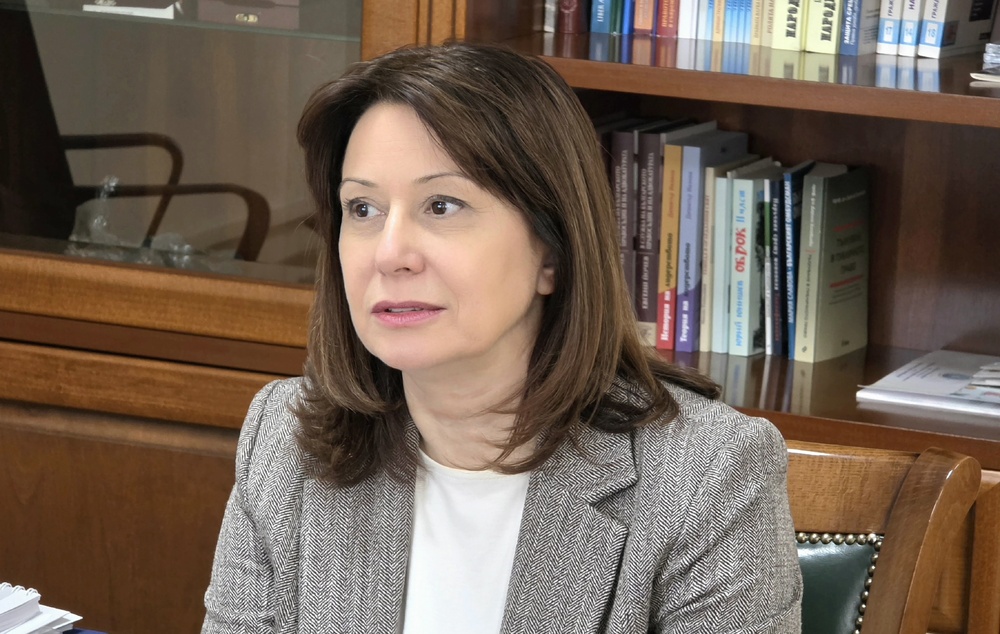
Ombudsman Velislava Delcheva has challenged the constitutionality of provisions in the 2026 State Budget Act, referring to a freeze of the minimum wage and hours-based calculation of the length of service, the Ombudsman’s office said.
In her request, the Ombudsman has asked the Constitutional Court to declare unconstitutional certain provisions of the Transitional and Final Provisions of the State Budget Act of the Republic of Bulgaria for 2026, arguing that they contradict the principles of a state governed by the rule of law and a social state.
According to the petition, these provisions change the mechanism for calculating the length of service, replacing the existing system based on days worked with one based on hours worked. The new provision introduces a strictly proportional calculation of length of service for part-time employment, removing the current rule under which a full day of service is recognized when at least half of the legally established working hours have been completed.
The ombudsman points out that to date this represents the most significant change to the system for calculating length of service since the adoption of the Labour Code.
A provision under which the mechanism for the annual determination of the minimum wage is abolished in 2026 is also challenged, as no alternative model, deadline for its adoption, or guarantees for future adjustments have been proposed at the same time.
The request states that the disputed provisions violate the principles of the rule of law and the social state, the constitutional protection of labour, the right to work, and the right to a minimum wage and paid annual leave. It also argues that the changes create a risk of indirect discrimination against part-time workers, placing this category of employees at a permanently more disadvantageous position solely because of the way their working hours are organized.
The Ombudsman emphasizes that the amendments to the Labour Code were included in the Transitional and Final Provisions of the State Budget Act without the statutory procedures, without a necessary preliminary impact assessment, and without a separate bill being drafted and discussed within the National Council for Tripartite Cooperation.
According to the petition, the provisions also create legal uncertainty, as they simultaneously provide for the inapplicability of the current mechanism for determining the minimum wage in 2026 and for maintaining its current level until future legislative changes are adopted, without setting a deadline for this.
Recently, Ombudsman Velislava Delcheva discussed the arguments for filing a complaint with the Constitutional Court against the amendments to the Labour Code concerning the minimum wage with Todor Kapitanov, Vice President of the Confederation of Independent Trade Unions of Bulgaria (CITUB), and Violeta Ivanova, Deputy Director of the Institute for Social and Trade Union Research and Training.
/TM/
news.modal.header
news.modal.text