Wrap-up
![Burgas Develops Child Support System but Needs More Foster Families, Discussion Finds]()
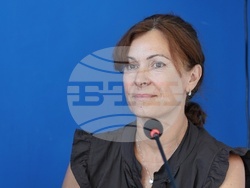
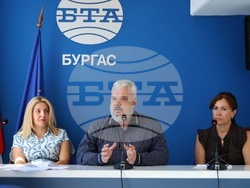
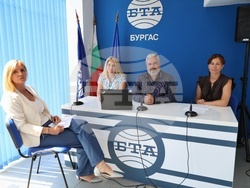
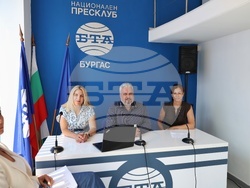
![Burgas Develops Child Support System but Needs More Foster Families, Discussion Finds]() A discussion part of the "Foster Me" national initiative, Burgas, July 20, 2026 (BTA Photo/Hristo Stefanov)
A discussion part of the "Foster Me" national initiative, Burgas, July 20, 2026 (BTA Photo/Hristo Stefanov)
![Национален пресклуб на БТА Бургас - инициатива „Приеми ме“ - дискусия]()
![Национален пресклуб на БТА Бургас - инициатива „Приеми ме“ - дискусия]()
![Национален пресклуб на БТА Бургас - инициатива „Приеми ме“ - дискусия]()
![Национален пресклуб на БТА Бургас - инициатива „Приеми ме“ - дискусия]()
![Национален пресклуб на БТА Бургас - инициатива „Приеми ме“ - дискусия]()
![Национален пресклуб на БТА Бургас - инициатива „Приеми ме“ - дискусия]()
![Национален пресклуб на БТА Бургас - инициатива „Приеми ме“ - дискусия]()
site.btaBurgas Develops Child Support System but Needs More Foster Families, Discussion Finds
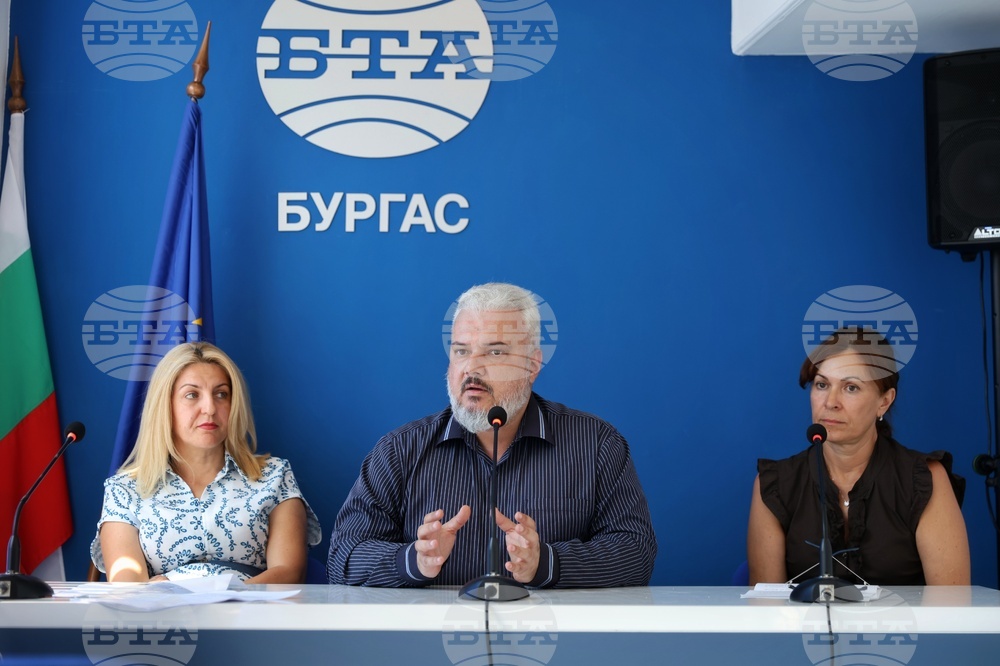
A discussion on foster care in Burgas took place on Monday. It was organized as part of the "Foster Me" national initiative of the Bulgarian News Agency (BTA), the Social Assistance Agency and the Ministry of Labour and Social Policy, and was held at the BTA National Press Club in the city.
Among the conclusions was that foster care in Burgas is developing as part of a broader system of support for children and families that begins even before a child is removed from their biological family. The main challenge remains finding more families willing to care for children with more complex needs - children with disabilities, older children and young people who have experienced violence or severe life hardships.
The participants included Burgas Deputy Mayor for Education, Healthcare, Social Activities and Youth Policies Mihail Nenov, social worker Katya Stankova from the Regional Foster Care Team, and Maria Atanasova, Manager of the Community Support Centre in Burgas.
As part of the discussion, a video testimony by foster parent Ana Raykova was also screened, in which she shared her experience of caring for children placed in a family environment.
According to Nenov, foster care should be viewed as part of a comprehensive approach to child well-being that begins with prevention. He said that the local authority's efforts are focused on preventing child abandonment or the need for children to be removed from their families.
Burgas Municipality runs programmes for early parental counselling before and after childbirth, as well as early childhood development initiatives in partnership with UNICEF. The aim is for specialists to support families during the earliest stage of a child's life and to identify developmental difficulties at an early stage.
The next level in the system comprises social services and family-type accommodation centres, which replaced the large children's institutions following the deinstitutionalization process. They work in coordination with foster care teams to find suitable families whenever a child is in need of protection.
Nenov said that the number of professional foster families in the Municipality has increased in recent years, but there is still a particular need for families able to care for children for whom finding a suitable family environment is more difficult.
There are 58 approved foster families in Burgas Region, social worker Katya Stankova from the Regional Foster Care Team said. She noted that applicants are most often people who want to help a child and provide them with a stable family environment. However, not everyone continues the process after the initial consultations, as foster care requires thorough preparation and readiness to work with children from a wide range of life circumstances.
At present, the greatest need is for families willing to care for children aged between 0 and 3, including newborns, as well as children with disabilities and young people aged between 14 and 18. Stankova stressed that suitable candidates should not only have the desire to help but also be able to provide a calm and secure environment, access to education and healthcare, and support for the child's development.
According to Maria Atanasova, Manager of the Community Support Centre, one of the most important tasks is to help prospective foster parents understand that they are supported by a network of specialists. She said that social services play an important role both in providing psychological support and in liaising with institutions to ensure access to healthcare, education and all the child's everyday needs. According to her, it is particularly important for foster parents to be able to understand the behaviour of children who often bear the consequences of past trauma.
Atanasova also stressed the need for more young professionals from the helping professions to join the social services sector.
For Ana Raykova, who is caring for her sixth foster child, the most important reason for choosing this role should be the desire to provide security and love. She said that what matters is for the child not to feel like a temporary placement but as part of the family.
Raykova pointed out that foster care is a daily responsibility requiring dedication, patience and readiness to face difficult moments. Among the challenges, she highlighted the difficulties of finding a general practitioner, enrolling children in a nursery or kindergarten, and the need for foster parents to cope with public attitudes. Despite the difficulties, she believes the effort is worthwhile.
/KT/
Additional
news.modal.image.header
news.modal.image.text
news.modal.download.header
news.modal.download.text
news.modal.header
news.modal.text