site.btaUniversities Must Change If They Want to Remain Relevant Says OECD Education Director
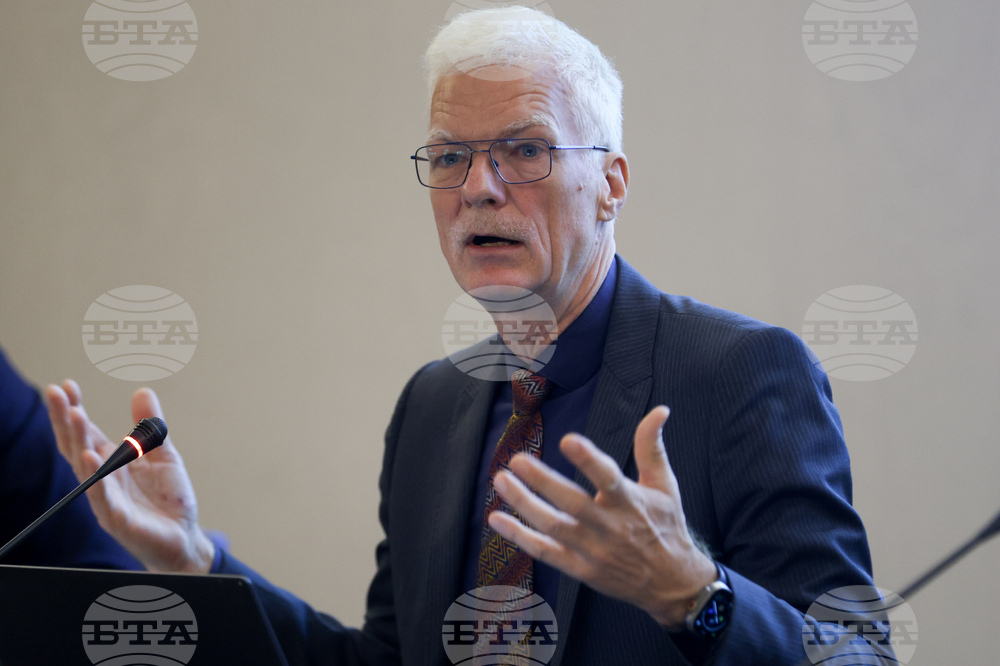
Universities must change if they want to remain relevant in the age of artificial intelligence and new technologies, said Andreas Schleicher, Director for Education and Skills at the Organization for Economic Co-operation and Development (OECD), during a round table held in Sofia Wednesday. The event, organized by the Bulgarian Employers' Association for Innovative Technologies (BRAIT), was dedicated to the connection between education, skills and economic competitiveness in the age of artificial intelligence.
According to Schleicher, who is the creator of the OECD's Program for International Student Assessment (PISA), universities have great influence in today's world because of their ability to create monopolies.
“They have done a very good job of creating monopolies. They essentially control accreditation. They decide what you need to learn to get their qualification. They manage the content and they do it consciously. And by combining those three things, they create an extremely powerful environment. But in the age of technology and artificial intelligence, there is no reason for those three things to be linked together. Content is everywhere now. You can access the best educational content outside of universities,” Schleicher said.
According to him, nowadays there is a question of why students need to attend lectures to learn something, when they can acquire knowledge in an interactive way thanks to technology.
"That's why I think universities need to reinvent themselves if they want to stay relevant," he said.
According to Schleicher, higher education institutions, on the one hand, must adapt to how and when people want to learn instead of pushing students towards diplomas that may become irrelevant, and on the other hand, increase their efficiency in training related to upskilling and reskilling.
"The future of universities is not about acquiring entry-level qualifications, but about providing people with support throughout their educational journey," he said.
According to Schleicher, if universities do not get the message, the monopolies they have created will collapse, as is happening in many other areas of society.
"Why would Harvard University charge you $70,000 a year? It has nothing to do with the value Harvard adds to your life. It's about the selection effect. They charge you money for the intelligence you were born with, the quality of your education, or the hard work of your parents, and I think that will go away. Reputation won't be enough for your university," he said.
However, he says public policies often take on the message too late and structures first collapse before they change. Higher education institutions therefore need support to make the transition to changes such as more flexible qualification structures or the introduction of micro-certificates.
Schleicher added that in every society there should be institutions that are guardians of knowledge, but there is a risk that this status will be lost if changes in higher education are not implemented in the right way.
During his presentation, Schleicher said that education systems need to rethink the relationship between task performance and learning itself. He gave the example of how high school and university admission exams in Bulgaria are based entirely on performance on given tasks, which does not mean that students actually acquire any significant skills, and according to him, the focus should be on acquiring skills.
/NF/
news.modal.header
news.modal.text