site.btaMedia Review: May 21
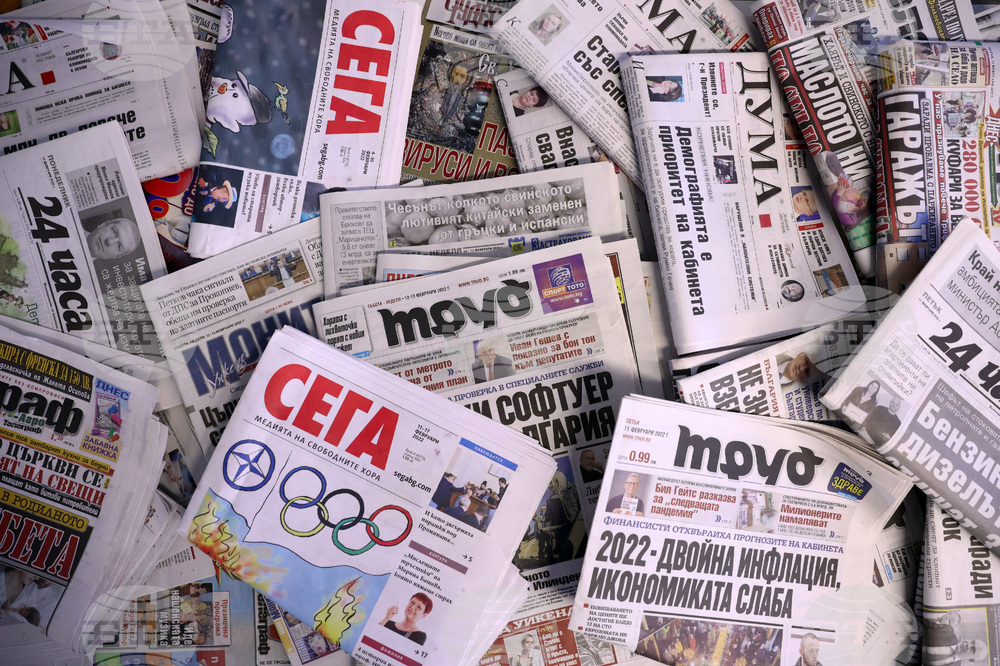
Corruption, administrative reforms, proposed changes to Parliament’s Rules of Organization and Procedure, fuel prices, education, and others are the leading topics in Thursday’s news media.
POLITICS
Mediapool.bg has published the first part of a series of articles by former Prime Minister Ivan Kostov, titled “War on corruption or being swallowed up by it”. In it, Kostov states that corruption has become a routine practice and is perceived as a "normal" way to obtain services, administrative positions, win public contracts, or circumvent the law. Citizens and businesses view it as inevitable since official mechanisms are ineffective. Corruption is found everywhere, from the lowest administrative levels to the highest levels of the executive and judicial branches. Furthermore, he describes how corruption works, with public resources being used to strengthen power. The strengthened power in turn protects and stimulates new corrupt practices that generate more resources, which in turn generate even more corrupt power. Thus, the corruption mechanism is self-accelerating and growing. Voters have repeatedly sought a way out. Simeon Saxe-Coburg-Gotha, Sergey Stanishev and Boyko Borissov denounced corruption and promised to fight it, but they were found to be part of the problem. Nowadays, society is pinning its hopes on Rumen Radev, who has promised that his administration will be the driving force in the fight against corruption. Kostov warns the ruling party that, upon assuming power, they inevitably become responsible for corrupt practices at all levels of the administration. These practices were not created by them, but they will quickly begin to be attributed to them, especially if they are not promptly exposed and stopped. Secondly, there may be individuals at the highest levels who are ready to exploit their power for personal gain. Therefore, the most difficult battles they have to wage against corruption are within themselves and within the administration they govern. Kostov ends the article by casting doubt on the proposed amendments to the Judicial System Act, saying that Progressive Bulgaria is neither ready nor willing to fully clean up and reform the judiciary.
The front-page article on 24chasa.bg is an analysis by journalist Viktor Ivanov offering advice on how to stop being “slaves to bureaucrats”. Ivanov first recalls that, when the Bulgarian Communist Party was in power, the word "bureaucrat" had a negative connotation and was considered an insult. However, things have changed so much that Generation Z now aspire to government jobs. Ivanov also states that administrative reform has been a topic of discussion for every elected party since 1989, yet the government apparatus has only grown. He adds that there are currently over 140,000 bureaucrats in Bulgaria, including teachers, doctors, military personnel, prosecutors, judges and even members of the Supreme Judicial Council, who receive salaries of up to EUR 7,000. According to Ivanov, these bureaucrats have done nothing significant for society to justify their inflated salaries. Ivanov then lists eight measures that could be implemented to stop this administrative bloat. These include an end to all pay privileges, the immediate closure of the general administration and the establishment of a small central unit to perform accounting and legal services for all departments. Ministries would be cut and, where necessary, staff would be transferred to failing agencies. If that is not enough, the ruling party can also deprive the Ministry of the Interior of special benefits, such as 20 salaries upon retirement, and reduce the police force by 20%. Ivanov’s proposals also target the regional administrations. He wants to consolidate many of the districts, stating that, given Bulgaria's population, 28 regions, each with their own administration, is excessive. Ivanov concludes by stating that these proposals are not new and have been discussed for over 20 years. He doubts that Rumen Radev and his cabinet will be willing to implement their proposed administrative reform to this extent.
Segabg runs an article about Prime Minister Rumen Radev’s takeover of the special services and the security sector. Barely sworn in, Radev's government did not pay attention to its voters, pensioners or the young, but quickly took care of its own security. It adopted a decision appointing Stancho Stanev as acting head of the State Agency for National Security (SANS) for a term of 5 years, starting from May 8, 2026. The decision was surprising, considering that Stanev has no professional experience in SANS, as he had been in the National Service for Protection for years as part of the personal security of a number of presidents - Zhelyo Zhelev, Petar Stoyanov, Rumen Radev. Sega further comments that the speed with which the government moved to reshape the leadership of the security services has fueled concerns about political control over sensitive institutions. The analysis recalls that Radev’s administration has already signaled its intention to directly supervise the Interior Ministry, the Defence Ministry, the Foreign Ministry and the intelligence services. The publication argues that while governments traditionally seek influence over the security apparatus, the current restructuring has been carried out with unusual speed and political assertiveness. It cautions that overconcentration of authority in the sector has historically created risks for democratic governance and public trust.
Dnevnik.bg published an article, titled "The Chronology of a Failure: The Anti-Corruption Commission" which outlines the political decisions, legislative compromises and institutional controversies that, according to the author, undermined the body from its inception. The publication recalls that the anti-corruption commission emerged from long-standing public and European pressure on Bulgaria to establish an effective mechanism for investigating high-level corruption. The commission underwent major restructuring in 2023, when Parliament divided the former anti-corruption authority into separate institutions and granted broader investigative powers to the newly created commission. According to the analysis, expectations that the body would become an independent institution capable of going after corrupt senior officials were quickly overshadowed by political disputes over appointments, questions regarding prosecutorial influence and accusations that the commission was being used selectively against political opponents. The publication reviews several high-profile investigations and political confrontations surrounding the commission’s activities, arguing that repeated institutional crises gradually eroded public trust. It also notes that criticism came from both governing and opposition parties, as well as from civil society organizations and European observers monitoring Bulgaria’s rule-of-law commitments. According to the daily, the closure of the commission marked the culmination of a broader political failure to build a sustainable anti-corruption framework capable of meeting both domestic expectations and European standards. It concludes that the repeated restructuring of anti-corruption institutions over the past decade has produced instability rather than accountability, leaving unresolved questions about how Bulgaria intends to combat high-level corruption in the future.
An interview with Stoyu Stoev, an MP from the Continue the Change party, was featured on Bulgarian National Television’s morning programme. He spoke about recently proposed changes to the National Assembly Rules of Organization and Procedure. Stoev described the changes as limiting the opposition's ability to raise issues and exercise control over power. "The mantra that the majority has been guided by so far is that the rules for working in the National Assembly were better during the "Borisov 3" era and under the previous GERB cabinets. These 40th, 41st, 42nd, 43rd and 44th National Assemblies work with these practices and sometimes even build on them. Today, the committee continues to work and we are having a constructive debate with our opposition colleagues. We have not sabotaged anything. On the contrary, we have discussed the problems so far and are trying to understand our colleagues motives, because of the 40 proposals they have made, their motives amount to literally three sentences", Stoev explained. According to him, there are no unnecessary quarrels in the current National Assembly, and imposing restrictive rules will not improve work.
On Nova TV’s morning programme, Kancho Stoychev, the Deputy Chair of the Association of Industrial Capital in Bulgaria with responsibility for small and medium-sized enterprises, and Vanya Grigorova, the former economic advisor of the Podkrepa Confederation of Labour, commented on the government's measures against high prices and inflation, and on proposals for layoffs in the state administration. According to Grigorova, the legislative measures under discussion will not immediately lead to prices going down. While criticizing the government, Grigorova stressed that it has initiated a dialogue with business and retail chains. She said that the meetings held and the session of the National Council for Tripartite Cooperation showed an attempt to find a balance between the state, employers, and unions. Stoychev stated that the problem with retail chains and the pressure on Bulgarian producers has existed for years. He recalled that, more than a decade ago, a campaign began against practices that he believes harm domestic production. He believes that the main problem is not the price level itself, but the weakening of Bulgarian production due to the concentration of market power in large chains. Stoychev also stated that years of lack of state intervention has allowed large retail chains to acquire excessive market power. "A market without regulation is a jungle. Capitalism is an extremely dynamic and effective system as long as it is controlled," he commented.
On Bulgarian National Radio, political scientist Teodor Slavov commented on the proposed changes to the parliamentary rules of procedure. According to him, the ruling party should be highly responsive to public demands and make sure not to reduce transparency and accountability. Commenting the debate on the proposed rule of procedure revisions, he said: "At some point, I felt that the ruling party was willing to listen to the opposition, at least on some issues. One of the most worrying things for me is the shortening of the deadlines for familiarizing themselves with bills and materials. There is a saying in parliament that when something is deemed urgent, it is usually not. I do not think that our legislative process should be accelerated; it should be slowed down. This is not a race. Adopting a bad law in a hurry does not make it any better. Not only is the participation of the opposition limited, but that of society is too", commented Slavov. According to the political scientist, the most sustainable model applied in all parliamentary democracies is the bill, and the legislative initiative should largely be made by the executive branch. In Bulgaria, however, it is exactly the opposite, the political scientist emphasized.
ECONOMY
According to Trud, there are signs that housing prices in Sofia are declining after two years of market euphoria. According to data from the Bulgarian Properties platform, the average price of completed transactions in Sofia in the first quarter of 2026 was EUR 2,680 per square metre. This represents a slight decrease compared to EUR 2,790 per square metre at the end of 2025.However, compared to the first quarter of 2025, there was still significant annual growth in housing prices in Sofia - around 29%. The publication notes that the average price per square metre in the first quarter of 2025 was EUR 2,080. New construction continues to dominate, accounting for around 70% of all transactions. The remaining transactions on the secondary market represent a variety of properties, including old brick and pre-fabricated homes, fully furnished apartments, and new homes purchased in previous years for resale. In these transactions, buyers are increasingly achieving price discounts of 3-5%, according to Bulgarian Properties. According to brokers' observations, buyers of three-bedroom family homes have been more active on the market this year than buyers of two-bedroom apartments. One of the most striking trends in 2026 is the demand for properties in settlements neighbouring Sofia. These areas offer lower prices, larger living spaces and a more peaceful lifestyle and buyers are willing to commute up to 30–40 kilometres daily. Plots and houses in villages around Sofia, as well as gated apartment complexes, are in high demand. Brokers predict that the continued influx of new projects, low mortgage rates and rising incomes will have a positive impact, maintaining activity albeit at lower levels, until the end of the year. Conversely, wars, geopolitical tensions and inflationary pressures will limit demand and keep market participants cautious. Home prices are forecast to continue growing, albeit at a lower rate.
On bTV's morning programme, Dimitar Hadzhidimitrov, the deputy chair of the Association of Bulgarian Fuel Traders, Producers, Importers and Transporters, was interviewed alongside Tsvetomir Nikolov from the Centre for the Study of Democracy. They discussed the recent analysis by the Commission for the Protection of Competition, which concluded that the caretaker government had exerted price pressure on the fuel market without implementing long-term measures. "The high prices of finished fuels, especially diesel, were due to high demand. Currently, there are fewer requests for diesel and fuel. Naturally, the price is going down," said Hadzhidimitrov. However, expectations of a strong tourist season are leading to increased demand for gasoline. "The expectation of a strong tourist season this year is leading to more demand for gasoline, which in turn is pushing up the price," explained Hadzhidimitrov. Tsvetomir Nikolov commented that the problem of the price squeeze has several dimensions. "Firstly, it is harming Lukoil. As we know, the company is under the management of a special administrator, who may use this to file an arbitration case and demand compensation from the state. According to Nikolov, the artificial price squeeze has also led to market distortion. "The problem is that retail margins are squeezed. The price is artificially pushed down and the real markups that should be presented to the market are not shown. All of this is due to a lack of transparency in the market," he said.
In an interview on Bulgarian National Television’s morning programme, Iovko Iotzev, Secretary General at the Bulgarian Airlines Association, stated that there will be no shortage of aviation fuel for Bulgarian airports and that the flight schedule is not under threat. He added that although prices have calmed down somewhat in the last week, they are still high at around 100–200 dollars per tonne. "Unfortunately, these prices are still 70–80% higher than those at the end of February, which poses a serious challenge for companies looking to implement their programmes," said Iotzev. He described the reduction of some destinations and flights by some airlines as a temporary measure.
Nova TV's morning programme featured an interview with Sergei Stanishev, the former prime minister and current member of the Executive Bureau of the Bulgarian Socialist Party. During the interview, Stanishev stated that Europe must realise that even Germany, the largest country by population, has a small economy in the modern world. He believes that Europe is lagging behind economically not because of the Green Deal, but due to a lack of sufficiently rapid and deep reforms. "If we want to be competitive and economically successful, and preserve the well-being of the community so that it does not become a museum of past glories, we need to change. We need to become more dynamic, and above all, increase the scale," he said. He added that China is proof that green transformation and economic growth can go hand in hand. "China is installing more solar capacity than all the other countries in the world combined. And this is happening without abandoning investments in other types of energy," he noted. Stanishev also highlighted Southeastern Europe's problems relating to energy and transport infrastructure. "One reason for higher electricity prices in Central and Eastern Europe is insufficient electricity transmission infrastructure between Southeastern Europe and the rest of the continent," he said. He added that the countries in the region are demanding more European funding for such projects. "If you don’t clearly state your problems, no one will take care of them for you," commented the former prime minister.
EDUCATION
24chasa.bg has published an article about the admissions plan for secondary education for the next academic year. Admission to vocational education will be carried out according to a new list of professions, though this will not change the structure of vocational education in general. According to the available data, there will be nearly 37 thousand places in vocational education in the 2026/27 academic year (63% of the total), covering nearly 150 professions. The majority of students will study to become cooks, automotive mechanics, and restaurateurs. The top ten professions with the most places also include several IT and economic professions, as well as construction and electrical equipment professions, all of which have over 800 places. In almost a hundred professions, intake is relatively limited, with under 200 places available. No places have been made available for 46 professions, including teacher's assistant, paramedic, fruit and vegetable processing, translator from and into Bulgarian sign language, health assistant and thermal power engineering. Overall, in addition to shortages in industry, there are also very few vacancies in education-related professions (0.8%) and healthcare (2%), despite the demand and shortage of personnel in these sectors. The only professions offered in all 28 districts are automotive engineering and mechatronics. In 27 districts, students will be accepted for cooking (excluding Silistra) and restaurant management and catering (excluding Pernik). A total of 32 professions are only offered in one district. These are usually concentrated in areas with specific economic activity, such as shipbuilding and ship repair in Varna, radioactive waste management in Vratsa, digital textile design in Sliven, geology and geophysics in Smolyan, shoe manufacturing in Pazardzhik and inland waterway transport – ship navigation in Ruse. The publication concludes by stating that, while the new list of occupations introduces some changes, it does not fundamentally alter the order of priority.
/RY/
news.modal.header
news.modal.text