site.btaScience Communication Is Important in a World Where Misleading Explanations Abound, Says Croatian Expert Marko Kosicek
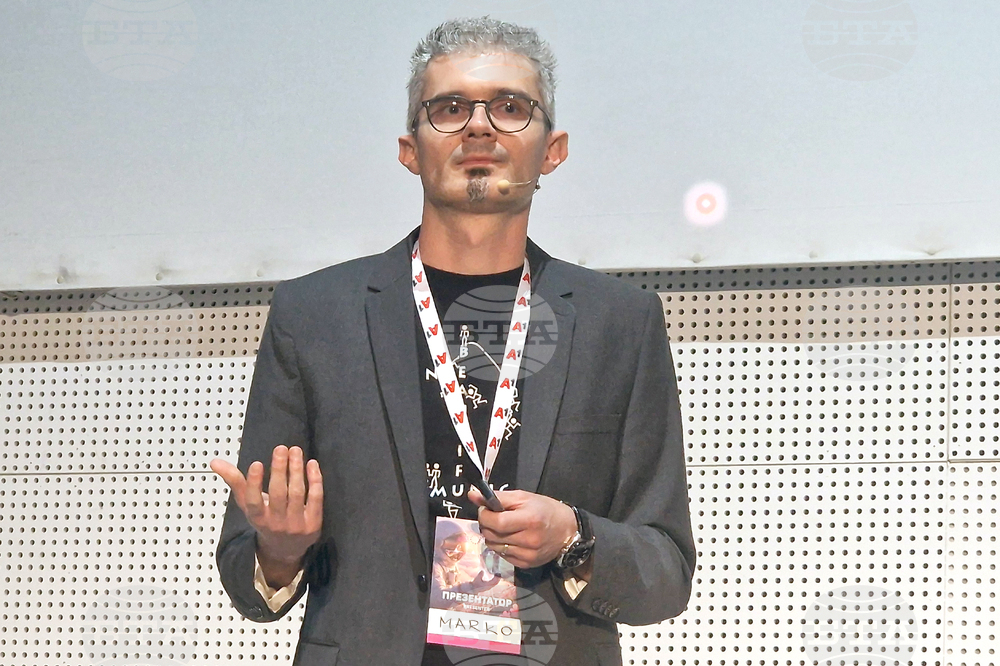
Communicating science to the public is an important responsibility in a world where misleading explanations are plenty, according to Marko Kosicek, science communication coordinator at the Rudjer Boskovic Institute, the largest multidisciplinary research institution in Croatia. Kosicek was interviewed by BTA on the sidelines of the Sofia Science Festival, underway in the Bulgarian capital from May 14 to 17.
He said in the interview that for decades, many scientists believed their work ended once their paper was published. "Today, we know that if science is not visible and understandable, others will fill that space with simpler, misleading explanations. We live in a world where people make decisions about health, technology, climate, and education every day, often surrounded by misinformation, oversimplified narratives, and AI-generated content. That is why communication is no longer just the promotion of science; it is part of scientific responsibility."
If the situation today is compared with ten or twenty years ago, several important changes are clearly seen, Kosicek said. Research institutions are more open, and the NGO sector has become very active in connecting science with society. At the same time, however, science programmes on national television have been dramatically reduced, which means that researchers increasingly have to communicate directly with the public, often through digital platforms and social media. Although scientists are much more open and willing to engage with society than they were before, most researchers were never trained for public communication, the Croat expert noted.
Asked whether science communication can impact policymaking, he answered in the affirmative, but added that the key challenge is turning scientific complexity into something that can support real decisions. "This becomes especially important during fast-moving situations, such as pandemics, emerging technologies, AI regulation, climate issues, or public health crises. In these situations, you rarely have a complete picture, yet decisions still have to be made," Kosicek said.
According to him, one of the biggest misconceptions is that science directly tells policymakers what to do. "Usually, science helps society better understand risks, consequences, and possible options. It is society that makes the decision, directly or through politics," he pointed out.
In the present time, when science-related discussions increasingly take place on social media, researchers should be "active, but not activists," Kosicek argued. "Scientists should participate in public discussions, explain evidence clearly, and respond to misinformation, but without losing the values of science itself. Of course, this is not always easy, especially when discussions become aggressive or polarized," he said.
Discussing the impact of artificial intelligence, the expert said: "AI can generate explanations, images, videos, and entire narratives in seconds. This can be extremely useful for education, creativity, and accessibility. However, misinformation can also spread more rapidly, appear more convincing, and become much harder to distinguish from reliable information."
Therefore, the role of science communication today is not only to explain science, but to help people navigate complexity responsibly, understand uncertainty, and make informed decisions. "In the age of AI, the problem is no longer a lack of information. The problem is knowing what to trust," Kosicek said.
He believes that the most powerful form of science communication is direct human interaction. In his work, he focuses less on delivering answers and more on raising questions that are emerging in science.
/VE/
news.modal.header
news.modal.text