site.btaThink-tank: Bulgaria Needs More Economic Freedom, Reforms and Labour for Higher Growth

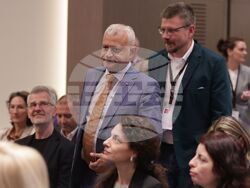
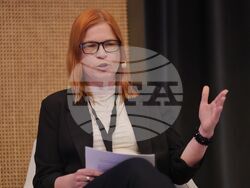
Policies that can unlock additional potential for economic growth were presented during a forum on economic freedom and the rule of law, titled “Time for Growth,” organized by the Institute for Market Economics (IME) in Sofia. The event brought together economists, lawyers, entrepreneurs, and business representatives for a discussion on the business environment, the institutional framework, and the prospects for the Bulgarian economy.
Lachezar Bogdanov from IME underscored the need for a predictable business environment, economic freedom, and the reduction of regulatory barriers to investment and entrepreneurship. According to him, sustainable economic development depends on productivity growth, which can be achieved through investments in physical and human capital, as well as by encouraging entrepreneurial activity.
Bogdanov warned that policies which restrict economic freedom and increase administrative burdens deter investors and slow down the adoption of new technologies and innovation. He argued that frequent legislative changes and an unpredictable regulatory environment reduce interest in investment and slow economic growth.
Adrian Nikolov from IME presented an analysis of the labour market and the country’s demographic challenges. According to him, Bulgaria will continue to face a serious labour shortage due to the demographic crisis and a shrinking population.
He said that there is a need for more active inclusion of inactive groups in the labour market, as well as easier access for workers from third countries to the Bulgarian economy. Nikolov noted that Bulgaria is gradually becoming a country that will increasingly rely on foreign labour, similar to a number of Western European economies.
He stressed that in recent years migration patterns have been changing, with a higher inflow of foreign workers being recorded. According to him, administrative procedures for hiring workers from third countries should be accelerated so that businesses can respond more quickly to labour shortages.
Nikolov also commented that the economy will face an increasingly severe labour shortage in the coming years, which will require both reforms in education and the labour market, as well as a more flexible migration policy.
Petya Georgieva from IME presented data on the state of the healthcare system and the efficiency of spending in the sector. She noted that Bulgaria remains last in the European Union in terms of average life expectancy, despite having one of the highest numbers of hospital beds per capita.
According to the data presented, the country has 864 hospital beds per 100,000 people, compared to an EU average of 511. Georgieva said that nearly 1 million patients passed through hospitals in just the first months of the year, and if this trend continues, hospitalizations could reach around 2.7 million by the end of the year.
She emphasized that the problem in the system is not a lack of funding, but inefficient spending. According to figures presented at the forum, total healthcare funding reaches around EUR 10 billion annually, or approximately 8% of GDP.
Georgieva argued that a large share of clinical pathways lead to unnecessary hospitalizations and could be replaced with outpatient care or other forms of treatment. She also noted that some hospitals could be restructured without losing medical staff.
An additional focus was placed on the need for more investment in prevention and early diagnosis. Georgieva pointed out that Bulgaria is the only EU country without a national screening program, while in countries such as Finland, preventive programs cover around 70% of the population.
In her view, future healthcare reforms should focus on the quality of treatment and real patient outcomes, rather than the number of hospitalizations.
Sara Albrecht, Chair of the Liberty Justice Center, which is challenging the tariffs, imposed by the administration of U.S. President Donald Trump, presented details about the development of the case. She noted that the challenge began in May last year, when the organization filed a lawsuit arguing that the president does not have the authority to impose tariffs under the legal mechanism used.
Speaking via video conference, she said: “Tariff authority per our Constitution lies with Congress. So at the heart of this case, it really wasn’t about tariffs. It was in fact about the separation of powers. We have three branches of government, and the president has things that he can do, Congress has things that they can do, and the judicial branch has things that they can do. You can’t take power from one branch to another, and that’s what he attempted to do. And if we didn’t stop it, he could have done that and the next president could have done that, and then slowly our Constitution erodes and becomes irrelevant,” she said, adding that the government is fighting that injunction, and the road ahead if them is long, but they feel pretty good.
/DD/
Additional






















news.modal.image.header
news.modal.image.text
news.modal.download.header
news.modal.download.text
news.modal.header
news.modal.text